

In the competitive landscape of beverage development, formulators face a constant challenge: delivering robust, authentic flavor while meeting consumer demands for cleaner labels and reduced sugar and sodium. Enter Caramelized Sugar—a traditional European ingredient that is proving to be a modern powerhouse in beverage applications.
Caramelized Sugar results from the controlled heat treatment of sucrose and other common sugars with water. This process creates a pure food product used for flavoring and enhancement, offering a spectrum of profiles from lightly sweet to dark, robust burnt notes. For beverage manufacturers, this translates into a multi-functional ingredient that does far more than simply sweeten.
Beyond Sweetness: A Multi-Functional Ingredient
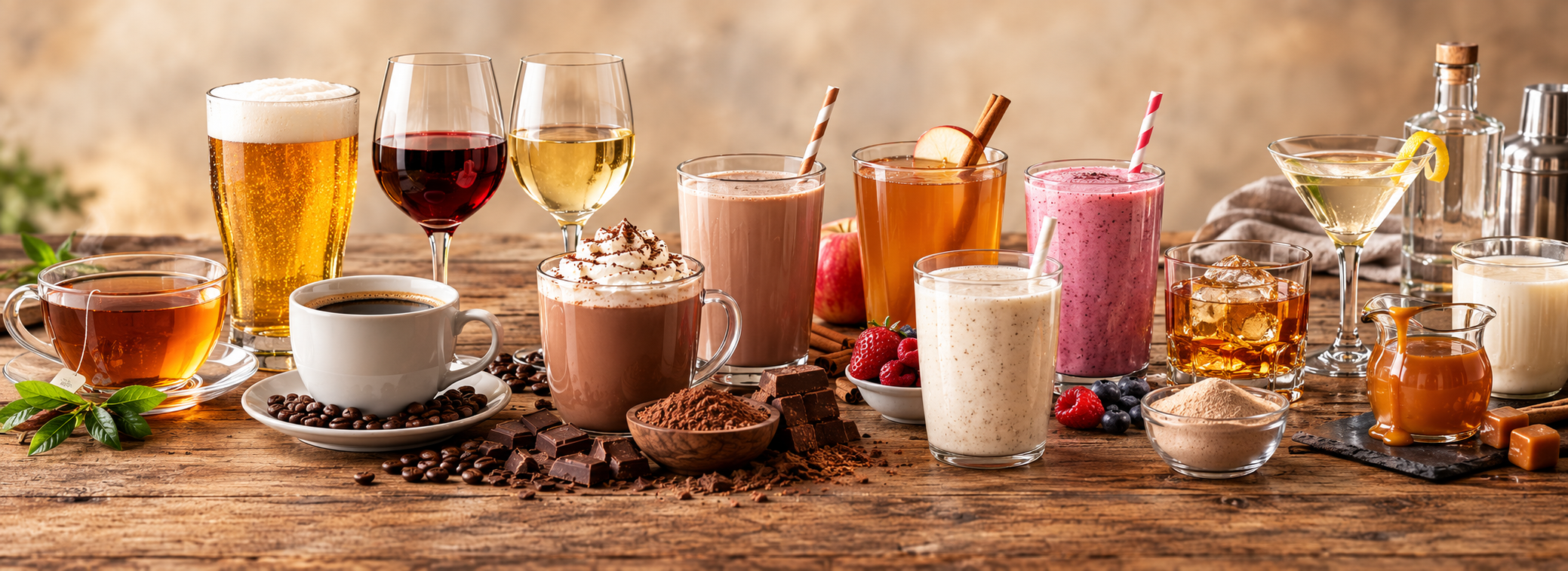
The advantages of Caramelized Sugar in beverage formulations are extensive. Across categories as diverse as tea, coffee, cocoa drinks, flavored milks, fruit drinks, functional and nutritional beverages, soft drinks, dirty sodas, and instant dry mixes, these ingredients deliver a consistent set of benefits.
Flavor Enhancement and Rounding: Perhaps the most significant advantage is the ability to enhance and round out flavor profiles. In tea applications, Caramelized Sugar enhances and rounds out flavor while standardizing color. In cocoa drinks, it enhances flavor, mouthfeel, and color—all while increasing yield and consistency. This means formulators can achieve a more complete, satisfying taste profile without adding multiple ingredients.
Masking Undesirable Notes: Bitterness is a common challenge in coffee, functional and nutritional beverages, and dairy-based drinks. Caramelized Sugar offers effective masking properties, particularly for bitter notes. In coffee, it masks bitter notes while improving color and adding a flavor boost. In functional and nutritional beverages, it performs the same masking function, improving mouthfeel simultaneously. For botanical flavors like floral spices and herbs, it offers low-cost masking properties while boosting flavor and visual appeal.
Mouthfeel and Creaminess: In an era where reduced-fat and reduced-sugar products are in high demand, mouthfeel is often the casualty. Caramelized Sugar addresses this directly. In flavored milks, it improves mouthfeel and enhances creaminess. In dairy applications broadly—including creamers, cheese, ice cream, yogurt, and protein powders—it boosts flavor, masks bitter notes, and improves mouthfeel. For instant dry mixes, it delivers improved mouthfeel and taste.
Color and Visual Appeal: Beyond taste, Caramelized Sugar provides secondary color appeal. It standardizes color in tea and fruit drinks, improves color in coffee and cocoa drinks, and enhances visual appeal in botanical, soft drink, and alcoholic applications. This dual functionality reduces the need for separate coloring agents, streamlining formulations.
Sugar and Sodium Reduction: A critical advantage for today’s health-conscious market is the ability of Caramelized Sugar to assist with sugar and sodium reduction. In cocoa drinks, flavored milks, functional and nutritional beverages, instant dry mixes, and sweet flavor applications, it provides sugar and sodium reduction properties. This allows formulators to reduce these ingredients without sacrificing the sensory experience consumers expect.
Standardization and Consistency: Natural flavor variances are a persistent challenge. Caramelized Sugar can standardize these variances and standardize quality, particularly in vanilla flavors and fruit drink applications. This ensures batch-to-batch consistency, a vital factor for brand integrity.
Application-Specific Advantages
The versatility of Caramelized Sugar is best understood through its specific applications.
Tea and Coffee: In tea (usage level 1.0%–4.0%), it enhances and rounds out flavor while standardizing color. In coffee (usage level 1.0%–3.0%), it masks bitter notes, improves color, and adds a flavor boost.
Cocoa and Flavored Milks: For cocoa drinks (usage level 0.3%–1.0%), Caramelized Sugar enhances flavor, mouthfeel, and color while increasing yield and consistency—with sugar and sodium reduction properties. For flavored milks (usage level 0.05%–2.0%), it improves mouthfeel, enhances creaminess, and delivers the same reduction benefits.
Fruit Drinks: In the fruit drink category—including cider and fruit-based beverages—Caramelized Sugar offers significant advantages. At usage levels of 0.05%–2.0%, it boosts flavor and color while standardizing color, ensuring consistency across batches. For fruit-based drinks, it enhances and rounds out flavor, providing top notes to create a complete system. This is particularly valuable in cider, where visual appeal and flavor consistency drive consumer preference, and in fruit-forward beverages where natural flavor variances can be challenging to manage.
Functional and Nutritional Beverages: In functional and nutritional beverages (usage level 0.05%–2.0%), Caramelized Sugar masks bitter notes, improves mouthfeel, and provides a flavor boost. It also delivers sugar and sodium reduction properties—a critical benefit in a category where health positioning is paramount. Whether formulating protein drinks, fortified waters, or functional wellness beverages, Caramelized Sugar helps balance taste and nutrition without compromise.
Soft Drinks and Dirty Sodas: In the soft drink and dirty soda segment, Caramelized Sugar offers distinct advantages. At usage levels of 0.3%–1.0%, it increases flavor impact and enhances visual appeal. For traditional soft drinks, it provides depth and rounds out flavor profiles, while supporting sugar reduction goals. For dirty sodas—the trending beverage category that combines soda with creamers, syrups, and fruit flavors—Caramelized Sugar enhances mouthfeel, adds complexity, and helps integrate diverse flavor components into a cohesive, satisfying drink. Its ability to mask undesirable notes and standardize quality makes it an invaluable tool for formulators navigating this fast-growing segment.
Instant Dry Mixes: For dry mixes (usage level 0.3%–1.0%), it improves mouthfeel and taste, with sugar and sodium reduction properties.
Alcoholic Beverages: In the alcoholic beverage segment—including beer, wine, cocktails, and spirits—Caramelized Sugar offers distinct advantages. At usage levels of 0.3%–1.0%, it increases flavor impact and enhances visual appeal. Products like 75/180-01, 75/260-01, and 75/760-01 are specifically recommended for these applications. This is particularly valuable in cocktails and spirits where depth of flavor and rich color are paramount, and in beer and wine where consistency and visual appeal drive consumer preference.
Flavor System Synergies
Caramelized Sugar also serves as a key ingredient to complete any flavor system. In fruity applications (berries, citrus, tropical fruit, melons), it enhances and rounds out flavor, providing top notes to create a complete system. In sweet flavors (caramel, maple, chocolate, coffee, nuts, desserts), it enhances flavor and color while improving mouthfeel in reduced-fat items. In savory applications, it enhances primary notes, adds to browning effects, and rounds out flavor. Even in vanilla flavors, it boosts flavor, rounds off-notes, and standardizes quality.
Reach Out To Our Sugar Experts
For beverage formulators, the path to leveraging these advantages is straightforward. Let us help you by connecting with one of our Caramelized Sugar Experts who can learn more about what you’re doing and what your particular issues are so we can give you options that “check off all the right boxes.” Get a live demo in person or via video or conference call, or request a Free Sample Kit.