Search across the BevNET CPG Media network including BevNET, Nosh, Brewbound, Taste Radio, Nombase and CPG Jobs.

Category Close-Up: Product Showcase - Frozen Meals
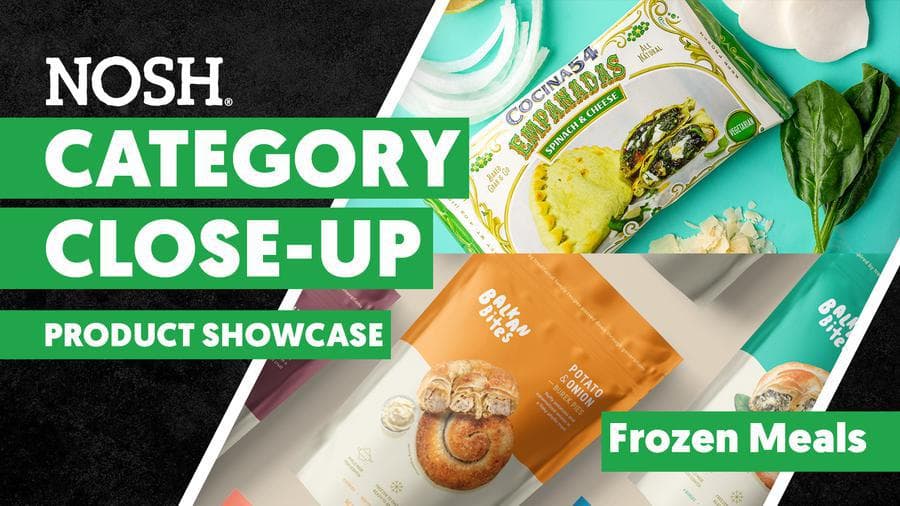
During the Frozen Meals Expert Analysis, our panel of industry authorities discussed the consumer behaviors, investment activity and retailer attitudes that are impacting the set. Now, we’re hearing from the brands. In this episode, NOSH editor Carol Ortenberg and reporter Erin Cabrey interview executives and brand leaders from frozen food companies, discussing individual company strategy, and how changes within the category affect new product development and marketing.
During the Product Showcase you’ll hear about the latest innovations and updates from brands including:
Good Food Made Simple
Balkan Bites
Cocina 54
Boazza
Kidfresh
Deep Indian Kitchen
If you’d like to find out how to profitably dive into the frozen entree set, as well as access all of our two-part Category Close-Ups, subscribe today.
Transcript
Note: Transcripts are automatically generated and may contain inaccuracies and spelling errors.
Carol Ortenberg [00:08] Hi everyone, I'm Carol Ortenberg, the editor of Nosh. You're tuning in to the latest episode of Nosh's category close-up series. This episode continues upon our exploration of the frozen entree set. Yesterday, in the expert analysis part of the series, we spoke with a group of industry experts to examine the trends, consumer behaviors, investment activity, and changing merchandizing strategies in the category. But today, we're shifting to the other side of the equation, chatting with executives from Frozen Brands about both their products and business strategy. Joining us today is Nosh reporter Erin Cabre. Aaron, how are you doing today? What are you looking forward to hearing from these brands?
Speaker 2 [00:50] I'm doing great, thanks. Um, all these brands have really exciting and diverse offerings, um, catering to consumers with different diets and special diets, and consumers interested in trying out international cuisine, you know, better for you options, um, for kids, um, all while offering convenience to consumers, so I'm really excited to hear what, um, they've all been up to recently.
Carol Ortenberg [01:13] Erin, I think that's a great point, and with that, let's get to our first guest for this episode. Uh, joining us first is George Gavris, the CEO of Good Food Made Simple. George, thanks so much for joining us today.
Speaker 3 [01:27] Well, thanks for having me. Glad to be here.
Carol Ortenberg [01:30] George, so what is good food made simple? I know you guys have been in the frozen set for quite some time now.
Speaker 3 [01:37] So Good Food Made Simple um was launched as a Better for you breakfast brand, oh, about 9 years ago. And we started in breakfast, and we had a lot of success there. And like a lot of other brands that are finding success in In, in their core category, they, they begin to look at other categories to enter. And for us, it was a natural extension to move beyond breakfast because we want to um Address the same consumers who are enjoying our products during breakfast, possibly during another time of the day. So we ventured into frozen entree meals, again, adhering to our sort of I call it a collection of strict ingredient restrictions, um, a fondness for organic fruits and vegetables, and also clean proteins in the form of ABF-free, um, humanely treated animals as a source of our proteins. Um, we launched our frozen entree meals in 2017. And we, we found uh the category to be a little different than breakfast, um, much more competitive, much more aggressive deals. And what we found is, our core consumers, while they followed us over into the category, and they looked, they liked what we're offering, they wanted to see a few more sort of, um, I'd say, claims as it related to specific trends that were occurring. As a brand, we're not entirely um focused on micro trends, but one of the category claims that we, we did feel some sort of, I think, pull towards was offering gluten-free, because a lot of our products, uh, they were rice-based to begin with, and it was a short walk for us to get them all to a gluten-free status. So, last couple of years, we've, we've spent time sourcing, um, The best gluten-free, um, pastas that we can find, as well as, uh, the, the corollary grains for those items that call for grains. Um, it's been a, it's been a difficult sort of process because a lot of these products are not necessarily readily available to, um, our manufacturers. Um, but we finally have Found a, uh, a pasta, gluten-free pasta that of all places is made in Italy, and, um, it's really made a difference in terms of the quality of our products. So, we're happy to introduce our, or to, to reintroduce our frozen entree meals, um, with the gluten-free position. And uh we've already had some pretty good distribution gains already, and we expect to, to continue those moving forward.
Carol Ortenberg [04:35] Now, I think you touched upon this a little bit. The frozen category is one where we see trends, you know, really come in and because it's, you know, a limited space in the store, you can see them grow really quickly. So, for example, cauliflower, uh, you know, suddenly it's in pizzas and pasta and And rice, cauliflower, and, and I feel like it happened in a blink of an eye. Um, how did you decide that gluten-free was the right attribute to settle on in the frozen food category, that it could have staying power and was also something that consumers were looking for from their frozen entree products?
Speaker 3 [05:11] So, as I, as I was saying earlier, we, we are not. We're not terribly um attracted to the sort of what we consider to be um short-term trends. Um, it's, it's a difficult process to be entirely responsive to whether it's the keto trend, paleo, um, that was whole 30 compliant for a while. Um, we look at things like, um, additional protein, gluten-free, Um, certainly all of the better for you sort of traits of products of no preservatives and additives as not necessarily trends, but as meaningful and desirable changes for, for consumers and for the brands that offer them. Gluten-free to us, we weren't being terribly responsive to the people that we're looking at, at gluten-free as a sort of short-term diet fix. We're looking at, looking at it from much more of a holistic, um, manner of, of eating better. When you reduce gluten, your body reacts in a certain way. And a lot of people that aren't necessarily, uh, sensitive to gluten just prefer, um, Uh, reducing the amount of gluten intake because they, they functionally, um, I guess, feel better. Um, we had a lot of consumers who follow us and, and eat some of our breakfast products which are, are, you know, full of gluten, so to speak, um, who also wanted to see us offer gluten-free products. Um, so, not only in addition to Entree meals, we now have some gluten-free products in our breakfast portfolio as well. So, you know, this is gonna be a long-term sort of position for us as a company, and it's not, it's not meant to be reactive to, you know, the sort of, what's the newest trend that uh can get our products on the shelf. It's, it's more being attuned to what your, your customer base wants and, and expects of you. So, that's our position on that. Oh, and, and to answer your question about cauliflower per se, um, we have one skew and frozen, um, our term meals, which is a cauliflower-based product. Uh, we like cauliflower. Uh, I've tried cauliflower pizzas as well. Um, Uh, some are better than others, I should say. Uh, but as a, you know, an ingredient that performs in terms of, um, formulating products, I think, um, as long as it meets our standards for cleanliness and performance, um, we're certainly open to using it.
Speaker 2 [07:50] Can you talk a little bit about um your innovation strategy? Obviously, the brand kind of balances kid-friendly options with um things that are a little bit healthier. So how do you kind of strike that balance and figure out, you know, what products to launch next?
Speaker 3 [08:04] So, Aaron, that's a great question. When we first started, we were looking for holes in, in the set, the proverbial white space and breakfast that would allow us to get on the shelf and, and obviously, um, uh, prosper. And, and what we found is we, we launched some very niche items early on, Frozen oatmeal, uh, steel-cut oatmeal, um, egg white patties. Um, we had whole egg patties back in the day. And those products are still around today, and they have a very dedicated, and I should say, um, dedicated, and they're, they're very consistent with their purchase patterns for those products. Um, but we, as, as a company, we wanted to grow and to, to build a, a brand that, um, I guess, had a little wider audience as far as who was buying our products. So, as we began to look, um, beyond that sort of narrow, sort of very healthy, very clean product, you know, we got into more meal solutions. Um, our biggest, I guess, Step up in the breakfast with our introduction of our breakfast burritos. And that was really just solving a problem for consumers. Um, a lot of times, you know, you're on the run, you wanna make sure either you or your, or, or your kids or your spouse has something healthy to eat. And we found that that was something that wasn't offered by the, the larger CP. CPG brands, and that we could do and do well with some products that um or for some components that we're already using in, in the, um, in the egg patty. So, it, it was, it, it's, for us, you know, we look at what the restaurants are offering, Aaron. We look at internally, um, blue sky sort of ideation sessions as it relates to You know, what do you do at home in the morning? I mean, I, I, I watch my own kids um make things and sometimes they give me ideas of, of what we should possibly pursue. Sometimes it's tough to manufacture those products as, as they're, as they're built uh in a, in a home environment. But, um, our innovation comes from, you know, just again, uh, what we see, um, What restaurants, uh, serve, and again, um, I think what we see that can be done better, um, that's already on the shelf today.
Carol Ortenberg [10:31] Well, George, I love hearing about how you approach innovation. Thanks so much for joining us here today. Well,
Speaker 3 [10:37] thanks for having me. Appreciate the time.
Carol Ortenberg [10:41] Uh, joining us is Ariana Tolka, the CEO of Balkan Bites. Ariana, thank you so much for joining us today. Carl, thanks so much for having me. So, Ariana, tell me about Balkan Bites and the innovative products you offer consumers. Sure. Well, Balkan Bites is a female and family owned business that specializes in comfort foods from Southeastern Europe, um, specifically a region called the Balkans. My family is originally from the Balkans. My mom's from Croatia, and my dad's from Kosovo, and food was always a huge part of my life growing up. They're both incredible home cooks, but the real hero in the kitchen was my grandmother, Mabuya. Anything she made was delicious, and the True star of of her kitchen repertoire was her berek, which is a flaky stuffed phyllo pie. Um, after my grandmother passed away, my aunt and I started Balkan Weiss as a way to commemorate her legacy and also to share and preserve Balkan culture and cuisine. Our frozen, ready to bake berets are made with 100%, uh, all-natural phyllo dough that's super flaky on the outside. And oozing with goodness on the inside. We use premium, all-natural ingredients like unbleached flour, extra virgin olive oil, and real butter. And whether you bite into one of our savory spinach and cheese berets, or a traditional beef and onion, or a mushroom and goat cheese, they're all out of this world. And baking them is super easy. Pop them in the oven for 35 minutes, or in the air fryer for 20 minutes until they're golden brown, and the delicious aroma will Tempt you to take them out sooner, but we, we suggest waiting until they're done. Um, currently we sell 6 SKUs on our website and, and strictly e-com right now, but we're really excited to announce that we're launching our single serve cartons for retail later this year. And, um, we really wanna be a new freezer staple for people that they grab when they want a home cooked meal without the hassle. Those sound absolutely delicious. I was getting hungry looking at your website, but I imagine a Barreck is new to many consumers. So, how do you go about describing it, and as you move into retail, how do you see yourself positioning it in freezer doors where you have this, like, you know, quick 12th moment to capture a consumer's attention? Yeah, it, it, it's difficult. We actually started out selling at outdoor markets and having so much real estate to talk about the brand and to educate consumers one on one. So we've had to kind of learn how to pare it down as we go. So that's making it even smaller for our, our packaging for our website, how to describe everything just on a one page on our website and now even smaller, making it, um, telling our whole story, describing where the Balkans. what Brec is on a carton that's 5 by 5 basically inches. So, um, it, it's, you know, we're, we're fitting everything on there and it's super eye-catching, really colorful imagery, um, beautiful product imagery as well. So we hope that lures them in and we, we are managing to tell our whole story on the packaging and it's pretty similar to what you would see on our website, um, or read about us in, in different articles. So we hope that. That encourages trial, and by having a, a single serve, we hope that also kind of lowers that barrier for someone to try something new.
Speaker 2 [14:05] Uh, I know the brand has kind of had, um, an interesting journey through COVID from, you know, pop-ups and wholesales to ecom, and so how kind of these different services like a fridge no more and things like that been really beneficial to, um, the brand, especially now, um, during COVID?
Carol Ortenberg [14:20] It's been super beneficial just reaching new consumers, um, and, and getting people to try our products since we used to sample at outdoor pop-ups and now we don't really have that opportunity and I think, you know, we've gotten a great response from people who aren't from the Balkans who are just interested in trying something new. I think because people couldn't travel for A year basically, um, even longer, they wanted to experience different cultures and cuisines in their own kitchen and global flavors just outside of the ethnic aisle, so I, I think we've, um, we've been really lucky to have partners that have helped us do that. Where do you hope this gets positioned in the freezer aisle when you go into retailers? Because I think, you know, there's an entree set, there's a burrito set, there's kind of that handheld appetizer set of dumplings and egg rolls, um, and I imagine you have a preference. I'm wondering where you'd like to be placed and kind of how you landed at that. So we would really like to be placed next to the single serve pot pies. I think a consumer who's going for those would. Be inclined to try ours. Um, it's also, you know, semi-indulgent and, and a, a pastry stuffed with different savory ingredients, so I don't really see us as an appetizer, and, and most of our customers eat a brek as a meal, not as a snack, especially since it, it does take, you know, more than 20 minutes to prepare. So usually people are, are making more than one at a time, um, but I, I see us in that single serve pot pie category. Given that you take 20 minutes to prepare, have you gotten any feedback from consumers around the convenience element of it? You know, I think for frozen, often, uh, consumers are heading there because it's easier than cooking, and it's interesting when I've talked to some brands recently that have to be put in the oven, they feel a pressure to come out with a microwave version or a product that can be cooked even faster. So, I'm, I'm wondering what you've heard, uh, from consumers in response to, you know, that slightly longer cook time. Yeah, we actually send a survey out to all of our, our Ecom customers asking that question with if they would prefer a, a par baked or microwavable option, and they say no, they actually enjoy the process and the smells of baking it. They, they feel like they're making something themselves that's homemade. Um, so I mean, it, it's a freezer to oven solution, so it's super easy. You just have to plan a little bit ahead, and a lot of people are looking for items to make in their air fryer, so we're, we're seeing, um, a lot of our consumers do that instead of baking it in the oven. Great. Well, thank you for taking us, uh, on a little journey to the Balkans and sharing your company with us. Thank you so much. Well, joining us next is Cecilia Peniccelli, the founder and president of Cosina 54. Cecilia, thank you for joining us today. Thank
Speaker 4 [17:17] you so much for having me here.
Carol Ortenberg [17:19] I know there's a lot going on with the brand, so tell us a little bit about Costina 54 and uh some of the exciting news you have.
Speaker 4 [17:29] Absolutely, so, Um, a little bit about our story. 15 years ago, uh, my husband and I, we came to the states from Argentina where our go to weekly meals were these traditional handheld pies that we call empanadas. We made Austin, Texas our home. We loved it here, but we missed empanadas. And so come the weekend, we will just make them ourselves. We will share them with friends. We will bring them to the office, and everyone loved them. And at that point we knew we were onto something. Um, I have been in the CPG industry for 15 years. I love this industry. And so about 3 years ago I was like, OK, let's look at what is happening in the industry. What are consumers really looking for? And we saw that consumers were looking for better for you products, but they were not willing to sacrifice taste or convenience. Um, so we kind of like thought, OK, what is Latin America's favorite snack? It's empanadas, so let's build a brand that brings heritage-inspired flavors from Latin America. And we started with Latin America's favorite snack, basically. And so today we have 4 different flavors, traditional beef, spicy beef, chicken and peppers, and Spinach and cheese, and we are a self-funded brand still and we have grown into 1000 stores. The Last week we launched at Target, so we are super excited about that. Uh, we are at Wegman's, Walmart, HEB was our first retailer, um, Fred Meyers, and we have a great partnership with Guff too.
Carol Ortenberg [19:05] Well, uh, interestingly enough, the Bevnet, uh, office in Massachusetts before COVID, uh, when we all kind of went to our own homes, uh, had two Argentinian team members, and both loved this and said it reminded them of. Of the empanadas they had in Argentina, uh, certainly, I connected with them from my trips to Argentina. Um, but with that, you know, we have seen other empanada-like products launch in the states, and they kind of take the approach of straddling. You know, a hybrid situation where they have some more traditional flavors from Latin America, and then they have more, uh, you know, Americanized flavors, let's say like pizza. So I'm wondering how you've thought about where you want to position the brand and how you think about flavors.
Speaker 4 [19:53] Well, we think about flavors. We actually have a spicy beef, and spicy beef is kind of like the perfect example of how we think about flavors. Uh, when traditional beef is our traditional Argentinian recipe, but spicy beef, when we moved to Texas, we just like our palate developed into loving jalapenos and spicy food, and so we kind of combined that. We use, uh, we use all fresh ingredients. So if you look at the frozen, uh, products, most frozen items, if you take a look at the back of the label, they will say, uh, preprocessed chicken or they will use, uh, pre, uh, like blanched onions. We don't. We use all absolutely 100% fresh ingredients and so our commitment is to Using the very freshest ingredients that we can find, uh, and then like in terms of like what products we can bring and what flavors, I do think that we have a lot of, uh, like a great way of bringing like flavors from Latin America but incorporating things that are unique to the States like, um, like jalapenos in Texas, for example.
Speaker 2 [21:00] Um, and what do you feel like the, um, target consumer is for this product? Is it kind of, um, families are looking for some something convenient, you know, millennials on the go, do you kind of have an idea of who you're marketing to, or do you think it's kind of, uh, more broad?
Speaker 4 [21:14] Yes, well, we, we see the consumer, we have kind of like 3 segments. We do think that the consumer that is looking for our products, number 1 is looking for convenience. So we are a microwavable option. It's ready in 90 seconds. A lot of people, what they will do is because they want a crust, a crust that is crispier, they will then put it in a toaster oven or in the air fryer for a couple of additional minutes. But we are convenient, so. That, that's the number one thing. Uh, the second thing are consumers looking for like authentic, uh, bold international flavors, and I think that if you take a look at the demographics and what has happened to the American table and what's, what's going on with, uh, the country, you can see that consumers are not looking for just pizza. They really want to be like, just, I don't know, inspire me, bring me flavors, like not, not something that I won't recognize, but bring me something that will inspire me. That will develop my palate. I, and I think that's, that's what it's, uh, happening right now and, uh, Target consumer, it's, it's looking for that. Obviously, moms are huge at Target, um, but when we looked, we worked very close with the Hispanic Heritage Council at Target and they were like, that's exactly what our consumer is looking for. They want convenience, but they want, they don't want to sacrifice taste or convenience or, or flavor, um, so that's, those are all the key elements.
Carol Ortenberg [22:43] And where does the brand evolve? How does it grow? Do you see it as staying as, you know, within empanadas? There are certainly brands that have stayed squarely within the burrito space and done very well, or do you see it growing into other types of frozen items or even out of the frozen category entirely?
Speaker 4 [23:00] Yeah, I think that we're gonna grow into a Frozen item, expanding to the frozen items, uh, but there is definitely a growth, uh, outside of the frozen category. Empanadas today, there are about 17 million, uh, segments, so it's not that big, so we know that we can't grow that much farther in there, uh, but there is like a huge category of like Like, there's a lot of consumers truly looking for heritage-inspired brands. They, if you think I'm like, I always think like, think about Goya and what Goya like could be if it was reinvented by millennials. And so that's kind of like what I will, would like to, to be as a brand, be Goya from this century.
Carol Ortenberg [23:43] I think you're off to a great start, and I'm looking forward to seeing how you continue to grow into the, the Goya of this century.
Speaker 5 [23:51] Thank you,
Carol Ortenberg [23:51] Carol. Joining us next is Alex Cree, the co-founder of Boazza. Alex, what is Boazza? Tell me more about this. It looks delicious from behind you.
Speaker 5 [24:05] Great. Well, thank you so much, Carol. Uh, it's great to be presenting today. Um, so Baoza, if, uh, if you're familiar with an Asian bao bun, Uh, is a, uh, perfect fusion of, uh, baoze, which is a steamed, uh, fluffy, um, street snack type of food common in China, um, and Asia, and then obviously pizza. Uh, we were founded in actually 2016, uh, 2 Americans living in Beijing, China for many years. Um, and we originally started as a retail concept, but then we saw, uh, significant interest. In frozen food. Uh, we have a business in China already. We've built our brand, uh, over the last 34 years. Uh, we sell all over China into major restaurant chain or major, uh, uh, retail chains, also, uh, food service channels and e-commerce as well. Um, and we've decided to bring the concept back into the United States. So if you've never heard of us, uh, that's totally normal. We're just getting off the ground here. Uh, we've been working very hard over the last 6 months, actually 2.5 years to build, uh, our, uh, uh, co-manufacturing capability and supply chain here. Uh, and we're now getting off the ground with live sales. We're currently available on Goldbelly for nationwide shipping. We sell to we, uh, Saywe.com, which is Asian grocery deliveries. Uh, and then June 21st, we go nationwide live at Sprouts. So we're a frozen CPG play, uh. Our packaging is our hero packaging here, which is a 2 pack. So we sell 2 buns. Um, we have 5 flavors, margarita, pepperoni, barbecue chicken, cheesy spinach, and Italian sausage. And inside each 2 pack are 2 of these. These are individually wrapped, uh, frozen bow buns, and they come inside a Special microwave steamer bag. So it heats up in your microwave perfectly in one minute. So it's the perfect snack, potentially a meal. Uh, many ways you can dress it up, you can throw it in the, in the toaster, you can pan fry it. We think it's a very versatile snack, and it's that perfect, uh, savory bite kind of, uh, when you, when you need a little something kind of right now.
Carol Ortenberg [26:27] I thought it was really clever that you launched on Goldbelly to start. Um, tell me a little bit about what you learned from using that channel, because it's not something that we always see more CPG brands immediately gravitate towards.
Speaker 5 [26:42] Well, it's a good question. We weren't really sure they would even take us, given that, uh, at least here in the US we're uh unapologetically CPG first. Um, that said, we do have roots in street food. We actually do have, uh, roots in shopping malls, delivery kitchens, uh, the hutong alleys of Beijing. So we used to be in, uh, in food service ourselves. Um, we like Goldbelly, and we really wanted to work with Goldbelly for a couple of reasons. Number one, One is we wanted a kind of a turnkey, um, easy on-ramp into D2C. Um, the second is that we thought that Goldbelly would help better position our product, uh, in front of people who are trying to, who are looking for new foods and willing to pay the, the extra, um, you know, shipping charges to get it, uh, delivered nationwide. So it gave us an opportunity, uh, to put the product out and get it into more hands.
Speaker 2 [27:35] Um, tell me a little bit about, um, your packaging, and something that's really, um, eye-catching and very bold, and I am interested to know what kind of went into that process of designing it, and, um, how important it is, especially if you're going into retail, to have that eye-catching, um, packaging in the freezer section.
Speaker 5 [27:51] In terms of the packaging, uh, you know, in, in China last year, we decided to do a packaging redesign, and we wanted to anchor our brand. We knew that we'd be coming into the US. We see ourselves as a global brand, but with a, a kind of a heavy, kind of American kind of rock and roll kind of spirit. And so we engaged a Um, packaging and branding design agency here. Um, just full disclosure, we're, uh, we're invested by Mark Cuban. Um, and, uh, we got a very warm, uh, introduction to somebody who does some work for other, uh, other portfolio companies of his. Um, and we basically wanted something that was going to be a lot more eye-catching, uh, in freezers. Um, obviously, freezers are foggy, they're dimly lit, um, and so part of our scheme was to do two packs and be able to stock as many SKUs as we can. And really go for a change in color scheme across the board. So when they're aligned right, um, you get kind of this colors of the rainbow that, that end up standing out. Our process for that, we, we tested this a lot. We would, we would make mockups of each draft, we'd put it, um, into a freezer, step back about 10 ft, snap it, and then kind of evaluate that way.
Carol Ortenberg [29:03] Alex, I know that a bow is still new to some consumers. Uh, how are you approaching, educating shoppers about that, and what's your target audience here in the US?
Speaker 5 [29:14] It's a really good question. Um, a lot of people think that we're going to be, you know, necessarily targeted at, you know, Asian communities or ethnic communities. Um, certainly, I think we'll do very well there. There's a lot of recognition of what Bao is, um, and we have our, our history in China, we're at scale in China. Um, but, uh, realistically, we see this as a mass market play, um, kind of a premium upper mass market play. Um, we want to be essentially Uh, a premium type of Hot Pocket, essentially. There's a lot of people that love Hot Pockets, but they don't want to eat Hot Pockets anymore because, uh, they, they kind of see it for what it is, um, is a little bit potentially low end, if you will, or economy, potentially. Um, and so we see an opportunity to, uh, play a little bit to some of those consumers. Um, it's a very wide spectrum. Um, ironically, we've done some testing, we actually find this does Very well with Gen X. So people 35 to 55, which was very counterintuitive. You think college kids, you think high school kids, but it's kind of maybe the, maybe their parents, or even maybe single people um of that age range. So, uh, we seem to test pretty well there. But I think, you know, just like, uh, any other kind of frozen pizza snacks, they tend to be very wide appeal. Uh, and we're trying to, um, you know, mop up as much of that as we can.
Carol Ortenberg [30:38] Now, the product does have Za in the name. So, uh, is this always a pizza product, or can you expand into other fillings as well? Will you, you know, launch other brands to do so?
Speaker 5 [30:52] That's a, it's a great question. I think our strategy for now is to not try to compete in multiple categories. Um, I think we want to be close to sort of the, the pizza, you know, single serve pizza snack space, at least for the next amount of time. That said, we've, we've trialed, you know, thousands of different types of bows. We've got, you know, pulled pork and burgers. And Jamaican jerk chicken and breakfast baoza, desserts, right? So there's a lot of different line extensions that we can consider. A boo really is just a steamed bun, and that's a platform product we, we call it. So there's, the, the sky is the limit as far as where we can go, as far as at least the next year, it's a pretty laser focused on kind of the pizza experience.
Carol Ortenberg [31:36] It sounds like it's going to be an exciting year, and thank you so much, uh, for joining us and telling us a little bit about the company.
Speaker 5 [31:44] Yeah, my pleasure. Thank you, Carol. Thank you, Erin.
Carol Ortenberg [31:46] Coming to us next to tell us a little bit about their frozen food company is Matt Cohen, the chief customer officer and founder of Kidfresh. Matt, it's lovely to see you here. It's been a while, we haven't had any trade shows. Um, tell us a little bit about Kidfresh and what's going on with the brand.
Speaker 2 [32:05] Well, the brand has been, um, accelerating its growth, you know, um, the past, uh, year obviously has been full of, uh, challenges, but I have to say that in Frozen, uh, it's been a great year, and, uh, Kidfresh has, um, become number one in the category. We passed Kid Cuisine as the number one brand in the category, uh, and our growth has just been spectacular.
Carol Ortenberg [32:31] How, um, has COVID impacted the business? Because you are aimed at families and kids. I imagine there are a lot more, uh, kids at home, um, looking for easy meals, but at the same time, you know, we all have a limited amount of freezer space. You can't always fit, uh, a week's worth of frozen meals in your freezer. So how did you kind of lean into that stock up mentality, make lunch easier, while also recognizing there are, you know, some. Limitations to the space consumers have?
Speaker 2 [33:03] Sure, well, we, we have a line of value packs, uh, value bags that are, uh, you know, 16 ounces, and those have really skyrocketed during, during the, the pandemic, uh, to your point, they are much more convenient in terms of, you know, storage, uh, but also they are for better value, uh, on a per ounce basis. So we saw those items gain a lot of distribution and certainly, you know, velocities go through the roof.
Carol Ortenberg [33:30] Matt, you started with savory products, then you moved into breakfast. What was that transition like? Is that an easy move to make in the freezer aisle, or is it difficult because, you know, while it's still the same aisle, you're in a whole different door?
Speaker 2 [33:44] It really depends on the retailer, uh, in some, uh, cases we are, uh, merchandized in the entree segment in some others we are merchandis in the breakfast segment. So, um, it, it, it has different implications for us. Uh, it also depends on the number of SKUs that we can have if we can have like a real banner effect. But I would say that what matters for us is the consumer, and the consumer comes first, the moms, and our goal is to offer a, a product line that goes from breakfast to bedtime. Uh, so to your point, we started with savory meals, uh, went into breakfast, and this year launched novelties with our fruit pops. I know the brand celebrated its 10th anniversary last year, um, congratulations on that. So I'm kind of curious to hear how you've seen the kids frozen meal segment kind of change and evolve over that time. What we've seen is consumers speak with their purchases by telling uh uh the marketplace that they want quality and they don't want processed foods anymore for their children and that's the core uh you know, tenet of our brand when we started Kid Cuisine, which is a Conagra brand of processed frozen foods for kids. Was the number one brand, um, with over $100 million in sales, uh, today we've become the number one brand, uh, and they have been declining since then, so for us it's a vindication of our value proposition which is every day better for you foods for children, convenient, affordable, and nutritious.
Carol Ortenberg [35:21] I'm wondering if you've ever thought about aging up the brand, um, are there offerings that you might start to put out for sort of tweens and teens, and, you know, also even busy parents, uh, if they're making one meal for their kids, hopefully they like it as well, um, or do you really see a value and benefit to focusing solely on children?
Speaker 2 [35:45] Well, our core is children today. Our, our core, uh, consumer, uh, is a child between 3 and 6 years old, right? That's our core. But we are expanding, um, we are expanding in different ways. First, we have, uh, tweaked and uh. Upgraded our branding and we're gonna continue to do that coming this year with a new uh a new visual to really expand our reach. Secondly, our products themselves have reached, um, different age groups and we are launching now chicken strips. That are more, you know, uh, targeted toward an older child, uh, forks and knives as opposed to finger foods, um, and we're gonna continue to do so, um, and as far as parents are concerned, we know that they eat our food, everyone can feed its uh inner child with Kidfresh.
Carol Ortenberg [36:39] Matt, I'm really excited to look at that new, uh, design that's coming out and check out the chicken tenders. Uh, thank you so much for joining us today. Take care. Joining us next to share more about their frozen brand is Kieran Laughlin, the general manager of Deep Indian Kitchen. Thanks so much for joining us today.
Speaker 6 [37:04] Thank you so much for having me, Carol. It's it's great to see you as always, and yeah, I'm excited to share more about Deep Indian Kitchen.
Carol Ortenberg [37:10] Well, there's been a lot of change at the company over the past couple of years. Tell us a little bit about uh how Deep got its start and then how it's evolved.
Speaker 6 [37:20] Yeah, so it's, it's a great question and yes, there's been a lot of change. Um, and so for, for folks who don't know Deep Indian Kitchen, we're, we're a line of frozen Indian entrees, appetizers, and breads, and we launched this in late 2019 as a fairly dramatic rebrand of the former Tandor chef. And to your point, Carol, we've, we've changed pretty much everything on that business since then and uh the, the one exception to that. would be our superior authentic quality and that's uh a reflection of our owner which is Deep Foods Inc. which is actually the number one Indian food company in North America and they've gotten there with their Indian family recipes and their custom proprietary self-manufacturing. So that was, you know, something we, we wanted to, to build upon and the reason we did such a dramatic change is We looked at the marketplace and we saw that Indian food in America outside of Indian people was, was quite underdeveloped and underrepresented. Um, and frankly, the trends were all on its side and there was this, just massive need and, in white space for a brand to come in and be both authentically Indian, which we are, and modern and millennial. Um, so that's, that's what we set out to do and I'm, I'm happy to report, you know, today, you know, about a year and a half later, that's been a, a resounding success. So we are now You know, we're exploding on social media. Um, our velocities of the brand are up 39% so far year to date this year despite, you know, cycling COVID. Um, and we now have the number one selling frozen chicken tikka masala in America. Um, and there are a lot of those out there, um, so we're quite excited about that, but I think, you know, the most exciting thing is we just got started, um, and we've got a lot of new distribution and new products on the way, and I'd love to share more about that with you.
Carol Ortenberg [39:13] Yeah, tell me a little bit more about where we can expect to see deep and what's coming down the pipeline from an innovation front.
Speaker 6 [39:21] Yeah, so, so right now we're in about 8000 doors nationwide, um, and you know, because we've been focused so much on High velocity and incrementality for retailers, we are bringing on, um, more retailers we got so far confirmed, uh, 15,000 new points of distribution for this year and that's building. Um. And so we, we've just recently launched in, in Hannaford up in your neck of the woods. Um, we've launched in Meyer, um, and we just launched an incremental 6 new products at Publix on top of the 3 we already have there and that's, that's chain-wide. So, there's just a few, um, there, there's many more to come and, uh, you know, from a, a product perspective, we're also launching. Two new products that we've, that we've just announced. Um, and that's really, it's building upon the, the success of, of, um, chicken tikka masala and giving consumers more variety. So we have, uh, one new product, um, which is our chicken vindaloo, and that's the, the spiciest product we've, we've ever had. Um, and we know over half of Indian food consumers want hot spice. Um, but there's another half of Indian food consumers who want more savory or, or milder spices, so we're launching our coconut chicken karma, which, as you might expect, is a coconut-based, uh, sauce, but also has some milder spices like cardamom in there.
Speaker 2 [40:46] I wanted to ask about um your social media presence. Um, have a, you have a pretty significant Instagram following, so I'm kind of wondering, wondering how you drove that growth and kind of what's the strategy um for engaging consumers to that platform.
Speaker 6 [41:00] Yeah, it's a great question. Uh, thank you for asking, Aaron. So, for, for us, our, our target, you know, it, it's millennials and it's foodies, so, so we know a great way to reach them and make them aware of our brand is through Instagram. So we, we've put a lot of focus on that as a team, um, and without the team to, to focus on that, um, we've You know, we've, we, we spent our dollars on the paid side. We've also done a lot of work with, with influencers, um, and, and quite proud of our content which I think, you know, drives all of it and we have so far this year our follower growth is over 150%. Um, we now have about 52,000 Instagram followers, um, which makes us the largest Indian food brand on Instagram and the fastest growing and due to our content, we also have about 3 times the average industry engagement rate. So, That's going quite well and something we continue to focus on to get more consumers aware of our brand and excited about it the way we are.
Carol Ortenberg [41:57] I'd love to hear a little bit more about how you straddle that line between authenticity and also accessibility. Uh, I know I received, uh, a really cool mailer around Holy, and, you know, that's not, uh, a holiday that necessarily Every consumer knows, but I think it was a great example of how you embrace the heritage of the brand. So, how do you kind of walk that line with shoppers, and do you segment your messaging depending on, you know, uh, the type of consumer you're speaking to?
Speaker 6 [42:28] Yeah, um, so, so how we look at that is our consumer, which is, you know, broadly speaking the, the millennial is actually when they're looking for global cuisine, one of the leading factors for them is authenticity. Um, so that's actually what we saw for them as a brand, um, you know, if you want Indian night, um, or if you want Thai night, you, you're probably not gonna go to TGI Friday's for that as a millennial. Um, so really what they are looking for is a brand that can help guide them through that cuisine, and that's what we do. Um, so, uh, a holiday like holy while it's not gone mainstream fully yet, and we're starting to see it become more and more popular there. You know, it's the festival of colors, you know, Indian, India is, is very colorful and, you know, pre-COVID times, you were seeing a lot of festivals around that. Um, and similarly, a lot of trends that are, you know, Indian are starting to come to the US. So things like turmeric and Ashwagandha and yoga, these things are all Indian, um, and people may not know it yet, um, but, um, that's part of our job as a brand is to help educate them on And, and what is Indian because we know they want that, that authenticity.
Carol Ortenberg [43:41] And when it comes to, uh, products that you have in other channels, you know, you've a wide array of items, um, both shelf stable and frozen. Can we expect to see some of those brands also start to transition over to the deep brand and be offered in more mainstream grocers as well?
Speaker 6 [44:01] Yeah, cer certainly that, that is, that's part of the, the long-term vision and yes, our, our parent company Deep Foods Inc. built their, their heritage in the um Indian grocery store channel and about 2000 of those in America and we sell 800 skews in, in that channel, so quite a lot. Um How we look at that in terms of natural and conventional, we, we strongly believe frozen is the core. We have to first introduce people to authentic Indian food in a way that's convenient and easy because frankly trying to make it yourself if you haven't grown up in the cuisine is, is very challenging. We've seen that's been one of the true barriers to at-home Indian consumption, um, which, which we solved as a brand. So, the, the long-term plan is to, you know, build out the brand in frozen and We have plenty more we can do in Frozen in terms of flavors and formats. Um, but longer term, we, we will look at entering into, into new categories. Uh, and one thing we, we didn't discuss yet, but we actually do have a chain of fast casual restaurants which used to be called Indy Kish. We also rebranded that to Deep Indian Kitchen. And we're, you know, introducing packaged products there as well as, you know, the fast casual element and we'll start to use that to help guide our innovation funnel and, you know, test things out there first, see what resonates, see what doesn't, um, and then, you know, bring that on a path to, to, to brick and mortar.
Carol Ortenberg [45:27] Thank you for sharing a little bit of the deep story with us and telling us what we can expect to see in the brand in the near future.
Speaker 6 [45:34] My pleasure. Thank you so much for having me.
Carol Ortenberg [45:37] All right, well, that's the last of our guests today. Uh, thank you to all of our presenters and for those of you watching at home or the office, thank you for tuning in. Make sure to check out the expert analysis part of our category close-up or all our previous category close-ups on Nosh.com.
Related Videos
Category Close-up: RTD Cocktails
In this episode of Category Close-up, we explore the trends and business dynamics impacting the spirit-based RTD cocktail segment. Guests: Brandy Rand, Ferron Salniker, Cara Kamenev.
Category Closeup: RTD Cocktails (Bonus Interview) - Natalie Accari, VP RTD & Convenience, Pernod Ricard
Following up on our panel conversation on RTD cocktails, we spoke with Natalie Accari, VP of RTDs & Convenience at Pernod Ricard North America about how the format fits into top-line strategy.
Category Closeup - Allergen-Friendly Food and Beverages
In this Category Closeup, our NOSH editor sits down with a panel of CPG founders, executives and experts to take a look at food and beverage trends in the allergen-friendly (or free-from) category.
Category Closeup: Web3 in CPG
In this edition of Category Closeup, a panel of CPG leaders looks at web3, including how brands can use NFTs, why conglomerates are jumping in, and how companies can address sustainability issues.