Search across the BevNET CPG Media network including BevNET, Nosh, Brewbound, Taste Radio, Nombase and CPG Jobs.

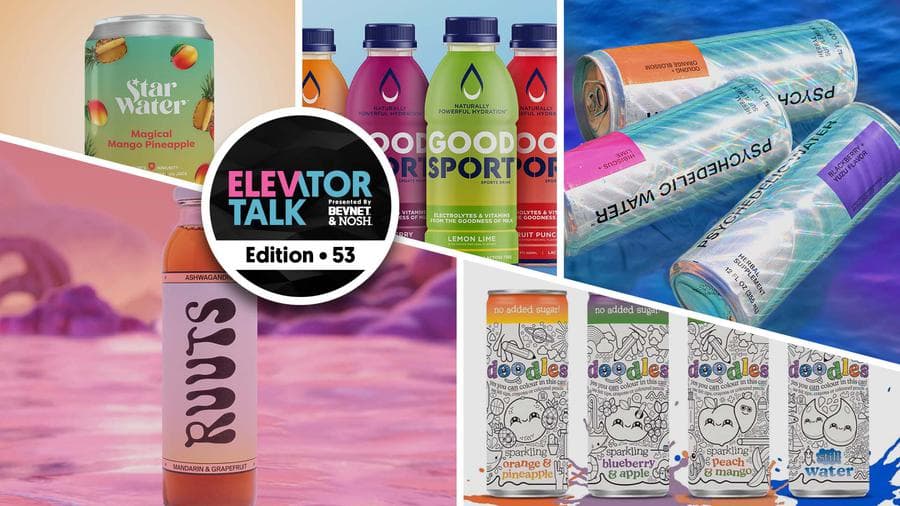
Elevator Talk Episode 53: Psychedelic Water, Starryside, GoodSport Nutrition, RUUTS, Doodles
Transcript
Note: Transcripts are automatically generated and may contain inaccuracies and spelling errors.
Ray Latif [00:06] Hey, folks, I'm Ray Latif, the editor and producer of Bevnet's Taste Radio podcast. And you're tuning into the latest episode of Bevnet and Nash's Elevator Talk, the series that profiles early-stage and disruptive brands from across the food and beverage industry. Today's episode will focus on 5 beverage brands whose entrepreneurs will have an opportunity to hear feedback and advice from our co-host for this episode. That's Mark Gallo, who is a sales manager for contract manufacturing with NorCal Beverage Company. Mark, how are you?
Speaker 2 [00:38] I am well, Ray, and most importantly, I'm well recovered from Expo West.
Ray Latif [00:43] Yes, what a show that was. Uh, I really, I, I forget how fun, exciting, interactive, all of the above Expos can be cause it's been 3 years since our last one, but man, that was a fun show.
Speaker 2 [00:58] It kind of reminded me. Back from my days working for Anheuser-Busch and Heineken, that making friends is our business in the beverage business. So it was good to meet new friends and catch up with old friends as well.
Ray Latif [01:12] Yeah, you referenced a couple of jobs you had in the past. You're now with NorCal. You've been in this business a long time. I've known you for many years, I think going on a decade at least. And, uh, you know, for our audience and for our folks participating today, um, could you introduce yourself in terms of your background and what you do with NorCal?
Speaker 2 [01:31] Yeah, so let's start. For 10 years, I worked for Anheuser-Busch in field sales, marketing, media here on the West Coast, did a small stint with Heineken, and for the past 4 years, I have worked for NorCal Beverage on the contract manufacturing. Side of our business and we have strategically two locations in California, one in West Sacramento, one in Anaheim, and we are a leading producer of energy drinks, teas, lemonade, sports drinks, and better for you, sparkling waters.
Ray Latif [02:05] Yeah, you guys work with uh some pretty amazing brands and, you know, co-manufacturers and co-packers are the lifeblood, I would say, of our industry. I mean, If we don't have you guys, who makes the product itself? So, um, you know, I, I, I'm interested because I know a lot of folks always ask, you know, what's the best way to work with a command, you know, what's the best way to interact with a command that you have, uh, a strong, efficient relationship going forward. Just, I know this is a general question, but what are some general tips that folks, uh, listening today can get, you know, when they are approaching a command for the first time?
Speaker 2 [02:41] You know, I think it's never too early to reach out to establish a relationship with a co-packer. You never know what their technicalities are, what their capacity is, and an onboarding process could take anywhere from 3 to 6 months all the way to 345 years down the road, and due to kind of explosive growth that brands might be seeing, it's something that they should be on the forefront and always thinking, what is my next option to line extend, add additional capacity and whatnot.
Ray Latif [03:11] It's especially important these days, uh, given that supply chain issues are top of mind for every entrepreneur in food and beverage. Um, you know, what are some of the pain points you're seeing right now?
Speaker 2 [03:22] Obviously, I think material availability, especially within cans and bottles, I think we'll have some relief starting in 2023 as all the US manufacturers of cans and bottles, Ardo, Crown, Ball, Plastic Pack, Graham, right, have announced and broken ground on new facilities that will meet the demand that's coming from new beverages.
Ray Latif [03:46] Well, that's good to hear and I'm glad you're optimistic about it because I think there's been a lot of pessimism about that subject over the last couple of years. But I am really optimistic and excited to speak with our five entrepreneurs or the 5, brands whose entrepreneurs we'll be hearing from today. Are you ready to meet our first? I am. Outstanding. All right, let's meet the co-founders of Psychedelic Water, Keith Stein and Pankaj Gojia. Gentlemen, how are you? Hey, Ray.
Speaker 3 [04:12] Hey Ray. Hi Mark. Nice to meet you.
Speaker 2 [04:14] Hello, Keith. Happy.
Ray Latif [04:16] Great to meet you guys as well. Psychedelic Water, I'm familiar with this brand. I've tried your brand. For folks who have not uh tried it or are not familiar with it. Tell us a bit about yourselves.
Speaker 4 [04:25] So, uh, I'll go first. It's Keith Stein here. Um, Ray, we launched, um, Not much more than 12 months ago, and we sort of took the world by storm. We sold about a million bucks worth of product in our 1st 4 weeks. Um, we think we hit the ground running with that sort of success because we knew, Hank and I knew before we launched that um we had We really caught lightning in a bottle here. First, we were launching the world's first legal psychedelic branded consumer product. So we knew that was gonna get attention. And we've really studied the psychedelic area. We're we're very supportive of it. And we recognized that there, you know, there was this great enthusiasm and excitement around the area. Nobody had tapped into it. So we knew that there was gonna be this, you know, great excitement when we launched.
Ray Latif [05:15] And what is psychedelic water? I mean, it sounds like there's a, a functional benefit to it. I mean, again, for folks who are not familiar, is it a sparkling water? What's the added benefit to this product? I mean, what, who are you trying to reach with it?
Speaker 4 [05:28] So we're trying to, we're, we're trying to support uh the psychedelic community. We always talk about how, you know, one of, one of our primary objectives is to shine a spotlight on psychedelics. It's a very important area. Uh, you know, there's been a great focus on cannabis over the last decade because it's, you know, there's been this wave of, of legalization that's coming in the psychedelic area. And we want to spur, spur that growth and that, and, and that trend. Uh, but We, we, we understood that if we were going to do this, accomplish our mission, mission, we couldn't, we couldn't create a product with psilocybin or anything illegal. So we tried to make it as psychedelic as we, as we could get by focusing on our first active ingredient, which is CAA. So, CAA is a primary ingredient in psychedelic water. It's going to, you know, people say That it relaxes them. It's, it's a, it's a very chilling sort of effect, but it, it, it's interesting because it gives you this chill effect with some exhilaration at, at the, at the same time. Um, and P and I were just talking before the show. Uh, we are now, uh, uh, the, the top product, Cava product in the world on, on Amazon. But we're, you know, this product, this brand. Um, and this company is more than about just Cava. We'll be launching various other products. We have a microdosing product that's coming out next month that, uh, is comprised of functional mushrooms. It will be the only legal psychedelic mushroom product of its kind in, in the world. But, uh, Pincus might want to add to, uh, add to my comments about some of the ingredients of psychedelic water.
Speaker 3 [07:02] Yeah, I think as Keith mentioned, you know, with kava we added a couple of other ingredients like damiana and caffeine which sort of boosted the effects of kava itself for the most people when people taste it, as you know, as we sort of market it out, it boosts people's mood. It's it's a great alternative to alcohol, you know, for some people it actually, you know, tingles the tongue when they're having it. So it has a, has a positive effect on people and it's something that you can have. Lots of different settings, um, when you're trying to relax, when you're trying to socialize, when you're just trying to, you know, ritualistically when you want to try and do it on a daily basis. So it's something that sort of suits a lot of different use cases for, for different people as they're doing it.
Speaker 4 [07:47] But we're also very proud that we created this functional product that's gonna make people feel happy. We think it's an alternative to lots of other products out there and stimulants and alcohol that aren't so good for you. Our product is hangover-free and, you know, ticks off so many other healthy, good for you boxes. So we've really created something we're very proud of.
Ray Latif [08:07] Mark, uh, Keith and Pankaj outlined a number of benefits, uh, for psychedelic water or at least a number of consumer groups that would be interested in this type of product. Let's start with this mood boosting, psychedelic enhancing type of function. Uh, what do you think of that market? What do you think of that opportunity, you know, for the beverage market?
Speaker 2 [08:26] It's something that can't be overlooked, right? I think the leading cause right now is within CBD THC. Um, obviously, they talked about kind of mushrooms, psychedelic, and the low dose to that, and so, everybody's looking for that alternative, right? Everybody wants to get out of this hangover, alcohol dependency to have. Fun in a social environment. So, this is right up what consumers are looking for and having bought the product at retail, holding it, I mean, it's got two polarizing things, right? It's got an amazing name that catches you and says, hey, what's this liquid about? Is this, you know, truly medicine in a bottle, in a can? And then the label itself truly pops.
Ray Latif [09:14] Yeah, I haven't seen a label like this uh in a while. It's, um, it's very psychedelic. Um, uh, Keith and Pankaj, you know, how do you set about, uh, creating this type of package design, you know, what did you think was important for it to stand out on shelf?
Speaker 4 [09:29] I, I want to thank Mark for that, for that feedback. Uh, it, it, it makes me, uh, feel good. Uh, it makes me, makes me feel really happy too because we spent almost 12 months developing the holographic packaging, which, which is the first of its kind. We, we think we're the only beverage product in the world with this type of packaging and for a very good reason. It was tough as hell. To figure out. It was like wrapping a mirror around a, a hydro pole. So very tough thing to, to execute on, but we did it. Um, and, you know, we're proud of our name. Uh, we think the name, you know, clearly distinguishes us, which is important because we're trying to not become part of a category, but create a new category here. We, and we have, we have done, done so. Um, and we spent almost as much time on IP intellectual property. I mentioned the packaging, but also Our trademark. We own that word psychedelic around the world. So, you know, not that we're just focused on creating a mode, but in effect, to create one because, you know, we, we have trademarked that word psychedelic, not only for our water category, but for energy, tea, coffee, you name it, we've, we, we've covered it all. So, We're, we're, uh, we're really dedicated, uh, to the psychedelic community, uh, and to, uh, I think we've become in a, in a short time, the number one psychedelic brand in the world and we intend to, you know, stay there.
Speaker 2 [10:51] Hey, Keith, something to that effect when you guys spent so much time developing the label and design. Knowing that there's a supply chain and that you guys use a shrink sleeve, are other technologies available to replicate that design, that shimmer, i.e. digital printing, or will you be, you know, reduced to always using sleeves on that can?
Speaker 4 [11:14] So Mark, you know, it really helped, it, it, it really helps when you have a CEO and that's Page, who's a brilliant guy, who, who not only has his MBA but is also an engineer. So he, he was the genius who actually figured all this out. I, I talk a big game, but he was the brains behind the whole thing. So I'll let him speak to that.
Speaker 3 [11:30] Thanks, Keith. But so there is alternatives, but again it's, it's a little more complicated in terms of how we went about achieving it. As Keith mentioned, we had to work with lots of different manufacturers, try a lot of different techniques to get where we are. Similarly, we have tried some of the techniques which we have as option to do that. So as we look at scaling, you know, it may not be exactly the same, but we can get something very close to the to the effect.
Speaker 2 [11:55] Yeah, no, I mean, it's beautiful. I mean, it's unique enough, right? Just like some of the distribution points that you guys got, as I actually found this at Urban Outfitters. How do you guys think about scaling in that alternative retail environment?
Speaker 3 [12:13] And it's definitely a cool thing, I guess. 11 of the things is, you know, as we talk to people about, you know, that we are in Urban Outfitters or something like that, for the most part, you know, we have been targeting a lot of the premium outlets, the national channel, you know, Irwin Market, Foxtrot, and some of the other independents that we're working with in California, you know, we're looking to launch very shortly in a couple of months in New York as well, so we're growing our points of distribution. Um, but we are seeing also attractiveness from brands like Urban Outfitters, who's not a typical beverage carrier. It's not like something that they do, but just because of the uniqueness of the brand and the innovative, I guess, approach to the market, it attracted them. They reached out to us saying, hey, you know, is this something you would love to carry? It's not something that we do, but, you know, what you have is something unique, and we want to put it into the into our stores. So we're looking forward to working with more brands like that. We're in multiple discussions right now, but You'll see us in, in more and more outlets over the next, uh, over the next few months, basically.
Speaker 4 [13:12] You know, we, we talked about the effect and people love this product and, you know, people suffer from anxiety and that certain issues have embraced this product. We've got MMA fighters, UFC fighters who love this product because it takes the edge off of very intense work. I mean, so many different constituents have, have reached out, reached out to us and, and told us about. How meaningful this product has been. So we know the effect is unique and there's nothing else, nothing else like it in the marketplace. But also really happy about our four flavors. Totally unique flavor profiles. It took us a long time to figure out the effect, but also we, we really wanted to create a product that people would love the flavors.
Ray Latif [13:49] Well, uh, it's been great speaking with you, Keith and Pankaj. Uh, you know, I, as I mentioned, I'm familiar with your product and your brand, um, and as Mark pointed out, you know, your packaging is phenomenal. I'm excited to see where this brand goes from here. Please stay in touch. We'd love to hear more about it as you guys grow.
Speaker 3 [14:05] Absolutely. Thank you very much, Ray and Mark, and uh definitely looking forward to any advice that's coming our way from, from both of you.
Ray Latif [14:12] All right. Up next on this episode of Elevator Talk, we have Erin Fasano and Liz Seeley, the co-founders of Starry Side. Liz, Aaron, how are you? How are you, Ray? Hi, Mark. I'm doing fantastic. Thank you so much for asking. Uh, I, Erin, you were at expo. Liz, were you there as
Speaker 5 [14:30] well? I was. I missed you.
Ray Latif [14:32] I am so sorry for missing you. I, man, the whole show swallowed me up whole. It was just. It's just incredible, just incredible show. But, uh, you know, I'm excited to hear more about
Speaker 5 [14:42] not even a taste, but, but we didn't see you, Ray, next time.
Ray Latif [14:46] Now, I see, I'm gonna get mad because he should have called me or texted me and let me know that you guys were there so I could try your product.
Speaker 5 [14:51] We sent you some. It's, it's on the way. It should be there in the next couple of days.
Ray Latif [14:55] Outstanding, outstanding. All right, so Starry Side, the makers of Starwater, uh, tell us all about your brand and products.
Speaker 5 [15:02] We'd love to. Well, We are on a mission to save kids' creativity, as Starry Side is a new natural brand, dreaming up more inspired drinks and snacks eventually to level up the lunchbox so that kids stay imaginative. And I know you're from a big family, so I think uh this will be exciting for everybody around you. But as, as parents, we want our kids to stay creative so they can discover their unique gifts and help solve the world's biggest problems. When we became moms, we learned creativity has been in decline since the 90s, and part of the problem we think is this old thinking when it comes to what they eat and drink. You guys know as beverage experts, we have so many millions of options. Uh, but the kids' drink aisle looks about the same as it did when we were little, full of sugar. juice boxes that go straight to the landfill. So we set out to create a new kind of kids' drink. And of course, we started with our kids. We have 7 kids between us and tapped into their creativity. For years and years, they only had milk and water, but they saw all of our options. And when they'd get creative in the kitchen, they would take frozen fruit and put it into different combinations to create their own unique waters, flavored waters. Um, and they also, you know, we're really excited about this idea of having something that they could recycle our kids. I'm, I'm sitting in, in bowl. Colorado, our home base, waiting for the snow to fall. And they were wondering, you know, when they did the rare occasion they had juice boxes, why they threw them all away. So we set out and they, they actually created these little paper 3D cans that they would wish for, these little tiny cans that we made real with their help. And so collaborate with kids and parents, along with a friend, fellow parents, and former Ben and Jerry's flavor guru to create the categories for sustainable and functional beverage, which is Starwater. Isn't it cute?
Ray Latif [16:44] It is. Man, you know, I love kids' beverages, um, you know, as you mentioned, Liz, the aisle hasn't changed much, uh, in many, many years, and I think this is one of the few, if, if any, uh, kids' beverages that I've seen in a can before. Mark, um, you know, a lot of beverages, kids' beverages have come to market, not many have been successful. Um, what do you think about Starwater and its potential to scale on the market?
Speaker 2 [17:12] First, I applaud the effort to introduce kids to a healthier option that is out there as I've got two little ones, uh, that water is just not kind of cutting it on its own, and so, uh, having the option now with three kind of magical, mystical flavors would be something that I know they would gravitate. Towards and, you know, kids like to be very visually stimulated and to know that, you know, they can identify with the strawberry, the mango, the root beer on it. It, it just leads them to want it versus kind of parents pushing down on kids and then them kind of questioning, hey, what is that? You know, I think this also Escapes the ageism that has always plagued kids' beverages in terms of either being in a pouch or in a juice box with a straw. So kids are seeing adults wanting cans, and they want to emulate us, so this is hitting on some big macro trends.
Speaker 5 [18:09] Really nicely said, Mark, and uh what we found too, part of the insight was that a lot of parents told us that their kids were stealing their sparkly waters and leaving half the can behind, whether it's it's sparkly water and kombucha, and they're saying, hey, wait a minute. So Aaron and I um also chatted with friends who were pediatric dietitians about the, the amount of water that kids should be drinking. For every year they are old, they need 8 ounces of water. So we designed these in the perfect 8 ounce portion. You know, when you're hydrated and healthy, you have better concentration and imagination. So we also wanted to make sure not only are these zero sugar, you know, infinitely recyclable, adventure ready, you're not going to squeeze the pouch or bag all over and spill it, but also immunity boosting. So these have vitamin C, D, and zinc, and they're just ready for, you know, fueling those creative adventures. We like to see that, say that with Starwater kids can think and drink outside the box.
Speaker 2 [19:04] Question about the label, knowing recyclability, sustainability is of the utmost importance in teaching that to kids at a very young age. Is there a call out on the label to remove the sticker before
Speaker 5 [19:18] recycling? There is a little perforation. Here the kids love to just yep, do the fun noise. Uh, our natural buyers love this as well. And then we're, we're thinking through too all the fun things you can do with these cans. Our kids are doing, you know, bowling, they're putting flowers in these, they're just reusing them as well before they recycle.
Speaker 2 [19:39] Job well done there.
Ray Latif [19:40] That was impressive. Liz was totally ready for that question mark. She's just like, uh, you know.
Speaker 5 [19:46] We've had, uh, several conversations, as Liz mentioned, in the Natural Channel, and we, we sort of realized the power of that visual show and tell when we were chatting with, with the, with some retail buyers. So we're excited to keep those conversations going too.
Ray Latif [20:00] Absolutely. You
Speaker 5 [20:01] know,
Ray Latif [20:02] I, I've seen kids drink out of cans as young as the age of 5, but I wonder who is this product for? Is it for older children? Is it for folks, for kids who are 5 to 18? I mean, is it, is it sort of teenagers or preteens
Speaker 5 [20:16] Yeah. So I'd, I'd say our sweet spot is 5 to 12, but you know, Liz has a 3 year old who's walking around with her Starwater. Actually 2. She was, she was not even 2. Erin, when we started this just, you know, a matter of months ago, she just turned 2, and she does great. Yeah. But what, you know, what we're hoping is that, you know, as, as kids are starting, you know, once they hit school and they see what's in everybody else's lunchbox, and they start wanting the Gatorades and the diet. And the actual sodas, but these are this product offers mom an option to address that ask but not feel so guilty about it. So, you know, I think we really feel like we can range all the we can age all the way into, in fact, we're even hearing some adults when we showed the expo, we heard a lot of great feedback from people who. Didn't have kids at all, who were like, I want this for me, small enough to quench my thirst. There's a lot of excitement around our rock and root beer, which isn't your typical juice flavor. Um, so we're just excited to see, you know, how many, how many different, uh, consumers find it, find it interesting. Yeah, our midday squares pals freaked out about this one. They're root or water.
Speaker 2 [21:21] The question that I had, you know, is Starry Side, it sounds to me like a platform that's gonna be built, beverages come first, food come kind of second. Um, is there a layer to this of, you know, these beverages become functional pieces outside of these remarkable flavors for, for the kids.
Speaker 5 [21:40] Yes, yes, the answer is yes, Mark. We've got a whole pipeline of, you know, the different flavors. We have a, a summer flavor in the works, but also mystery flavors coming up. That's what the kids request. And then other line extensions, sparkly star water, Smarty Star water, sporty Star water. So we have a lot to, to Explore, um, but your point, we recently shared these also with, uh, MBA students up the street at the University of Colorado, and they were saying, I would drink this, this is kind of the new vitamin water just because it is that zero sugar functional element that gives you those added vitamins for the immunity boosting.
Speaker 2 [22:16] Yeah, and I think the 8 ounce package suits kids tremendously, right? If you get into a 12 ounce standard, 12 ounce sleek, 16 ounce, right, then you probably attract a different consumer base, uh, but little kids holding these in, in their hands, they think it's probably the coolest thing that they've drank. They're really excited.
Ray Latif [22:36] I love that 8 ounce can. I, I mean, even for me, you know, when I don't want 1216, whatever it is, 8 ounces seems to be the perfect size. However, uh, when you're thinking about price point, people want to get the biggest bang for their buck. What is the price point for Starwater at this point and are you looking at it as very much a D as a D2C brand right now or is retail, you know, your focus?
Speaker 5 [23:01] So both right now it's only available D2C at Starryside Company.com, um, but when we're talking to retailers, we're actually talking about a 4 pack configuration that would retail for 6699, which is quite a premium in this space, um, and we've, we've talked and debated quite a bit about that, but. Our position or our hypothesis of the brand is that mom's willing to spend $2 to $3 a can on something for herself, like Poppy, and that mom who has who doesn't shop the juice set. So we're actually bringing her back by creating an offering. For her, that makes sense for her family. Right now, she's maybe serving milk or tap water. So we're bringing an option to a category that's really hasn't been revitalized, that we hope that mom can see the, see her sort of herself and her kids' offerings. And the functional aspect will be exciting too, just not for retail alone, but also food service. We've got a lot of conversations around restaurants and even coffee chains, so stay tuned.
Ray Latif [23:59] I will. I am really excited for this brand. I wish we had another half hour to talk to you guys because there's so much more to talk about. Um, thank you so much for taking the time to be with us today. Um, and please stay in touch because I'd love to know what you guys are doing, how you're growing as the year progresses. Um, and please get into Whole Foods because I'd, I'd love to go across the street and go buy a 4-pack for myself, well, I'm sorry, for my kid. Thank you for having us. All right, let's move on to our next guest for this episode of Elevator Talk. That's Michelle McBride, who is the founder and CEO of GoodSport Nutrition. Michelle, how are you?
Speaker 5 [24:36] Hi, so nice to see you. I've been listening for years.
Ray Latif [24:42] I appreciate you saying that. Thank you so much. Uh, and thanks so much once again for joining us on this episode of Elevator Talk. Good Sport Nutrition. I remember seeing your brand, I think it was for the first time, a year and a half ago. Um, really interesting product. Tell us all about what you guys do.
Speaker 5 [25:00] So good sport is an all-natural sports drink that has 3 times the electrolytes and 1/3 the sugar than traditional sports drinks, that's been scientifically shown to provide rapid and long-lasting hydration by harnessing the electrolytes and carbohydrates found in milk.
Ray Latif [25:17] So this is a milk-based sports drink, is that right?
Speaker 5 [25:20] Well, we extract the electrolytes and carbohydrates from milk to make a sports drink. So we have a uh clear sports drink. Milk, many people don't know, is packed with electrolytes, and it has the right balance of carbohydrates that's been shown to provide rapid and long-lasting hydration. So the science has been there, that milk provides more hydration, but nobody has wanted to drink milk before or during a war. Work out because you don't want all of its protein sitting in your gut when you're trying to move around. So we've, um, we are harnessing just the electrolytes and carbs from milk to make this, uh, sports drink with over 1600 mg of electrolytes in every bottle.
Ray Latif [26:05] Now, I made a comment um about whether or not this product is milk-based and um even though you note on the front of your pack, it's from the goodness of milk, I assume there's a little bit of consumer confusion. How are you getting people past that, if there is indeed, as I imagine, some consumer confusion about where you source your functional product, functional ingredients from, that is.
Speaker 5 [26:28] Yeah, you know, it's been interesting. Um, I don't, I wouldn't say that there's, um, consumer confusion. There's been a lot of excitement. And we may change the, the wording on the front of the pack, um, because what people have understood is that, you know, if you can extract electrolytes from coconuts and you can grab it from maple water, then why not be able to extract it from milk, and that's really what we do, you know, ultrafiltration allows us to remove the protein. And you're left with the part of the milk that's just packed with electrolytes and carbohydrates. And so, um, it makes for a great sports drink that's already being used by teams across the NFL, NBA, WNBA, MLB, uh, because it's, you know, also backed by peer-reviewed and published studies to be effective.
Ray Latif [27:15] Michelle, I would agree with you that this is a very exciting product. Um, Mark, have you seen Good Sport before? Are you familiar with this brand?
Speaker 2 [27:23] I have, and when I first heard about it, I ran out and bought myself a variety pack, and the idea that milk and sports drink had a fusion, this is kind of what it is, and it was intriguing. The viscosity threw me for a total loop as it's more on the sports drink. Um, then I, then I melt, but I think the most clever thing that they did to drive that trial, at least from myself, was have four familiar flavors in the sports drink world in terms of lemon lime, fruit punch, citrus, and wild berry. So the flavor got me over the hump of, hey, what is this? Milk inside, uh, and it's delicious. The question that I kind of have is, is this a before game, during game, postgame, or is it across all three of those segments of this hydration category?
Speaker 5 [28:17] Yep, it's across all three segments. That was, that was the whole point. Um, I was looking for a, a natural, uh, sports drink that my children and athletes who, you know, I've grown up with, could consume before, during, and after, and that's why we made it.
Ray Latif [28:34] Michelle, uh, as you know, the sports drink category is dominated by a handful of players. Um, you know, I, I, there's really one brand that's made a dent in that Gatorade, Powerade, uh, dynamic over the past, uh, you know, 15 years, and that's body armor. Helps if you have a founder who has, uh, many hundreds of millions of dollars to invest in a really big partner like Coca-Cola. So, you know, the obvious question is, How do you think you can make a dent in this space, you know, how do you intend to differentiate in a way that really um is easily communicatable to retailers and consumers and also that doesn't represent what the giants in the space represent.
Speaker 5 [29:21] Yeah, absolutely. So, you know, good sport is the first all-natural sports drink that has a body of science behind it demonstrating its efficacy, with more studies um to come. And that is, you know, that's a big factor. You know, when Gatorade launched, uh, when it launched 50 years ago, nobody had heard of a sports drink, and it was the science behind it, the electrolytes, uh, that we learned that we need to help replenish the fluids lost, um, in sweat. And so this is just now another, you know, step up. in terms of the hydration efficacy and we're able to do it with completely, you know, naturally sourced ingredients because milk is this natural source of a broad spectrum of electrolytes. And so, you know, what we're hearing from consumers is that they, they love that these, you know, they're, they're getting this broad spectrum of electrolytes including calcium, um, from a natural source. And so how do I think that we're going to compete? smart and strategically, um, with the right type of investors and by being very strategic and how we roll this out, but so far, um, The, the consumer acceptance and enthusiasm for the product has been tremendous, as well as the brand and what we stand for as a brand. Um, you know, the name Good Sport was very intentional, and we, everything we do, uh, at Good Sport is about keeping good at, at the core of everything we do and so we're a very mission-driven brand as well, which is resonating with consumers.
Ray Latif [30:59] I love the brand name, by the way, uh, trademarking, you, you own the trademark for good sport for beverages? Yes. Wow, that's very impressive. Um, and where are you sold right now? What's your retail distribution footprint look like?
Speaker 5 [31:11] So right now we're in the Chicago land area and we are, uh, launching, um, in, uh, throughout the Midwest this spring and summer. Mark, I,
Ray Latif [31:22] I know you've seen dozens of sports drinks come to market and, you know, some have fared better than others. Um, the research-based approach to, you know, differentiation or communication of your product, um, I think it's also one that we may have seen in the past, but, you know, good sport is definitely unique in terms of how it's formulated. Um, does the formulation, does the research move the needle for you as a consumer and, you know, let's say you're an investor, would it move for you, would it move the needle for you as an investor as well?
Speaker 2 [31:54] I mean, for me personally, it, it would, right? It's becoming that alternative source to, you know, high fructose corn syrup that has built some of the legacy brands, coconut water as a base, you know, set the tone for body armor and other ones that are out there. You've got alternatives using cherries or watermelon to set the base, and so, you know. carving out milk, which is obviously its own big kind of category, and the alternative side, that this is just becoming familiar and you know, I think what Gatorade did right is not just sell the product but sell the science to it. And with that, with the right education, the right strategy from distribution, manufacturing, this has a chance to be very successful.
Ray Latif [32:40] Price point, obviously very important for that sports drink consumer. Uh, how much is a bottle? How are you selling this product? Is it in a multi-pack? Is it single serve,
Speaker 5 [32:48] Michelle? We're selling it in single serves in 12 packs, and we're in the mid-2s, um, you know, with the discount schedule and things like that.
Ray Latif [32:56] I mean, that seems like a reasonable price point. Um, add to the, add to that, uh, you have to really be on top of things when it comes to marketing as well. I mean, I think the social media that you've put out, and I'm looking at your Instagram page right now, um, is pretty compelling, I have to say. Um, how are you interacting with influencers and athletes, uh, to bring them on board, to get folks to spread the word about good sport?
Speaker 5 [33:22] We've really been lucky in that we've had an influx of interest from athletes, from professional to college and with the NIL rules, uh, changing just as they did around the time of our launch, that was very helpful. So there's not a day that doesn't go by that we don't have athletes reaching out to us on. Um, and that's really exciting too, but you know, we won't work with anybody who doesn't love the product and isn't, you know, using the product as a regular part of their, their regimen because we really, the authenticity is very important to us. So that's how we're doing it.
Ray Latif [33:57] You know, sponsorships are so important, seemingly to the sports drink category, um, you know, going back to Michael Jordan and Gatorade, you know, be like Mike, I, I believe that was the, that was the tagline for Gatorade and it's in it's uh work with uh with Michael Jordan. Um, Mark, you know, when it comes to sponsorships in the sports drink, sports drink category, um, you know, where does authenticity live? How do you, how do you represent something that, um, consumers will believe when it comes to sponsorships?
Speaker 2 [34:28] You know, the old school model was that the big brands, you know, just pay for an athlete to be an endorser. Now you start to see athletes become investors, chief liquid officer within these brands and taking a more active role, and it's so much so that they've got the community, they've got the following, that they are already trusted. It's how does the product fit into their world and does it do it. Authentistically.
Speaker 5 [34:58] Yeah, it doesn't hurt us that Ken Griffey Junior, Ronnie Lott, and Thaddeus Young are investors in the brand. No, it doesn't hurt at all, um, and that the WNBA champions, the Chicago Sky, um, you know, we're an official hydrator, and, uh, you know, they, they happen to be drinking GoodSport their championship year, you know, so, uh, none of that hurts us at all.
Speaker 2 [35:17] So Michelle, what takes you guys to the next level from where you're at now, from a regional distribution? What is it that's next?
Speaker 5 [35:25] Well, it's, it's going to be expanding the retail distribution for sure. I mean, that's, that's where our priorities are right now.
Ray Latif [35:33] Outstanding. Well, Michelle, it's been so great speaking with you. Thank you so much for taking the time. Uh, I'm excited for the future of GoodSport and, uh, please let us know how we can help in any way as you continue to grow in scale.
Speaker 5 [35:45] Thank you guys so much. I appreciate it.
Ray Latif [35:47] All right, let's get to our next guest for this episode of Elevator Talk. That's Alex Mallon, who is the founder of RUUTS. Alex, how are
Speaker 4 [35:54] you? I'm good, Ray. Thank you for having me. How are you?
Ray Latif [35:57] I'm doing fantastic. RUUTS, R U U T S. Relaxed with RUUTS is the tagline on your website. Tell us all about your brand.
Speaker 4 [36:05] It was really based off the observation that the ready to drink tea landscape hasn't evolved to the shift in consumer demands. So, what I mean by that is too many brands on the shelf compromise on sugar, calorie count, quality of ingredients, and the actual efficacy of the functional benefits, if they even have any at all. So at the same time, we're also living in a, in a time where we have historic amounts of stress and anxiety, especially amongst younger generations. Millennials set all-time records for stress and anxiety, and Gen Zs have seemed to, to substantially surpass them as well. So then that brings us to RUUTS. So RUUTS is a drink that has zero, none of these compromises. All our products are completely sugar-free, organic and handpicked ingredients. And it's infused with 350 mg of ashwagandha, which is the most trending functional ingredient in terms of relaxation and, you know, anxiety combating. That being said, all of our skews are also between 0 and 10 calories, um, which we're really proud about.
Ray Latif [37:04] Very cool. Um, your branding is pretty striking. It has a psychedelic feel to it, how about that? Um, was that the goal? Was that the intention? Uh, because it, it, it does feel kind of groovy.
Speaker 4 [37:16] Yeah, it was, especially the logo mark of The RUUTS was super groovy. It was honestly completely inspired off the Beatles' Rubber Soul album, so it's right on, right on point with, uh, with your observation.
Ray Latif [37:27] Mark, do you, do you understand what this product is? I mean, you know, if you picked up a bottle, would you understand, um, that it's an iced tea? I mean, is this something that, um, you could reach for on the shelf and know what it is pretty quickly?
Speaker 2 [37:37] I mean, I think that would be the one call out that me as a consumer, if I would just pick this up without having, you know, under the roots or, or next to it, that it's tea, I, I wouldn't know. I obviously understand what Ashwagandha is. And I know it's a hierarchy of kind of the label footprint, so I know it's kind of a calming effect, but I would think it would be beneficial to add some marker of tea or elixir or tonic or something that calls this out so that when you're standing on that shelf, it's clearly identifiable of what the product is.
Speaker 4 [38:11] Yeah, 100%. That's actually definitely a rookie mistake that we made. We've, we've actually already accounted for that with our new production run, so I'll be very excited to share our new labels with your team.
Speaker 2 [38:20] That might be a rookie mistake, but you have a seasoned. Uh, label to me, the vertical branding of RUUTS separates you guys. Uh, it's just something that I've noticed across multiple different brands. The ones that are vertical are eye-catching, appealing, and if you think about it, right, vitamin water was there, body armor was there in terms of vertical branding, and those guys had some pretty nice exits. So, uh, I'm not saying that you're gonna be at, at that scale, but it's clearly a, uh, point of differentiating.
Ray Latif [38:52] You know, Alex, uh, when I think about uh Ashwagandha, I know what it is. I've been exposed to Ashwagandha, you know, if you're in the beverage industry, food industry, you know what it is. Um, for the average consumer though, not so much. It feels like a very natural driven ingredient or, uh, uh, an ingredient that's very specific to the natural channel. Um, is that your focus right now? It's just natural channel? Do you plan to expand into the mainstream or mainstream retailers in the near future?
Speaker 4 [39:18] In the near future, yes, right now, we're really just trying to like really show our velocity through the national channels, and as well as like boutique cafes in in certain local markets that that still fit that same customer demographic. But once we, again, once we just have a bit more timeline of showing high velocity, then we plan to go into more national channels. Mhm.
Ray Latif [39:37] Mark, just like the sports drink category, uh, iced tea, very competitive, um, you know, we've seen a lot of folks get into that space, some with varying levels of success. Um, when I look at RUUTS, I do see a point of differentiation with the Ashwagandha, even more so, I think with the flavors though. Um, do you see the point of differentiation here as, um, you know, as I do, do you think that this brand really separates itself from what's, what we've seen in this category?
Speaker 2 [40:03] Yeah, on two fronts, right? The flavor profile, complexity there along with the ashwagandha, but also being in a glass bottle. That is a commitment usually to uh an elevated experience, or at least that's the Idea within kind of consumers when they're reaching for it and, you know, that's a point of question. Um, are you guys committed to glass or have you started to think about moving into the trendy cans or any other package configuration?
Speaker 4 [40:35] Yeah, we've, um, we've thought about cans. We're not ready to discontinue our glass bottles. We might do, uh, like a, you know, run both, both forms of, uh, packaging. And obviously we've looked into, you know, Tetra pack, um, but for two reasons. One, scale, we're not quite there yet, and, again, we're not quite sure if that's really the best, uh, solution, but we are, we are actively considering new forms of packaging.
Ray Latif [40:56] The other part of this that's kind of interesting is, you know, immunity is a big buzzword as it has been in the past, um, you know, 23 years, um, and I think, you know, you even point out when you're talking about, um, Ashwagandha, it doesn't specifically call it immunity, but it calls out the halo of immunity in terms of functional benefits. Um, how much do you talk about the, the functional benefits of this product to consumers? Are, is that a big reason why they're buying RUUTS?
Speaker 4 [41:26] Yes, it is. We get, you know, on a weekly basis, we'll get a random tag on Instagram of someone buying our drink in our various retail locations, and we, you know, number one question we ask, like why do you choose to buy, buy RUUTS, and oftentimes, like I, I love Ostriganna for my stress and my anxiety. The second reason is actually the no sugar commitment has been another really big driving factor of, um, of reason to purchase.
Ray Latif [41:47] Alex, you mentioned social media, you mentioned Instagram. Um, if I'm going to your Instagram page right now, um, you know, I think the, the grooviness of the label, um, is that what you're trying to represent on social as well? I mean, are, are you trying to create this sort of lifestyle brand experience, uh, as it ties to, you know, as you mentioned, the Beatles Rub Rubber Soul album, that whole sort of And, and I don't wanna use the word psychedelic because we already had a brand on here that was Psychedelic Water, but you know what I'm saying, right?
Speaker 4 [42:15] But groovy is definitely a term that we use internally, and 100%, the Instagram right now is pretty much entirely UGC or user-generated content. You really just wanna show people relaxing with RUUTS and, and enjoying themselves while they're drinking.
Ray Latif [42:30] Mark, you know, when I think of a product like RUUTS, um, if I were, if I were a retail merchandiser, I would probably put it next to iced tea, um, but you can also probably put it next to other functional beverages as well. So,
Speaker 4 [42:44] we actually like to place in the functional section because of our price point. We price out of ready to drink tea, but we're, we're pretty well and competitively priced compared to other functional drinks, uh, so definitely in the functional section.
Speaker 2 [42:55] Hey, Alex, let me throw a curveball. At least from, that is the physical world, a lot of noise is being made in like the digital web 3 NFT. Is this brand and its community ready for that aspect? And have you been spending time thinking about what this brand looks like to connect with those consumers that are interested in that?
Speaker 4 [43:17] Yeah, 100%, but we're being very careful about it, given this was our first soft launch, and a big part of our go to market strategy was to avoid any digital ad spend whatsoever, um, you know, we're, we're making sure we keep it completely organic by engaging people in that community.
Ray Latif [43:32] Alex, I can't recall if you mentioned this. Um, if RUUTS is, uh, 0 to 10 calories per skew, is that right?
Speaker 4 [43:39] Yeah.
Ray Latif [43:40] And is there any sugar in this product?
Speaker 4 [43:42] No.
Ray Latif [43:44] So that's such a, I mean, that's a, that's a, it would be a great call out on the front of the pack. No, I mean, is
Speaker 4 [43:48] that, will that be on the next iteration of, yeah, yeah, it will be.
Ray Latif [43:51] Yeah, I mean, I feel like that is a huge reason for me to, you know, want to reach for a product like an iced tea and especially, uh, you know, given the flavors that you have, if you do have strong flavors, at zero calorie, add zero sugar, um, that's a huge selling point for sure. Um, at the same time, I mean, going back to this question about price point, um, the price has to be right for me to want to pick up a product like RUUTS. I mean, It it is what it is. I mean, there's a lot of competitors out there when it comes to functional beverages or iced tea. What is the price point for RUUTS right now and, um, you know, where, who do you think is the type of consumer that would buy this product at this point?
Speaker 4 [44:33] Currently, we're priced at 399. Our future plans is to get that price down to 249. That being said, our current retail partners are pretty price in sensitive, given that we, we launched primarily through channels like Foxtrot, Airwan, and Juice Press. So we can support 399 right now, and those customers have no issue with that. But again, going forward as we expand through more mass channels, we definitely need to get that price down.
Speaker 2 [44:56] And how do you envision getting that price down, Alex? Is it through, you know, the comman relationship tolling cost? Is it on your supply, material, ingredient sourcing, or what do you? Forecasting that
Speaker 4 [45:10] we plan on partnering with a, with the CPAC facility to help, help. Better our margins, so to speak, and also just as, as our, as we scale, our margins right now are actually pretty, pretty high, given the fact that we're pretty low, low-order run. Um, so I'm not, I'm not worried about our ingredient cost at all or our materials.
Ray Latif [45:28] Well, Alex, it's been great speaking about Roots and learning more about this brand. Uh, this is the first time I've seen it, and I think, uh, even though you are going through a label revamp, I think you've got something great on your hands right now. I can't wait to try it. If you have an opportunity, please send some to our office. We'd love to sample
Speaker 4 [45:43] it be sure to do so.
Ray Latif [45:45] Thank you. Fantastic. All right, our final guest for this episode of Elevator Talk is Alicia Eason, who is the co-founder of Doodles. Alicia, so great to see you.
Speaker 6 [45:54] You too, Ray. Hi, uh, Mark as well. Thanks guys for having me as well.
Ray Latif [45:58] And once again, thanks for joining us. Excited to hear about Doodles and thanks so much for your patience. I know we met with 4 other brands uh prior to this one, but I'm really excited to know more about Doodles. Uh, all the packages, all the, all the brand packages that we've seen in this episode have been pretty phenomenal, uh, including yours. Um, tell us all about Doodles.
Speaker 6 [46:16] Yeah, sure. So, um, Doodles was founded in late 2019, um, and I can never ever take the credit for Doodles and the crazy wacky packaging that we have. Um, it was the idea of, of my son, Alfie, who was, um, 9 at the time. So we were out to dinner at a restaurant, and as usual, I'm, a mum of three children. I always forget something, and it was the activity packs to do. Um, so we were at the restaurant, there was nothing for them to do, and, um, they tried to color on some menus which were laminated, and we kind of got into the conversation is why is there never any drinks, why is there nothing for kids to do? And, um, my husband Lee actually ordered um a, a beer and it came with a glass bottle and a paper label, and I didn't even have a pen, I had an eyeliner. So I passed Elfie the eyeliner and I said, see if you can do something on there, like make that bottle into yours. It was poured into a glass, so it was safe, there was no beer in the hands of children. And um he carried on doodling away. And so as the dinner progressed throughout the evening we got more and more, my kids are very sort of business savvy, they have little businesses, they trade and they do these things between themselves and their friends. And before you know it, we left the restaurant with this big plan of that they were gonna make this project um of a little drinks company. They were gonna sell it into farm shops, our friends have restaurants and boutique hotels. And um yeah, we set to work on it just before um the pandemic hit, so that was early 2020. And um we didn't expect to have the success that we've had to date. Um, we've gone across Europe, we've gone across the UK. We've just sold our just over 22 million cans within 12 months. And now we are packing our bags and boxes up and we are moving over to Texas, which we're super excited about, so we are due to be with you guys very, very shortly and we've got some epic launches that's happening this year.
Ray Latif [48:15] Wow, uh, a lot packed in there, Alicia, and thanks so much for sharing that with us. Did you say 22 million cans sold across the UK and Europe? Yeah, wow. Uh, and you're I've
Speaker 6 [48:26] been running around scrambling for cans. It's been insane. Like it was never expected.
Ray Latif [48:31] I'm sure you are, and you're moving to Texas. What better way to get, uh, a feel for America than to move right into Texas? Uh, I, I think that's a good call actually, um. Uh, Mark, uh, you know, I, I, I talk too much. I, I'd love for you to get the first word on, on Doodles cause, um, I, you know, I, I think it's a pretty, uh, innovative, uh, label for sure, but, uh, you know, what are your thoughts?
Speaker 2 [48:55] The first thing that I would like to understand better is what is that, you know, supply chain for cans manufacturing gonna look like when you uproot and come here to the States? Will you import the brand from the UK or will you start to source and manufacture here locally in the States?
Speaker 6 [49:15] Sure, yeah, so we originally we thought we were gonna be, we, we thought we were gonna have a very slow launch um on entering the US market. And, um, again, um, a brilliant problem to have, but we've had so much, actually, not even us reaching out, but we've had so many buyers contacting us, um, over the past 8 months in regards to stocking the brand, which is outstanding, absolutely outstanding, and we're so, so grateful for this. But really it, it's, it's not, it's not fair to be importing this amount. There's there's just far too much, um, product that we're gonna have to be moving. So we've, we've decided to stage this a little bit easier so I don't become totally gray within the next 6 months, let's just say. Um, so we're, we're having a smaller launch than originally planned, so we've, we've brought over, we're, well, we're bringing in small amounts of stock from the UK, but we've just, um, signed our first co-packing partnership, which is for the, um, East Coast. And then we're looking now to sort of gear our launch, uh, for the West Coast to start within the next 6 months. We're gonna take this one a little bit steady. And really nurture the ground, that our new soil that we're um we're hitting really.
Speaker 2 [50:31] I mean, it's exciting to hear that you've strategically got that East Coast option out there for manufacturing and you're having those conversations with West Coast options as right now, right, the variability and extreme cost of freight to move beverages back and forth between the coast, it's, it's kind of costly and, uh, quite frankly, it's. I would say Put a damper on people's rollout expansion plans. So, that's good. Can you talk to me a little bit more about the interactive label, um, from, uh, coloring, stickering, strength sleeving, I mean, that's the selling piece to kids, right? It's the extra.
Speaker 6 [51:15] Yeah. So when we originally started the brand, as I said, it was going to be very small, it was gonna be almost like sort of table bench canning and, and that's the way we were gonna get. And we were going to wrap the cans in labels, um, and my husband, um, I always say co-founder, but we're really not, it's the children that are the founders in this, but so as workers, my husband is ex-forces, um, and he was in the military and he was an engineer, so he had the idea of working with pipes and using different sprays and technologies and techniques. Yep, so in regards to the camp, we then designed a matte, um, paint, basically, which is really importantly, is BPA free. Um, hopefully you guys can see the can. Um, so the can, ooh, it's printed, it's fully printed. Um, it's kind of like a whiteboard effect is the easiest way of describing it. We looked at obviously sleeving, um, wrapping the cans. We found it was a little bit messy and being a mum, obviously we want limited mess as possible, we, or, and dads too, we don't want them inks or colors everywhere, so this was just the safest, cleanest way to do it. Um, so we have, we're really actually proud of what we've been able to do cos obviously we have created, which is very much something first to market with having a 100% coloring format that you're able to do on the can. You can use, um, felt tips, pencils, and even crayons. Even you can use um like sort of glitter pens and paint pots as well, which is really fun actually.
Speaker 2 [52:43] So when they sit at retail, will they just be completely like a blank canvas?
Speaker 6 [52:49] Yep, so when you get the can um at retail, sorry, these, this is just a showbox, uh sorry. But yeah, they're totally blank, they're in black and white, the only thing that obviously is colored therefore is the, the color around the rim of the can, which is the flavor and the brand logo, obviously Doodles. Everything else is black and white. And we want kids to go out the lines, we want them to make their own world on this can. All the cans have different stories as well, so everything that you see on the top of the cans, um, is everything you'll find in the sky, so rain clouds, we get lots of those in the UK, um, sun, thunder, stars. In the middle you'll always have something which is on the, the land, so we have castles, um, we have different characters. And then on the bottom, we have everything that you find in the ocean, so all the different animals. And the kids, the, the older two, Millie and Alfie, they did this because Felicity was so small when we were starting the concept of Doodles. They, she just loves story time. She, it, it's her favorite time of the day is bedtime because she gets a new story, so they thought, well, we can make a difference. Different story for her every time that we're going through, and she was a baby, so she was just on water and milk at that stage. So she couldn't take the hydration of obviously of doodles. So they incorporated her onto the can by having these different story times um pictured throughout.
Speaker 2 [54:09] No, I mean, I think it's a beautiful concept, right? And it naturally leads itself to great kids or user-generated content to kind of post on social, and it will save, you know, thousands of stacks of papers on parents, you know, tables with their artwork, now it's just on a can.
Speaker 6 [54:31] Yeah, exactly. That's it.
Ray Latif [54:33] Alicia, I love hearing about your family and your family stories, uh, and, and, you know, how this idea of doodles came about. You know, a very poignant moment in that story when you initially talked about the idea of doodles was when you went to a restaurant and I feel like Doodles. It's made for food service. It's made for restaurants. I mean, I feel like I, you know, this is perfect for an Applebee's or a Red Lobster or wherever people, you know, go and eat out at these days. How, how much do you look at that opportunity, uh, in terms of the growth of this brand?
Speaker 6 [55:05] Yeah, I think this is a really great one. So, um, for an example, I'll, I'll pick up as as the UK is one here. So within the UK it was actually, to be really honest, our last thought was in hospitality, which was, which was crazy because that was where this was founded, if, if you like. So, um, we've had some outstanding um conversations and also applications and now we're going on to menu, um, in a lot of, um, actually even one fast food chain, which is gonna be in Germany. As an exclusivity for 6 months. And we have in the UK as well some real high-end restaurants as well which actually normally don't even hold children's beverages on the menu. It's kind of you, they have to take the adults one, but actually, do you know what, we're gonna actually carry your drink because it's so different and it keeps kids' bums on seats as, as I've had back quite a few times, which is really important when you're in a. A restaurant setting, um, but flipping over to the US, um, we've had some, um, great conversations again, in depth conversations with, um, actually one of the chains that you mentioned and hopefully, um, eyes peeled on that one, but we should be looking at a late fall lunch within one of those restaurant chains.
Ray Latif [56:20] We're pretty much out of time, uh, you know, one thing we didn't talk about, which is strange for, uh, a show that's talking about beverages is the beverage itself. Uh, I think we barely, you know, scratched the surface on that. Um, you have 3 sparkling varieties and then a still water variety as well. Um. I guess is the selling point as much about the, the beverage liquid itself is, or, you know, or is it very much the selling point about the label?
Speaker 6 [56:46] Um, to be truly honest with you, when we've had feedback come back in, a lot of the time we've had feedback that's come back from consumers has actually been the beverage inside the can, which. Um, I haven't told the kids that yet because they'd be a little bit disheartened if it wasn't about their can time, but, um, so yeah, a lot of the time it's because the ingredients we've had are just so simple to read. There's really no hidden anythings on there. There's just some really, really good quality, very well, zero nitrate spring water. And um some delicious fruit juice flavors. We have just done some um really interesting market research using Suzie for some data. Um so we've got some really exciting flavors that will be coming out also full time on our steel and sparkling lines as well. So again, always keeping to no added sugar, no preservatives, which is super important to us cos we don't need kids with any more energy than they've always got. You, you understand that one, Mark.
Speaker 4 [57:46] Yes.
Ray Latif [57:47] Gotta keep those bums on the seats and off the table for sure. Absolutely, yeah, yeah. Well, Alicia, it's been so great speaking with you and learning about doodles. Uh, I'm really excited to see the progress that you make in the United States and, you know, the next time I'm at Applebee's, it's not saying that that's the brand you're talking to, but next time I see you go to Applebee's, I hope to see your brand in there.
Speaker 6 [58:08] Sure, that's brilliant. Thank you ever so much, guys, and, and take care. Thanks again.
Ray Latif [58:11] You know, it's so, this show is just gives me so much energy because even though we just got back from Expo West and saw, you know, thousands of brands and saw tons of beverage brands, you know, um, this is the first time I'm interacting with, uh, you know, some of these uh entrepreneurs and, and learning so much about, uh, how they're building their companies and it's so fun, it's so exciting. Um, you know, in a general sense, um, it, it feels like we saw some new plays in established categories and then we saw a couple of brands try to sort of make their own way via new categories as well. Um, You know, what are some of the things that you saw today that really captured your attention? And what are some of the things that you'd want to hear more from the entrepreneurs, um, in terms of their scaling strategies?
Speaker 2 [58:59] I mean, first, let's just say it, right? We are in great hands with the future um beverage entrepreneurs that are out there. They're Uh, strategically building the community first and the product market fit is proven within that kind of segment, and they're carving out small niches and they're finding ways to go from niche into more and I think that's where all of these brands are kind of laying. They've identified their core audience and now they're looking to build out and go to a wider audience and truly test the limits of what consumers are willing to. Drink and hydrate with.
Ray Latif [59:40] Yeah, and, and, you know, it's not just, again, you know, we talked with Alicia about, um, you know, the outside of the can, but the inside of the can being just as important. I think all the brands that we saw today really understood that pretty well. Um, You know, when you talk about packaging, I think there has been such a great evolution, but there are some selling points that matter more than others. Um, you know, you've been in the business and you've seen thousands, if not tens of thousands of labels. Um, you know, what are some of the key selling points that folks need to get across to consumers regardless of the channel, regardless of the consumer?
Speaker 2 [1:00:16] You know, I think the idea of sugar levels or or organicness, those are still on point. Obviously, the label architect of where they put the key star ingredient, the name of the brand, uh, what the actual item is, uh, and then lastly, flavor, people want to be blown away and find that unique selling story through the flavor experience.
Ray Latif [1:00:43] That's a really good point, and you've made a ton of great points in this episode, Mark. Uh, I can't thank you enough for taking the time to sit down with us. I know how busy you are, and it really means a lot to me that you joined us for this episode. Um, for folks who want to get in touch with you, we talked about, uh, Twitter. Um, LinkedIn, is that also a good way to get in touch with you?
Speaker 2 [1:01:01] Yup, that is also another good way to get a hold of you.
Ray Latif [1:01:05] Fantastic. And your handle again on Twitter is uh at Gulo, G U H L O, correct?
Speaker 2 [1:01:10] Correct. And Raya, I do wanna say thank you for hosting. Thank you for everything that the Bevnet community does for uh the food and beverage entrepreneurs. You give everybody a voice and you began, you guys have become that anchor shoulder to come to as a resource.
Ray Latif [1:01:28] I really appreciate you saying that, Mark, because that is, uh, a lot of what we try to do is to be a resource to entrepreneurs and, you know, I mentioned to all the entrepreneurs uh participating today to please stay in touch, let us know how it's going, let us know if we can help in any way. And I really mean that, um, you know, we're here very much to help you. It sounds cliche, but, you know, we are not successful unless you're successful. If we don't have brands to write about, we're going out of business ourselves. So, uh, thank you so much to all the entrepreneurs who did join us, to all the entrepreneurs watching at home or in their office. Thank you once again to Mark, uh, and to our fantastic team at Bevnet Nash and Taste Radio, signing off for everyone. I'm Ray Latif and we'll talk to you next time.