

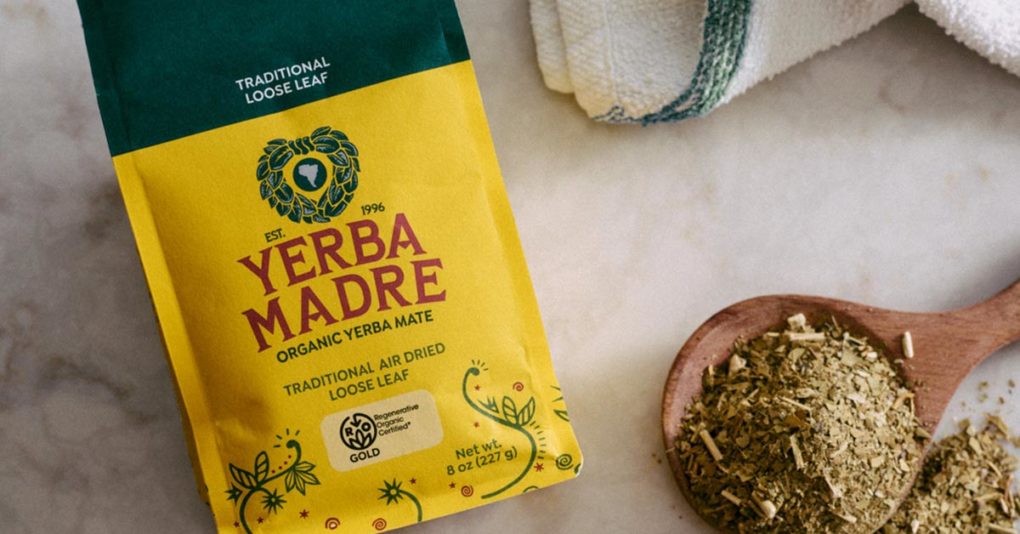
After nearly 30 years in business, the mother of North American yerba mate brands is changing its name.
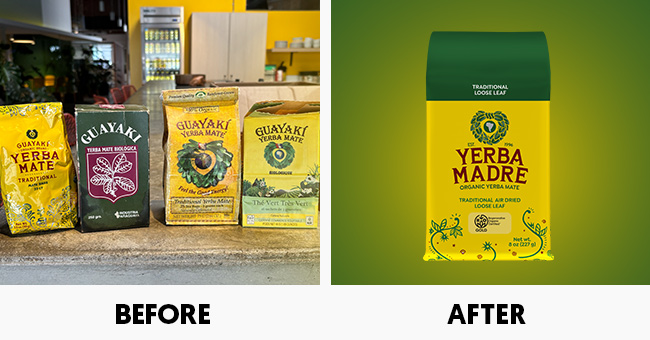
Guayakí announced today a full rebrand under a new name: Yerba Madre. According to the company, the name – which means “Mother Herb” – is intended to be both easier for consumers to remember and more representative of its diverse set of suppliers and partners across South America.
“This rebrand is about coming back to our roots and recommitting to the mission that inspired the company decades ago,” said co-founder Alex Pryor in a press release. “Yerba mate is more than a beverage, it’s a tradition, empowering cultural and ecosystemic relationships. Yerba Madre honors the communities who have grown the yerba mate plant while ensuring the regeneration of the forest and its sacred value.”
Founded in 1996, Guayakí was originally named in tribute to the indigenous Aché people of Paraguay, who have traditionally consumed yerba mate and served as one of the first major suppliers of the plant for the California-based business.
But according to CEO Ben Mand, since then the business has grown its supplier partnerships to over 255 farmers across South America, including Argentina and Brazil in addition to Paraguay. After visiting with a number of those partners, Mand said the company felt the brand name should be reflective of the cross-cultural nature of the business as it stands today.
“They’re very proud to work with us, yet they were not reflected by the name,” Mand said of Yerba Madre’s international suppliers. “In all senses of how we brand this company, we’re trying to be as inclusive and positive as we possibly can.”
As for American consumers, Mand noted that native English speakers have often struggled with the proper way to pronounce Guayakí, with even longtime loyal customers instead employing nicknames like “The Yellow Can” or, more simply, “Yerba.”
“I find there’s always like a hesitation, a pause, and then almost a bit of a stuttering when people try to say the name Guayakí,” Mand added.
Last year, the company sought to subtly drop the Guayakí name, creating a canned line of drinks that simply said “Yerba Mate” in the brand’s signature trade dress, with only a small call out to the parent company name on the label. Mand said that most consumers didn’t even notice the difference – a testament to the strength of the company’s design versus the name.
The first product relaunching under the Yerba Madre name will be the brand’s traditional air dried loose leaf tea, but Mand said that the brand’s 15.5 oz. RTD line is set to follow soon afterwards and will likely have a casual transition in the marketplace as the older Guayakí-branded cans sell out and are replaced by the new, visually similar, designs.
Matriarch of a Category
Despite any difficulties with the old name, the brand has long been the leader in the U.S. for ready-to-drink yerba mate beverages, often presenting in the market as an organic hybrid of tea and energy drinks, and has been experiencing sustained double-digit growth in recent months.
According to Circana, in the 52-week period ending December 29, 2024, Guayakí’s RTD line grew 23.3% to over $206.6 million in U.S. retail, MULO and c-store accounts. The next largest yerba mate brand, PepsiCo’s Yachak, shrank by 12.7% to just $11.4 million in the same period.
That performance boost follows a transition away from a semi-experimental self-distribution model it dubbed the “Hacedor” program and back to a more traditional DSD network, which includes national coverage by Anheuser-Busch InBev houses, that was begun during the tenure of previous CEO Stefan Kozak and completed earlier this year.
Mand assumed the CEO position in spring 2024, coming to the business from coconut water brand Harmless Harvest (another organic beverage maker with an intricate international supply chain). Since then, he has set about reorganizing the company to improve efficiency and drive growth.
Mand said Yerba Madre has reorganized its innovation team while also working to scale its marketing and sales operations, emphasizing more event and in-store activations and working to develop new products that can appeal to both existing and first-time consumers.
On sales, one of the big questions facing the business is how to get Yerba Madre into more independent and “non-traditional outlets,” Mand said.
“Unlocking those opportunities are pretty important. So,we are very confident that we can really start to grow this business in a much more dramatic way.”
From the operational standpoint, Mand noted that the company has identified “a number of ways’ to simplify its supply chain, “which has the beauty of really managing costs in a much more effective way, but also really reduces miles, reduces packaging and things like that that have a positive impact from a greenhouse gas and environmental standpoint.” That shift has included reassessing the location of manufacturing, how finished goods are stored and fulfillment.

Madre’s Mission
Continuing to support the brand’s environmental and Fair For Life missions have also been vital goals, and Mand said he believes the rebrand will help to maintain that giving back element of the business which makes it a “force for good.”
At Harmless Harvest, he said he aimed to “double down on impact” by financially supporting farm partners. At Yerba Madre, the company sometimes pays double the market rate for its yerba mate supply in order to both ensure good relationships with partners and that they are able to make a proper cost of living.
It also grants Yerba Madre a competitive advantage over many local competitors in South America who aren’t willing to pay as well.
“In the grand scheme of things of yerba mate in South America, we’re still much smaller than any of the others,” he said. “But as we continue to grow and as I look to the future, I would imagine at some point, others will not be so happy that we’re paying such a premium, but it’s something that we think is important.”
With the macroeconomic environment rattled by Donald Trump’s new tariff policy, Mand also believes that the strong relationships with suppliers will help Yerba Madre navigate difficulties and disruption.
“Whether it’s tariffs or whatever, at this point I’m very used to dealing with all sorts of disruptions in the system. It’s just another disruption,” he said. “What I focus on is driving a lean, efficient supply chain. So, we are unlocking millions of dollars in savings just by running our business more efficiently, which then allows us to either address tariffs, or, in this case, invest in marketing or whatever we need to do.”
Mand did not say whether or not the brand may take pricing action to deal with increased costs, and said they are simply in “wait and see mode” with the tariff situation.
But regardless of economic headwinds, Yerba Madre appears positioned to continue driving growth on the back of increased demand for natural products, clean energy and convenience in the U.S.
“Consumers are increasingly recognizing that with what you eat and drink, you’re building a person,” he said. “Your health relies, in some part, on what you eat and drink and so this is just a more natural, aligned with Mother Earth, way to find some energy. So we think it’s positioned perfectly.”