


Is Product Reformulation Food and Beverage’s Best Kept Secret?
Food and beverage manufacturers may be embracing cleaner ingredients, but they’re a little more hesitant when it comes to talking about it.
Food and beverage manufacturers may be embracing cleaner ingredients, but they’re a little more hesitant when it comes to talking about it.
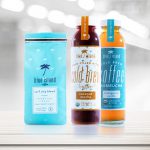
Chris Hopkins wants to take you on a tropical vacation. His mode of transport? Coffee. A longtime beverage sales executive, Hopkins recently launched Blue Island Coffee, a brand designed to carry consumers “away from their daily routine through coffee innovation.”
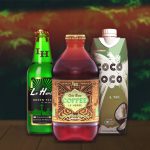
Cannabis beverage manufacturer Le Herbe wants to help consumers get their buzz faster, and has partnered with ultrasonic liquid processing company Qsonica to develop new methods of extraction, preservation, and processing of drinkable cannabinoids.
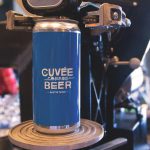
Cuvee Coffee’s crowler machine is finally free from the clutches of the Texas Alcoholic Beverage Commission (TABC).
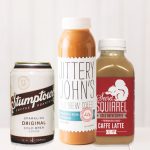
Given the investments into a cohort of cold brew companies and the pervasiveness of the new style, it’s likely that stores and distributors are going to need to find room for both clean and sweet cold brew styles. Thus far, it’s been left to individual companies to carve out their own philosophy towards indulgence.

Raisman, a native of Needham, Mass., discovered Cheribundi two years ago and integrated the drink into her daily exercise routine for post-workout recovery and sleep.
Earlier this month, State Senator Bob Wieckowski, a Democrat, introduced California SB 504, a bill that would require warning labels on all food containing synthetic dyes, including those sold in restaurants. If passed, the law would be the first of its kind in any state.

Zoe Leavitt, Retail & Food Technology Analyst at CB Insights, led the online presentation, which explored recent investments, current trends and forward-thinking innovations in the food and beverage industries.
Until more consistent sources of “ugly” produce are made available and processing is subsequently implemented on a larger scale across the industry, smaller, more regional companies will likely be leading the way.
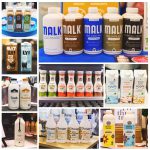
In this video, BevNET’s John Craven and Ray Latif examine current trends in the dairy alternative category through the lens of the product developments on display at the recently-concluded Natural Products Expo West 2017.
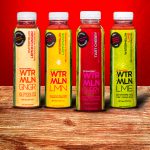
Great taste will always be paramount, but several brands that use crops like coconuts, bamboo and watermelon are taking a closer look at upcycling, the practice of using discarded waste and byproducts from the production process, as a way to promote sustainable farming practices and responsible environmental stewardship.

As numerous clinical studies confirm the gut benefits touted by brands, probiotics’ popularity with consumers has rocketed and the inclusion of these tiny gut bugs in beverage has sent waves through the industry.

The most well-funded food and beverage start-ups by state include big names, Essentia signs Periscope as its first creative AOR, PepsiCo pulls 12-packs and 2 liter bottles from Philadelphia, and Forbes lists its top female leaders in food.

Included in this edition of the BevNET Podcast are interviews with Dirty Lemon's Zak Normandin and Alpha Dominche's Thomas Perez, exploring how outside-the-box thinking shaped their respective companies.