

Having weathered COVID’s upheaval to the office coffee market, New York-based Wandering Bear has hit its stride as a DTC-centric brand since the height of the pandemic, building a healthy business online selling a wide portfolio of black and sweetened-but-uncreamed SKUs in multiserve cartons and bag-in-box fridge packs.
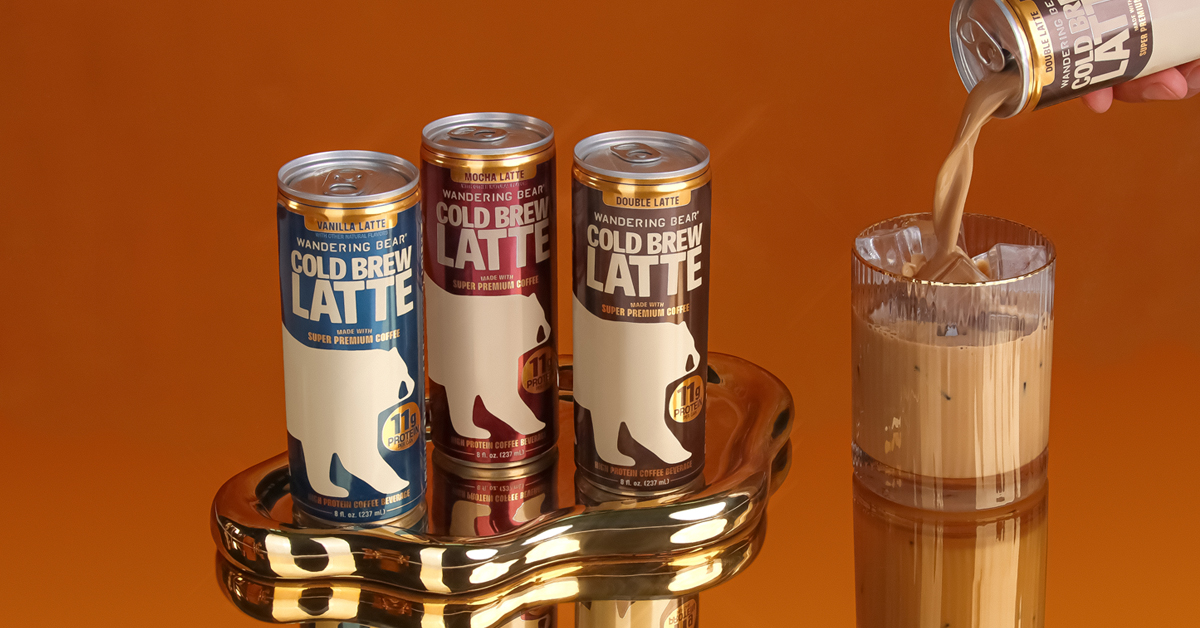
That model has allowed the brand to go wide on indulgent and creative flavors, but deeper product innovation has been on hold, until now. Wandering Bear’s first-ever canned drink – a dairy-based cold brew latte enhanced with 11 grams of protein per 8 ounce can – arrives today online and exclusively at Whole Foods Market locations.
With the business back on solid footing, co-founder and CEO Matt Bachmann and his team began exploring where else the brand could go, both from a formulation and conceptual perspective; at that point, protein wasn’t a fixed destination, Bachmann told BevNET during a recent visit to the company’s offices outside Boston.
Drinks that replicate the coffee shop experience remains Wandering Bear’s North Star, he said. But unlike previous detours into single-serving lattes made with coconut milk, this time Bachmann found inspiration from dairy: specifically protein isolated from ultra-filtered skim milk, which provides the desired nutrient profile and mouthfeel without impacting taste or wildly inflating the calories.
An 8 ounce can contains five to six grams of cane sugar and no saturated fat, plus 100 calories and 140 mg caffeine. The new line comes in three flavors: Vanilla, Mocha and Double Latte.
“The mass market is still consuming these really, really sugary drinks, and most of the products on the market that have been launched are ‘less bad’ without being actually good,” Bachmann said. “The goal was, how do we get to the place that we need to be on taste, make something that’s actually good, and try to meet the consumer where they are?”
Wandering Bear isn’t exactly muscling in on the existing protein coffee set; at just 11 grams per can, it’s dwarfed by products from Super Coffee (25 grams for its Protein+ line), Slate and Starbucks (both 20 grams each). It’s not playing specifically to athletes, like Throne Sport Coffee (10 grams per 325ml can), either.
Rather, the brand’s credibility comes from its specialty grade, super premium cold brew, and it’s approaching the category from a coffee-first perspective: on the package, the callout for “Cold Brew Latte” stands higher and more prominently than “high protein coffee beverage” on the bottom.
Although Wandering Bear’s initial goal was simply to introduce dairy to its offerings, in the time between beginning the project and its launch Bachmann said he witnessed the explosion in protein demand, making the timing of the rollout coincidentally appropriate.
“I don’t think most consumers are really looking for protein drinks as a replacement for their coffee,” he said. “So we didn’t go to create a protein drink. We went to create a latte.”
Protein may be a driving force behind current diet trends, but Bachmann sees its momentum as indicative of rising consumer interest in nutrient-dense, nourishing food and beverage. That idea steered decisions around the product’s development: along with the desired mouthfeel, the use of high-oleic sunflower oil adds two grams of monounsaturated fat (the same heart-healthy fat from olive oil) per 8 ounce serving.
“The ultimate goal in fusing these things became how do we create the latte that tastes the way we want it to, has the mouth feel of a coffee shop latte – creamy, not watery – and then do so with the best nutrition panel possible,” he added.
As a chainwide Whole Foods exclusive, the product is expected to hit the mark with shoppers seeking premium nutrition; it retails for $3.99 per can. A 32 ounce carton will also be available online from the Wandering Bear site and at partners like Thrive Market and Imperfect Foods.
Back from the Brink

In 2019, Wandering Bear had found modest success in retail and online, but its bread and butter was the office channel – making up over 75% of the brand’s sales. Then, almost overnight in March 2020, that business dried up to nothing.
Because nearly all of the revenue coming into the company at that time was from office accounts, Wandering Bear cut back from 5,000 retail doors nationwide to 500 in order to drastically cut spending and save the company. It then began investing heavily in ecommerce, with DTC and Amazon becoming the major pillar holding up the brand.
Flash forward to today, Wandering Bear’s office business is now larger than it ever was pre-pandemic, but it’s no longer load-bearing for the brand. Direct-to-consumer makes up roughly 50% of sales, Bachmann said, while retail grocery is around 30% and office and foodservice the remaining 20%.
Along with Whole Foods, Costco and Sprouts have become major partners for the business, with an even bigger support push now backing the latte launch.
“This is such a premium product at a premium price point in a really, really constricted set,” he said. “No matter where you go, you have to be so thoughtful about how you invest behind it. What we’ve done today in grocery – it’s easy for me to envision a much more expansive world of distribution with the canned latte and, to me, it belongs anywhere the consumer is.”