

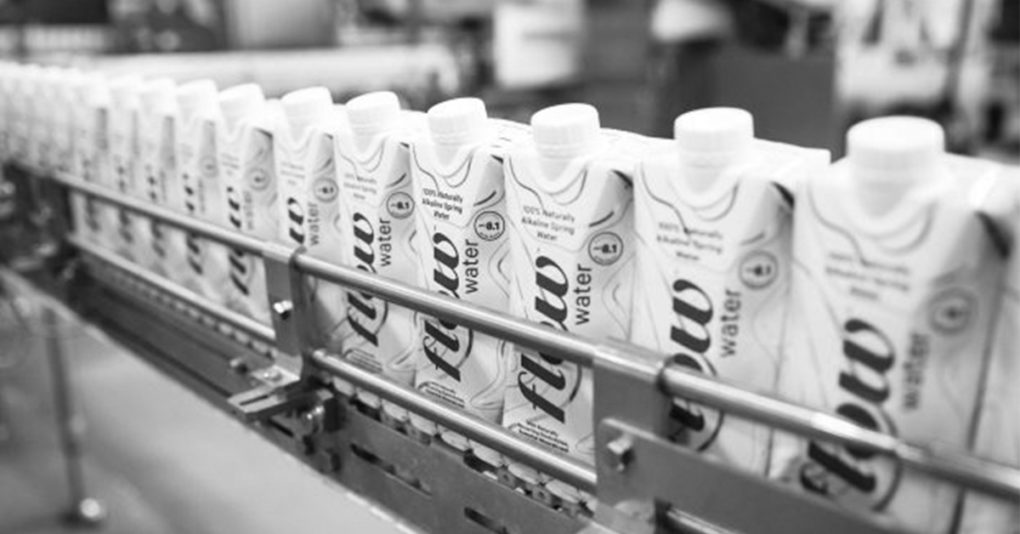
After years of challenging earnings releases and high losses, the company behind beverage manufacturer and water brand Flow Water was foreclosed on last month by two of its creditors. While that development would be bad news for any brand, the dire financial situation begs a bigger question beyond one lone bottled water: what’s going to happen to all of Flow’s co-packing customers?
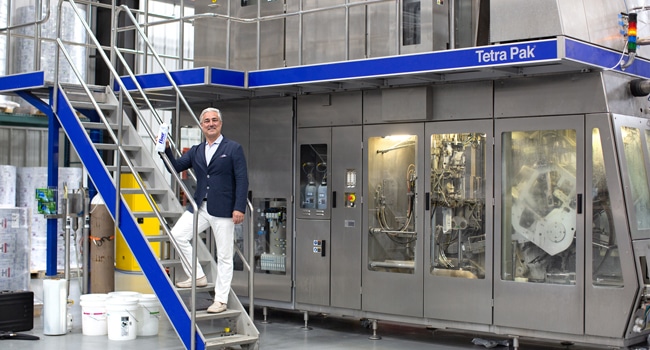
After all, Flow’s Tetra Pak-capable manufacturing operation in Toronto supplied much of the company’s revenue, co-packing brands including alcoholic punch maker BeatBox and functional hydration brands Joyburst and BioSteel, among others.
Earlier this week, Flow entered a support agreement with creditors NFS Leasing Canada Inc. and RI Flow LLC to transfer ownership of the business and its assets to the firms. The lenders also agreed to provide bridge financing that will keep operations running during the transition – which ideally should come as a sigh of relief for brands dependent on Flow’s production.
The situation remains particularly fragile, however: Flow is one of a limited number of manufacturers capable of producing numerous sizes of drinks in Tetra Pak cartons, and a shutdown could leave some customers stranded if they cannot locate an alternative.
Always Be Prepared
According to Pete Grego, a corporate vice president of Nor-Cal Beverage Co. with over three decades of experience in food and beverage manufacturing, impacted brands should have already been seeking backup co-packers by this point and that producing a beverage in an uncommon packaging format always carries these kinds of risks.
“Anytime you have a co-packer that is packing in a unique package like that, I think brand owners have to be sensitive to what the network of that type of package is in being able to source product availability,” Grego said.
In particular, the 500 mL Tetra Pak carton that Flow can package is harder to come by in the manufacturing world than smaller 350 mL packs, although Flow is far from the sole producer.
“You have to be aware of these types of things, because you have to be able to pivot,” he added. “I mean, you can’t take a brand like BioSteel or these other brands that are out there in that package and all of a sudden completely displace them in the market.”
Prior to the crisis at Flow, some brands manufacturing in 500 mL Tetra Pak had already made the transition to alternative packaging formats; St. James Iced Tea, for example, made the leap into an aluminum bottle with its latest refresh. But Tetra Pak is still becoming an increasingly popular format and the Tetra Pak company reported 2.6% net sales growth last year to over €12.8 billion (or around $14.8 billion).
While it’s cumbersome and never welcome to have to change a co-packer suddenly, Grego did suggest that savvy brand owners could still use this as an opportunity to find ways to improve their business, noting that there could be unrealized capabilities to streamline distribution.
“Right now the game is getting the product produced as close to where the consumer demand is,” he said. “In theory, if you were a brand that were co-packing at Flow [in Canada] and you found that a lot of your customer base was in the Southwest or the West, maybe it makes sense to go to Mexico and look and bring it from South to North and fill where the biggest demand is.”
Navigating the Foreclosure
Ensuring you have manufacturing lined up is only part of the struggle in this particular scenario. Safeguarding your inventory and your investments during a foreclosure process is the other key element, said Brandon Hernandez, senior partner at Whole Brain Consulting.
While every situation will be different, it’s important to recognize that a creditor assuming control of a manufacturer does not mean they will be running the business in the same way as the previous leadership team, according to Hernandez.
“There is that aspect to it of the unknown,” he said.
In some cases, a company could be released from their contract with the co-packer early during a foreclosure, which can turn into an invitation for chaos if brand owners aren’t prepared (or even if they are prepared).
“In this instance, if I have raw materials that I own at the facility, how am I going to prove that?” he added. “Are they going to let me come and get it? If I have material, if I have packaging that I own, what is the opportunity for me to get my stuff out of there? How hard are they going to make it on me to do so?”
While there’s no sign that this will or will not happen with Flow, creditors seizing ownership in a foreclosure will frequently capture inventory, leading to an audit that can take months to complete.
Brand owners, Hernandez suggested, should feel free to be present with their co-packing partners and ask questions regularly regarding the health and direction of the business. In Flow’s case, it was a public company allowing more direct insight into its financial situation via earnings reports, but even with private co-packers being on site and forming relationships with the teams is an important part of doing business.
“Now, if in doing so you get the feeling ‘I need to be here all the time,’ you’re in the wrong place anyways,” he cautioned.
One Brand’s Firsthand Experience
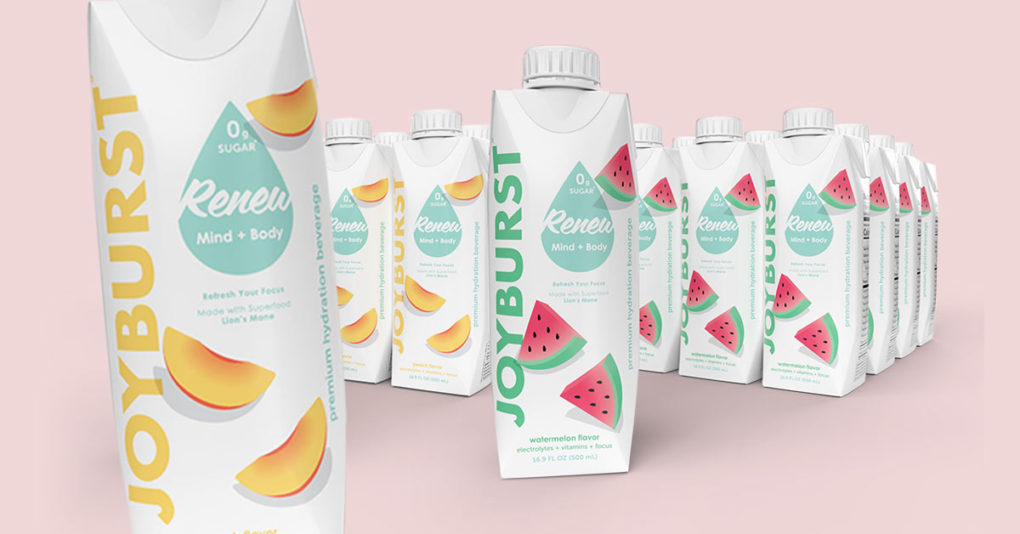
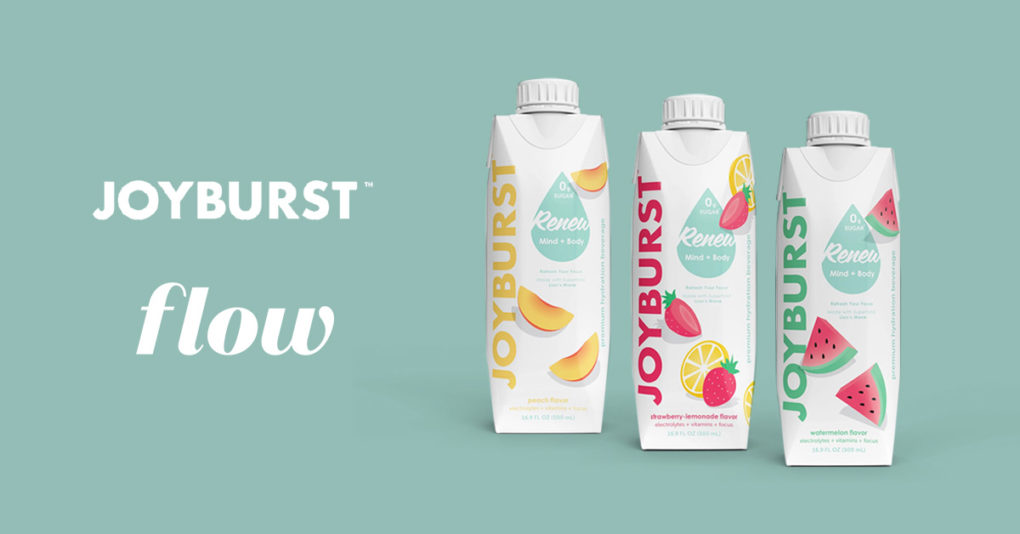
Brad Woodgate, founder and CEO of hydration beverage brand Joyburst and The No Sugar Company, is a copacking customer of Flow and said that he heard about the foreclosure deal at the same time as the public, but quickly received a call from the company after the press release went on the wire to assure him operations would be continuing.
However, even with the company’s contract with Flow still intact – for as long as the machinery is running – Woodgate said he is working to source additional copacking capacity from other companies.
The disruption comes at a make-or-break moment for Joyburst, as the brand is rapidly gaining traction in the U.S. market, thanks in part to a collaboration with Disney to create co-branded cartons. Woodgate said the company has grown over 100% each year for the past three years, and is working to upscale its production.
Woodgate said he was aware of issues with Flow ahead of time, noting their numerous quarterly earnings reports that showed large and consistent financial losses.
“We’ve been concerned for years,” Woodgate said.
So when the other shoe dropped last month and Flow officially announced the foreclosure from its creditors, Woodgate said he was ready to handle the situation and ensure minimal disruption to Joyburst’s operations.
He noted that he tries to have redundancies built into manufacturing at all of his various CPG businesses and this summer secured an additional copacker in Mexico, for both Joyburst and The No Sugar Company, which is capable of producing 500 mL Tetra Pak cartons.
“We feel relatively confident that if we had to completely pivot in terms of [Flow isn’t] able to meet capacity or meet their agreement, we have an additional supplier,” he added. “Having said that, for all intents and purposes we’ve liked working with Flow. We like, specifically, some of the personnel there that we work with and we hope that what they’re saying to us is correct.”
Woodgate echoed Grego’s concerns that Tetra Pak manufacturing is far more limited than other packaging formats, and said he has considered moving to alternative packaging options if the situation called for it.
However, he added, he’s optimistic that growing interest in the Tetra Pak format is leading to other co-packers looking to add more options for the cartons.
Woodgate also complimented the Tetra Pak team itself, noting that the company has been “really interested” in growing its business in the hydration category and that “they’ve been trying their best to lead the charge, giving favorable terms to manufacturing facilities to make the capital investment to get into this space.”
Meanwhile, Woodgate said, it’s up to Flow to prove they can match the demand.
“By contract we have to fulfill, until told otherwise, our commitment,” he said. “What we have told them is that we are well beyond the commitment … of 20 million [units]. We’re meant, we’re on pace for 50 million, it’s a significant amount, and they’re going to have to show us significant improvements and stability before we can say, ‘Hey, the additional volume can come your way.’”
BevNET has reached out to Flow for comment on this story.