Search across the BevNET CPG Media network including BevNET, Nosh, Brewbound, Taste Radio, Nombase and CPG Jobs.

Office Hours: Building a New CPG Workforce
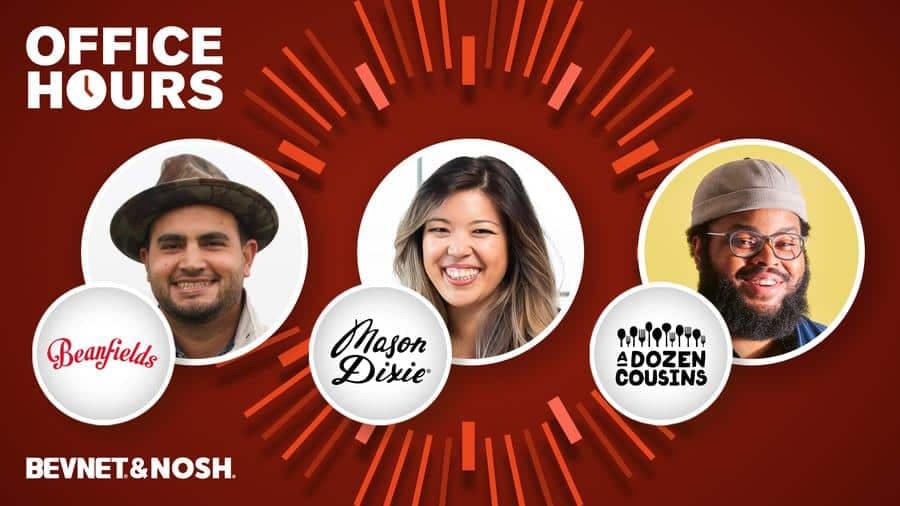
Office Hours is a one hour live call-in show to help food and beverage industry professionals find answers in uncertain times. On Tuesdays at 3PM ET, we're joined by industry experts to field questions from the entrepreneurial community.
Office Hours is an exclusive show for subscribers of BevNET and NOSH. Subscribe today to gain full access to our reporting, educational content and virtual experiences.
Transcript
Note: Transcripts are automatically generated and may contain inaccuracies and spelling errors.
Jeff Kleinman [00:14] Hello and welcome to the latest episode of Office Hours, the show where we mine our connections for strategy and advice on your behalf. I'm Jeff Kleinman, the editor in chief of Bevnet, and today's guests are the founder and founding board members of a new organization, Project Potluck, whose mission is to build a ladder of opportunity for minorities in the food and beverage business who've long faced systemic issues around hiring, fundraising, mentoring, and other areas that are creating that are key to creating both successful companies and successful careers in the CPG industry. This is the kind of goal that many believe the food industry has long needed. I've had many conversations over the years about the fact that the CPG business has done a better job building businesses around foods co-opted from the kitchens of racial and ethnic minorities than it has in creating businesses owned or led by members of those groups themselves. As with many opportunity gaps, the problems are of connection, access to capital, and also lack of intentionality when it comes to countering bias-laden systems that uphold the sense of division and otherness for non-white entrepreneurs and employees of businesses of all sizes. And I know as I sit here that I'm as much of the problem as anyone. I come from a privileged background, due to the color of my skin, which has allowed me to avoid so many obstacles that are in place due to the bias inherent in so many of these systems. And trust me when I say, I myself am pretty lousy when it comes to overcoming obstacles. We know the system isn't fair, and we all have to work to change it. But one interesting. aspect of Project potluck is that it's coming from a place that isn't as tinged with the negativity and cynicism that I'm personally expressing right now. I can tell you this because in trying to set up this discussion with the founder, Ibrahim Bashir, the founder of a dozen Cousins, and his founding board members, Arnulfo Ventura, the CEO of Beanfields, and Asha Abelhisa, the founder of Mason-Dixie Baking, there was a lot of work done to make it clear that this organization did not form. In reaction to the social upheaval and protest that defined the summer. It had been On its founders' minds for quite some time. It's about change, of course, and it's picking up from the threat of inequality of opportunity that creates the problems it's trying to solve. But it relies on the business experience and community smarts of its founders, who've broken down the problem into areas of opportunity, like the good business people that they are. So we have the opportunity to hear their views on the problems that may be limiting opportunities for people of color in the food and beverage industry. Which ones they're taking aim at. And what they think true change will look like in the end. Ibrahim, Asha, Arnulfo, welcome. Thank you for joining us. Uh, I, I'm hoping that you can start off by telling us how Project Potluck got started.
Speaker 2 [04:23] Yeah, thank you for having us as well. We're, we're pretty excited to be here. I, um, you know, I'll, I'll start just by sharing a little bit of the overview of how we came to be and then, you know, I'll invite the other board members to, to jump in. Um, the, the program, as you started to allude to it, we really started to come together probably in March or April of this year, um, and it really started with some basic facts, right, which is that if you look at the US population, about 40 to 50% of the US identifies as, as being a person of color. Depending on how, uh, what data source you look at. Um, but then when you look at the CPG industry, whether that's board representation, uh, leadership teams, founders, those numbers start to drop off pretty, um, pretty quickly, right? And so the whole organization really started around that singular goal of how could we close the disparity between the people who are leading and forming companies in this space and the population at large. Um, and so I wanna On kind of a listening tour, probably for about 60 days. I was talking to fellow founders, um, leaders in this, excuse me, leaders in the space, um, board members, uh, HR recruiters, just trying to understand like why do we think the teams look the way they do, what do we think some of the root causes are, um, and kind of three clusters started to emerge that ultimately then became the pillars for the, for our program. Um, you know, the first one that kind of started to come out as I spoke to founders and others working in the space was this question of just like access, right? Um, they felt like, man, you know, if I can get an intro to this person or, uh, someone who I could ask this question to or, um, you know, some of those things that just, it feels almost like there's a wall between them and, and all the cool stuff happening, um, they felt like that would be a changemaker and so that kind of gave birth to our mentorship program which we can talk about a little bit more. Um, a second theme that emerged with this question of just belonging and feeling welcome, you know, um, and there's certainly no, no blame on any individuals, but I think if you go to a lot of events in the space or if you're, um, doing business in the space, it's very unlikely as a person of color to see a lot of people who look like you, right? Um, and so I think sometimes you can get that subtle message that Is this space for me? Am I welcome here, right? Um, and so that then became the second cluster of work that we do around events and community building, um, and just wanting people to have the sense of community and comfort and welcomeness, um, that I think a lot of us feel in this space and appreciate in the space. So that became kind of the second pillar. Um, and then the last one was, was really tactical, which was like I spoke to so many people in HR and recruiters who were saying, man, we want to build more diverse teams. Sometimes people are specifically coming to us and asking for diverse talent, but we don't know exactly how to deliver it, right? Um, there's not like an easy database to You know, search people by race, by ethnicity, and, and for good reason, of course, but um we felt like we could help overcome that a little bit and that ultimately then became this, this digital community pillar um that for us really lives on email and LinkedIn. Um, but the idea was if we could create a place where people could just raise their hand, you know, share how they identify, let people know that they're interested in growing their careers in the space, then, you know, we feel like we can be a matchmaker of sorts between those that are looking for talent and those that, um, that have it. So that at a really high level is kind of how the organization came to be. Um, you know, Asha and Arnulfo, uh, we all met earlier this spring at a gathering of, of CEOs of color and, um, you know, we started talking about the idea. I think we all just, they both sparked to it and, and, and felt the same passion that I did and so ultimately came together as the board and, and it's been a fun couple of months since we built it out.
Jeff Kleinman [08:01] Was there anything in your individual careers or experiences that uh caused that spark to uh to spread?
Speaker 2 [08:17] Yeah, you know, I'll start and then I'll turn it over to these guys. I'm sure they'll have an answer as well like, you know, I always joke with people that um I've basically been, been in this, on this journey since I was like 17 years old, right? Like I grew up in Brooklyn. Um, my high school was literally 99% minority, right? Predominantly black and Latino. Grew up feeling very comfortable, feeling this great sense of community, loving, loving the, the environment that I was raised in. Went to the University of Pennsylvania, which I loved, but immediately became a very, very small minority on that campus. And so really since the time that I got to college, I feel like a large part of my academic and professional journey has been Creating this idea of comfort, community, belonging for people who look like me and, and so it was just a natural extension to do that work here at CPG, you know, I started my career in this industry probably about 10 years ago. Um, and so it's felt like home to me for a long time, but I know that there's a lot of folks, um, that it doesn't feel that way or could feel more, more warm and welcoming and so, uh, you know, the, the, the mission of what we're doing really spoke to me personally.
Jeff Kleinman [09:22] All right, so it's about building a community that you can take with you. Into this industry. So that it's not just you penetrating it.
Speaker 2 [09:35] Yeah, I think that's part of it. I think a part of it is wanting that sense of community for myself and others. I think there's also a part of it of like what is just, what is fair, what should the product landscape look like? What should our retail shelves look like. I think there's a lot of the business side of it that's important as well, which we haven't quite dug into yet, but, you know, I wouldn't want to discount that part of it either, I think. And we have a lot of great retailers here. On the call, you know, at the end of the day, we all benefit from having robust product sets that speak to a, a wide range of consumers that solve different needs, that are designed with empathy, that are designed with innovation. I think at the end of the day, really homogeneous things generally don't, they don't last over time. That's not like the way of nature, right? Um, and so I'll pause there.
Jeff Kleinman [10:19] Asha, um, was, for you, was it something environmental or something personal, uh, that, that made you wanna get this organization started?
Speaker 3 [10:31] Um, I'd say both, right? I mean, particularly Project Potluck. Um, when, when I first met Ibrahim and he kind of discussed the principles he was taking on, the first thought in my mind was that it was very tangible, that we could achieve the goals that he set out in this plan very easily, because the reality is systemic racism and fixing it is a huge problem, and it's easy to get overwhelmed in trying to tackle all the different ways that systemic racism keeps people down. So for me, I thought it was really um Very organized, very tangible and goal-oriented. So personally, I thought the, the mission of this group, sorry. Sorry guys, um, thought the mission of this group was something that I could definitely sink my teeth into. Obviously we're all CEOs and, um, some of us are founders. There's a lot of work already in, in existing in CPG, so this to me was like, OK, I'm not gonna get. Scrambled and trying to solve all the world's issues right now. The, the big three, visibility, community access, they're very easy things that, you know, through my network that I've been able to build through EAS, through Arnofos, we can continue to persist. And then I'd say like personally, you know. Um, I'm a double whammy, right? Because I'm a woman as well as a minority. So, you know, there's nothing like the glass floor that exists for women on top of being a minority woman. Um, I always joke that, uh, in most organizations, the only roles for women are in HR and marketing. And I don't want to do either. So, um, you know, for me, this is a big, um, middle finger to those folks that think that we don't belong or we don't belong in boardrooms in the positions that we deserve. Um, and I know it as a fact of obviously being a woman of color growing into various industries that are particularly male dominated and white male dominated. This is my chance to find other women like myself, um, who are climbing that ladder and just need a little boost and need a little help. So, you know, near and dear to my cause as well.
Jeff Kleinman [12:38] All right, I, I just wanna throw out to all of you how much of a boost is needed, how. Does the food and beverage industry compare to those other, other, uh, business types that are out there, and in what areas? are uh Are inequities most apparent in your experience?
Speaker 3 [13:10] I'll kick it off to just say I, I, I am a firm believer that food is a unifier. Um, America is a very beautiful country, and how pluralistic it is that someone who has blonde hair and blue eyed could be eating Indian cuisine or Ethiopian food, and it's not an issue, right? They're educated about it and they're enjoying themselves. So it's definitely one of those communities that is, um, I'd say maybe less agnostic about the issues. However, um, You know, and just typically looking around, you know, um, a lot of companies are run by, uh, white males who tend to hire more white males. And, you know, the sense of culture and community doesn't get, doesn't, doesn't really match. The universe that's out there. Um, I think it's a lot of who do you have access to immediately, who do you have cultural affinity for, and it makes it really hard to start welcoming groups of different people into the fold. And that's as unhomogeneous as food in America is. The industry itself has become a little bit homogenized. So for us, it's really about bringing visibility to those that have these talents and match the purchasing power that is in America into the fold of these businesses in the CPG industry.
Speaker 2 [14:29] Yeah, just, I'm sorry, I just wanna jump in really quickly and just share a couple of numbers for those that are listening and may not just be grounded on like the nuts and bolts of it, right? And I started to lose this at the beginning, but I'll share them here. The Jedi Collaborative and New Hope, um, over the last two years, I think have done a series of benchmarking surveys around kind of the natural product space. So think about CPG not just food but also um some personal care etc. Um, so that number that we started off with, right, 40% of the US population identifies as being a person of color, 27% of natural consumers identify as such, right? There's a drop off just as you talk about who's buying and consuming these products, right? Then if you talk about who sits on boards of these companies, it's about 19%, right? So we're now at about half of the US population or the US representation, right? Then if you look again at who sits on leadership teams, so think about heads of sales, heads of marketing, heads of supply chain, that number goes down to about 16%. So the first thing I just want to make sure that we're, we're really clear about is like it's a, it's a very real and acute issue. It's not like uh, you know, hey, we, we'd love to be more, it's like, no, we're actually here at less than a third of what the, the numbers would imply we should be, right? Um, and so to me that's the opportunity here is how do we get on more boards? How, how are we sitting on more leaders? Leadership teams and then my belief is that some of the other organizational things will trickle out from there, right? Like, I can assure you when you have a marketing team that's led by women, men, people of color, they have a lot less blind spots, they say a lot less silly things. They make better advertising uh ultimately, right? And so, you know, that, that to me is the opportunity here.
Jeff Kleinman [16:10] Arnoldo, you've been around this industry for probably 1520 years at this point. Is there Uh, A one-generation gap, a two-generation gap? How long do you think it will take to uh create that sort of level of diversity that Ibrahim's discussing?
Speaker 4 [16:39] Yeah, I mean, great point. And just before we get started, when I heard Ibrahim's numbers and his vision, just so it's on the record, I came to Ibrahim just asking if I could make PowerPoint slides for him. So I was just trying to serve and just be like, hey, how can I help you? Because what you're saying is absolutely true. Um, so, you know, it's interesting. I think it's definitely what we're talking about is systemic and actually beyond my CPG industry experience back when I was at Merrill Lynch, we were, um, they had what they called affinity groups and there was a, a Latino symposium. And so even back then, I was trying to be part of a community, um, as a minority in, in an industry, in a segment, and, um, as we've all shared, I think we all have similar experiences going back to our adolescence, trying to do that and be part of that. So naturally, potluck is an, is an extension of that here and we didn't have anything like this, right? So as we think about the change, I think I'm, I'm cautiously optimistic because as Ibrahim pointed out and I said, it's about the leadership and if we can affect the leadership and, and get more representation at the leadership level, we just think there's naturally going to be a ripple effect that happens throughout the organization and its overall look of diversity. You know, what's interesting though is I'm becoming more and more optimistic as I talk to more folks centered around potluck and that for the mentorship pillar, which we can get to a little bit later, but there's multiple generations in terms of our vision for what that mentorship pillar looks like, and there's things that I scoped out for the 2nd and 3rd generation. Um, that go pretty far out that we're already getting approached by some folks asking, uh, with ideas on how to tackle those later generations. So I think, I think the energy is there. I think the awareness is with the institutional capital folks who can make a big difference in creating change for, for, you know, entrepreneurs, people of color, uh, founding companies, uh, and, and then I'm also optimistic about the help that I think is going to be there for, for the later generations and the modeling that we have a chance to achieve.
Jeff Kleinman [18:39] Uh, you mentioned the capital folks. Um, and this is one that constantly comes up when you hear about equality of opportunity. It's equality of growth capital and the networks that allow you to reach that, uh, those, those sort of pots of gold, you know, along the rainbow. Um, I wonder Do you think that the, uh, that some of the things that have been coming out of the growth capital community over the past few months, Do you see concrete steps being taken like the ones that you're taking?
Speaker 4 [19:24] I mean, I'll, I'll, I'll go first and I'll say that it, there's, there's energy. Um, I haven't seen it completely materialize quite yet and, and certainly I haven't benefited from it, from necessarily being out there even looking. Um, that's just not where we are right now. So it's, it's hard to say. I think the future will tell. The energy that's being put forth is reassuring, but, but I'll open it up to, to, to Aisha and Ibrahim.
Speaker 3 [19:51] I mean, I, I personally think we're still a long way away. Uh, financial literacy among, um, people of color is still a huge issue pandemically. Um, and that's if you don't come to the table with access to how to talk to a VC, how to structure your financial arguments and your pitch, how are you gonna get money? So it's like you gotta back it up way up before you even get to the meeting with, you know, the, the, you know, equity and private equity world and VC world. You really need an education on how you even get there, um, and that's something I think that Project Potluck is also seeking to do in some of our community events, for example, we're gonna be focusing on anything from marketing to operations to sales to finance, trying to bring in experts and allies that want to help make sure that we can gain equal footing in financial literacy so that these conversations can start to truly change and so these VCs feel like they can actually interact with people of color in the way that they deserve.
Jeff Kleinman [20:49] Is this something that you're expecting the mentors uh to help out with as well?
Speaker 3 [20:54] Yeah, both, both mentors and like I said, on the, on the community events side, we actually are casting a wider net. You don't actually have to be necessarily a project potluck member in order to be a speaker or a community organizer or do, you know, awesome things with our teams of people. You just have to, you know, fit into a certain subject matter expertise arena that we think benefits the membership.
Jeff Kleinman [21:19] OK. So I'm gonna turn it to uh one of our audience members for our first question. Uh, Maggie, uh, is it Jenny Awati? Um, I, I know that you'd sent in a question earlier. Can, uh, you please throw it to the group?
Speaker 3 [21:38] Yeah, and you got it right. Yeah, it's Ginawati. Um, so my question for the board members is, um, for some of you who pursued MBA, how does this impact your experience as a person of color in terms of starting up a business, for example, building a better connections and etc.
Speaker 2 [21:58] Yeah, maybe I'll take a, I'll take a quick first step. I, I got my MBA and it's funny because in some ways, I, I, I do think it's benefited me a lot, right? And I think in some ways what we're doing with with Project Potluck is meant to mirror some of the benefits that I received through that experience, right? So if I was to tell you Some of the things that have benefited me the most. Number one has been a network in the space, right? Both through my MBA but also through the years that I kind of spent just working in CPG. Um, I've got a chance to just meet a lot of people. There's a chance to ask questions. I have a broader peer group, so fellow MBAs and people who have done this role in other spaces. Um, and, you know, um, There's just a certain element of, I don't wanna say savviness, but I've been able to just avoid a couple of pitfalls or potholes that I think maybe others might, might stumble into. So, you know, I just wanna start by saying, I, I think 100% the NBA has helped me, and in some ways, I think potluck will, will hopefully replicate a couple of those benefits for people who maybe have not, not had that same path.
Speaker 4 [22:58] So when I think about, um, so I went to an MBA program in the Bay Area and, uh, I think ultimately, there was still an experience for me where, um, even to go down the, the lane where I'm entering the school, um, there was kind of like a, a, a mind change that had to happen and prepare myself to go into that community where even though our school was super diverse, um, I still found myself in something that was, um, new to me, um, and, and new for my family, etc. And so it's kind of funny, like actually at the school, um, While there was a, a large uh Latinx population, there's still in terms of who highly identified as Latino and wanting to create change and willing to take on extra responsibility like each of us are doing here with potluck, that number became really small, almost to the point where we're looking at each other around the room. It's like, OK, so you're going to be president, you're going to be treasurer, and you're going secret. Um, so I, that's happened to, I think, each of us over, over the years. As we, as we progress and, and, and become, realize more success in our, in our profession, um, all of a sudden the, the onus, that responsibility falls on us more and more. And so I think with that, that's why Ayesha, Ibrahima and myself, um, wanted to put potluck on our shoulders just to get it started. Um, and, and we think we can make it stick.
Jeff Kleinman [24:13] How quickly do you think you can make it spread? And, and, and to, to follow up on that, you know, in those situations where you've been president, or VP or treasurer, um, how long does it take for those, uh, for those movements to, uh, have more hands on the, on the burden?
Speaker 2 [24:39] I mean, I, I'll just say we're, we're what, in the US we're 60 years post-Civil Rights Act, you know, give or take a couple of years. So the first thing I just want to share, like we're dealing with very long time horizons. The three of us are not going to reverse and, and move the needle on things that, you know, hundreds of millions of people have failed to do so before. So I just want to start, you know, by, by acknowledging that but saying You know, for us, we look at it as the impact will be immediate, right? We have about 300 people who have signed up to take part in potluck in some way, shape or form, whether that's through a mentorship, attending one of our events, um, signing up to raise their hand for jobs and opportunities. So for those 300 people, we, we expect to have an impact on them in the next, you know, 3 months, right? And, and that's the way we look at it is like if we can help somebody go from having a You know, middling company to a company on a really great growth trajectory, that's a win for us. If we can help someone get clarity around what their next role in this space should look like and, and what their fair compensation is for that role, that's a win for us, right? And so, I know it's not 100% answering your question, but I think that's the way we prefer to look at it is like, how many people can we impact immediately and over time, hopefully that'll continue to kind of build on itself.
Jeff Kleinman [25:52] Um, and I, I think that's a really important point, particularly when you're in this entrepreneurial side of the industry, where so much of the funding. tends to come from former entrepreneurs who moved into this investment or angel investment type space. Um, but I just wanna follow on Maggie's question one more time and ask, is there, because this is a show about advice and strategy first and foremost, um, and I wanna make sure we satisfy that mission by asking, If there's any specific advice. That you 3 have for people of color who may be starting businesses or trying to grow careers in the food and beverage industry.
Speaker 3 [26:48] I, I'll jump in only because I don't actually have an MBA, um, and I, I think that there's a plethora of amazing, uh, members and people that we want to join this community that won't even have a degree. Which is OK. I, I know many founders actually that have never even gone to college and started out as inventory folks at a store. What's wrong with that? Nothing. And you can be the VP of sales at a company with no degree and stock boy experience. That's what's beautiful about the food and beverage industry that we're in, the CPG industry. Um, so I think one of the goals we have too internally at Potluck is to make sure that we are getting people that are maybe in more low skill labor roles to be exposed to a community of people of color in multiple segments of business and expose them to those opportunities, get them the training. That they need to try internships, you know, stas, whatever it is, and, and elevate them. Because, I mean, one anecdote I always give is, when I was little, my parents only knew that high paid roles were lawyers and doctors. Every foreigner kid goes through this because it's the only thing they know makes money. And they don't want you to work a hard job, right? Well, if I was exposed to anything else, if I was exposed to a businesswoman, and my parents knew businesswoman existed, they probably would have also suggested that route for me. So, it is about access, it is about building visibility. It is about giving people of color, all kinds of resources to make better decisions for their career, past and futures. Um, and those are very tangible things we can provide.
Speaker 2 [28:22] Yeah, I'd love to, I'd love to, um, to just jump in here again with, um, you know, a slightly different angle to your question of like what advice would we give to people of color starting a business? You know, unfortunately, I'm in a really cool position that I get to talk to founders of all backgrounds and people who are maybe at the same level as me, one step behind me, etc. The reality of the situation is some of the advice is very similar regardless of what your background is, right? Which is, you have to start with a legitimate problem and a gap in the marketplace. You have to design a product which is better than the alternatives. You need to sell it at a price which captures the right amount of value for the consumer, right? So it's not overpriced, it's not underpriced, you have healthy margins, right? The, the building blocks of a successful CPG product actually are universal regardless of kind of what you're back. Around is, I think what you're hearing from us is the ability to just point people in that direction, give them a little nudge towards it, right? But at the end of the day, a successful CPG product, as you guys know, is purchased by tens of thousands of people sometimes in a given month, right? There's no way to fake that. Uh, at the end of the day, product has to deliver, people have to come back and repeat against it. So, um, I just wanted to just hit on that, that, you know, there, there are some basic principles that I think are, are true regardless of your background.
Speaker 4 [29:36] Yeah, I follow up on Ibraheem's point. I think it's totally true, and the words that came to me, that came to mind for me were just the same thing I'd tell any, any entrepreneur, irrespective of whether they're a person of color or not, and, and that you, there can be no Plan B. You have to will it to succeed, and that's the energy that I think the three of us are bringing to Potluck as entrepreneurs is that we can't let this thing fail now. It's on us, and we think that there'll be a community that will come together. So I think that's, that's a big point that ties back to what Ayeshah said about access and visibility. If we can get people to, to, to, to self-identify and then we can create the access for all the other generations that had privilege and can and can share steps with their, with whether they be with mentees or through small group events, etc. there's, there's a value that we think we can create there.
Jeff Kleinman [30:31] I think that you 3 are not the only ones looking to create opportunity here though, so I've just gotten a bunch of questions from audience members about how they can contribute as well. Um, I wanna throw it to Heidi Traore from, uh, the National Coop Grocers Association, who had a couple of questions about this starting off. Great,
Speaker 3 [31:04] thank you. I'm so excited. I'm very, very excited about the work y'all are doing in this space and I agree with Jeff, very long needed. Um, so, as I was thinking about, you know, the trajectory that y'all take to build your brands, and even in, in building, uh, the project potluck, just wondering, um, you know, if you've, as you've grown your brand, um, and, and this organization, what have been the most valuable tools that you've had in your toolbox, and then just to compound it a little bit. Uh, what have been some of the largest kind of aha moments for you, where you just kind of ran into something and you were like, wow, I didn't expect that at all. So, love to learn a little bit about that from you. Those are big questions. Um, Ibraheem, do you wanna go? I saw your hand go up.
Speaker 2 [31:49] That was, um, that was like my welcoming hand to someone else, but I, I am also happy to start if you guys want me to.
Speaker 4 [31:55] I'll, I'll take a stab at it. I think, well, in terms of what, uh, what we bring, what's in our toolbox is, um, I'm, I'm the first of my family born here, and I think there's, there's a work ethic that we share, um, and for me it's, it's, it's a, it's what I'll call like an immigrant work ethic that's been bred. Into me by my parents. Um, and so that kind of, we work around the clock, um, for, for our businesses and if it's important enough, it's personal and um that's Project potluck. So I think we bring, uh, where, I say iron sharpens iron, we bring our A game to our business and when we come together on community. Uh, we all just want to be the, be the best that we can and bring the most value. So I think, um, and that ties to like the second point in terms of what's been a surprise or an aha, is, uh, you know, when, when I see Aisha and Ibrahim, it's one of my favorite moments, uh, of any given week, uh, and it's given me a new boost of inspiration and motivation, as Jeff alluded to. I'm, I'm a little bit of a dinosaur in our industry. So this is like, this is refreshing, uh, and, and it's, uh, it's creating tons of joy in my heart.
Speaker 2 [33:02] Very cool. I, I would love to weigh in. I think it's an excellent question. I'll, I'll share two things that I think this cuts across a little bit of potluck and then also my, my day job, if you will, with a dozen cousins. But you know, the first thing I would say from a toolkit perspective is like focus and prioritization, you know. Um, actually alluded to this when we were talking about even just the programming pillars. I think it's really hard to get anything done and it's, it's even harder when you're trying to do like too many things, you know what I mean? And so whether it's the business or whether it's been potluck, we've just really just really pushed ourselves to say, OK, what is the most important element here, right? Is this actually needed or could it be delayed? Is this, um, you know, is this something that needs full energy and attention or something where we just kinda gotta get, get something in place, right? And I think anyone who's built a business, anyone who's built a brand, you're making those trade-offs day to day around focus and priorities. So that would be the first thing I would say. And then I'll say the biggest aha for Me, and, and hopefully this doesn't sound odd, but it just, it's like, there's a credibility gap that you deal with as an entrepreneur that was very jarring for me at first, right? Because I spent the last 10 years between, you know, being in an academic environment, being in a big company environment. Whenever you pick up the phone, you're everyone's number one priority, right? Hey, how can we help you? How can we get this done for you, right? And then you, you know, you go and start a company and people are like, no. I don't have time for this. You get people hanging up the phone in the middle of conversations, not responding to your emails. All of that stuff for me was very jarring when we first started. Um, and you know, as we got rolling, your, your, your skin thickens, you get used to it, but I would say like that for me has been the biggest thing. I, I didn't realize just how big that credibility gap of like, do you actually matter to the person you're talking to, um, how big it is for entrepreneurs. So that would be my, my answers.
Speaker 3 [34:49] And I, the last thing I'd say is, um, and maybe this is just more of being a woman and being grown up as a girl, you're taught to listen a lot. And I think, um, because I was always told to shut up and listen, I do that very well. And I think that's been incredibly valuable in building this communication stream. Um, I think all three of us have that instilled in us somehow, where it's like, you know, we're just really good listeners and we're trying, I mean, Ibrahim took 2 months to go and listen to people, you know, that's how change gets done, is active listening and looking out for solutions as you're thinking about what people are saying. Um, and I think that, you know, just in terms of the biggest aha moment I had, I actually came from two very male dominated industries, automotive and tech. And no one, no one opened Kimono with anything in those two industries. Everything is closed to chess, you don't share information, you don't share who you know. And when I came to the food and beverage world, um, and CPG in general, especially in emerging brands, people are willing to give you everything. Literally, like you could literally be a competitor and people are friends. Um, and I think that's something beautiful and unique to this industry, and I think it's what's ultimately going to help organizations like ours succeed, because there's no competing interest in positive change. Everybody wants that, and everyone benefits from it. So I think, um, for me, that was one of the biggest aha moments of, of being in CPG.
Jeff Kleinman [36:17] All right. Um, we have a question from Alex Marks, uh, from Kay as well, I think. Yeah, thank you. So first, thank you all for putting this together, um, from Project Potluck to this webinar. So my question is pretty straightforward. How can distributors, brokers, or other stakeholders in the industry support Project Potluck?
Speaker 3 [36:47] Well, I mean, first up, like I said, and as Arnofos mentioned too, the mentorship program and community events pillars are really the biggest opportunities to really help our membership. Um, as distributors, as brokers, as anyone with key expertise in the field, you do not have to be a person of color in order to be a mentor or a community leader. So, you know, we know that we can benefit from anyone who's good at their job. So, um, please, please, please sign up for the mentorship program on our website and also, um, feel free to also directly contact us via LinkedIn or whatever. We're happy. To start, um, taking interested parties and we've started doing that now. We have a list of allied partnerships that we wanna be able to launch. So if you wanted to do a segment on distribution and how to get it for our young emerging brand leaders that are in the space, please do. If you wanna talk about careers in that, that's also welcome. So just get in touch with us, um, and we can start to put that into our subject matter pipeline.
Speaker 4 [37:44] Yeah, and I'll, I'll just jump on that. Um, so with the mentorship program, it'll be across all kinds of vertical disciplines, including sales, including hopefully go to market. I always kid that uh I came in on the wrong side of our industry. When I look at um distributors and the margins there, I feel like that's, that's. That's the part that I should be in, but I'm on the, I'm on either side of that. So I wouldn't underestimate, you know, your value, Alex, especially at a place like Kahe. Kahee is, is, and, and route to market in general is one of the most complex things for a, uh, a brand. And that's in between the retailer. And there's so much learning that I think can be passed down through, through just anybody that's operating in that vertical, which gets me back to like the mentee and the mentorship program. And I think it's those kind of connections that we're going to be trying to make through potluck, um, where if we have, uh, industry. And, and, and vertical expertise, it's, they can literally help understand like what does it mean to plan out an OI? What are, what are the differences between an OI MCB scan back and um how, what's the strategy? Where do you put those? I, I ran across, I've run across sales leaders who, who at one point have communicated to me their, their strategy for where they laid their OIs was at the first month of every quarter because it was easy to remember it that way. Uh, and that's not necessarily the best solution for the brand or for or for retail. So there's so much value that I think, uh, uh, especially a partner like you can can create. So, um, definitely would, would look at, at, at our mentorship, pillar.
Jeff Kleinman [39:17] But is it purely educational? Um, is there other advice you give to buyers or investors, um, in terms of actually putting some of their intention into practice that you'd like to see change?
Speaker 2 [39:34] Yeah, first of all, thank you for that follow-up. That's actually just where I was about to jump in. I was gonna say like what I, what I would love to do, and I'm, I'm volunteering this as a new piece of work, but just to get together a list of all the member brands that we currently have and get them to you guys. Cause at the end of the day, the honest best thing you can do is like buy some of those products, take them into distribution, and, and put them in, put them. on the shelf, right? And so, um, you know, I'll, I will take, we'll own that as a follow-up to put together just a brand list of people who have opted into being identified as a minority-owned, minority-led business. I know other, I know some of you guys are tracking that stuff anyway, but I think we can help broaden that list. Um, you know, and to your point, Jeff, I think You know, at the end of the day, buyers are, are very, I think, very good about knowing who their customer is at any given retailer and every retailer is different. You know, I'll just encourage folks to just keep an eye towards the diversity of their lineup, you know what I mean? Like I, I can't tell you how many people when I was starting a dozen cousins, basically laughed at me that I was selling. Beans, you know what I mean? They're like, beans, what is this? No one cares. Get a can of beans for 99 cents. I'm like, we're not talking to the same people. We don't live in the same world because to me, beans are important and they're special and they have connection and emotion. And I won't get into the full picture there, but it's just an example of there's a gap between people's lived experiences that can sometimes stand in the way of good product decisions. And so, um, to the extent that retailers are mindful of it, I think it's something that's easier to overcome.
Speaker 3 [40:59] And I just wanna jump into, I, I wanna commend Kahi for doing what they're doing in diversity. Um, the visibility that they're trying to bring to diverse founders and brands is very big. Their list of, um, uh, minority-owned brands is huge. Um, and they've done amazing things like waive ad fees for these brands during particular months, and I think more of that is needed because these brands need the boost. And on the same front, I had a really great conversation with a buyer at Ahhold, and um she was saying what she's trying to impact internally within Ahold's buying is also understanding how to best sell. A BIPOC brand. It doesn't do any good to leave Ibrahim's beans on an endcap corner on its own, with a bunch of other stuff with great, you know, 50% off deals on it, right? I mean, like, you got to merchandise this intelligently. Put Ibrahim's beans next to our newfo's Beanfields bags, like, put the brands together, so people can feel good and realize that that display is all minority brands. You know, we get so funneled into category management that we forget that sometimes people buy with heart. And so it's really important to start implementing merchandizing and buying behaviors that supplement that. We're all um brands that are doing this with heart. So why not, why not do the same in the merchandizing and selling strategy.
Jeff Kleinman [42:18] I think we had a question that's sort of that's relevant to that from Sarah Nathan, also from NCGA. Sarah?
Speaker 5 [42:27] Hey, yeah, uh, well, I'm not surprised that two of these founding members have come from the Chobani incubator, paying it forward. I love seeing that. Um, yeah, so I think you touched upon a lot of parts of my question, um, you know, but really what advice could you give buyers and investors? Uh, looking to bring on more diversity. I know there are a lot of programs, especially this summer, um, you know, to really not feel tokenized, um, and really feel like you're, uh, every bit as great as any other brand, and, you know, what aspects of vendor mentorship from this side of the industry. have been the most, the best boost and what have been detrimental. Would you rather add fees, you know, be cut, or would you rather have it, have the advice and really just understand how, how that retailer works? Um, what advice could you give buyers to really be able to invest either time or money?
Speaker 4 [43:19] I think part of the advice that I'd give would be the same advice that we try to follow ourselves in running our own organizations. I think also just oops, I think generally there's there's economics and so ultimately we understand that we, while it might be nice to cut out things like ad fees, that may not be an option. We all held to a standard and a P&L. Um, but I think what we are trying to do is we're developing potluck real-time. And so we're trying to understand if there are ancillary for service providers and people in our industry, if there's ancillary things that they can do, um, and we can open that up to our potluck community, we're, we're, we're open ears for that, um, whatever that might be.
Speaker 3 [44:00] And Sarah, in my conversations, for example, with that buyer at Ahhold, you know, one of the things that we talked about was, get creative on the fees. Like, we, we're happy to pay, but we can't pay $50,000 right? But you know what, 5 of us could pay $10,000,000 apiece, and we'd be willing to share the equity. And that's the difference, right? When you're so used to looking at big CPG they want. Full territory, full conqueror, full ownership, right? We don't. Well, we're, we're glad to have any piece of the conversation and that having that mindset is a real, real, uh, benefit, I think, to any, any brand, whatever status, veteran owned, woman owned, whatever. I think thinking bigger and broader and understanding that we're all part of a, a, a bigger effort to bring visibility to emerging brands in general. Um, so I think thinking along that mindset and understanding where we rank in terms of cost sharing and, it's a very different business model from the bigger guys.
Jeff Kleinman [44:57] Asha, I, I wanna follow on that for a moment. Um, You know, There's been a lot of talk over the summer, and, and I know we don't want to get into the upheaval of the summer, but there, there's been a lot of, we wanna do the right thing. A lot of companies, a lot of organizations, uh, that feel an urgency now, um, through, uh, rethinking or reworking their approaches to minority advancement, uh, through supplier diversity mandates, um. Is that Are you seeing follow through? And how well does that dovetail with what you're doing at Project Potluck?
Speaker 2 [45:55] Yeah, if I, if I can jump in, I just wanna share two thoughts and then of course, invite other, others to add. The, the first thing I just wanna reframe a little bit is we're talking about for-profit enterprises that are selling products to people, right? And so I guess just one thing that, and I'll be honest, this is just rubbing me the wrong way a little bit is like If you sell haircare products, you're not doing an act of charity by creating products for people of different hair types. You're making a smart business decision, right? And if you sell products for people of different hair types, you're not doing an act of charity by inviting one of those people to work on your team. You're making a smart business decision, right? And we can kinda go down the list. And so a lot of what you're hearing from companies is a commitment to correct mistakes that they've made in their own business. And so they should do it as fast as they can do it, but like I don't wanna give people too many brownie points for that cause that's just kind of good business. So that, that's the first thing I'll say, right? In terms of how quickly the follow-through is coming through, candidly, I'm not tracking that. I don't know exactly how, you know, what actions and hires and investments are being made behind the things that people say they. are, um, I anticipate it's probably a wide range, right, where some people have immediately put into action concrete plans and are starting to work against it and you probably have some people who made a press release, did some stuff for marketing, and moved on to the next thing. So, um, those are just two things I wanted to throw out there to, to, to begin.
Speaker 4 [47:17] Those are solid points. The other piece is that it's a little early, Jeff, in terms of where we are in the in the season. So, you know, for many of the categories in CPG in grocery, for example, the category review seasons are really just kicking off. So all these JVP. Uh, Zooms and sessions that are going to be happening with retailers and brands are in the months to follow for for execution next year. And so it'll be interesting as we, as we sit at the table, so to speak, to see kind of what that dialogue is like and what kind of partnerships we can form and create and how can we help elevate that for, for potluck members.
Jeff Kleinman [47:57] So I, I think Asha touched on this a little bit, but I, our, our friend Jen Figel from Commonwealth Kitchen had a, had a question along those lines of creating opportunity at the buyer's table or buyer's screen at this point. Jen,
Speaker 6 [48:21] sure, thanks, Jeff. First of all, I just want to say how inspired I am by what the three of you are doing. Um, super excited for our work in Boston at Commonwealth Kitchen to support, uh, this part of the industry. This is work we have been doing for a long time of trying to figure out how on earth do you support brands owned by people of color that very often have products that are unfamiliar to people who look like me. But when I taste it, and I have on my shelf some of Ibrahim's beans, and I had them for dinner last night, and they are Awesome, my brother, fantastic, right? So, so part of the, the question for me as you guys are thinking about this is, like, there are so many issues in the industry to deal with and so much structural racism and sexism and class and transparency is an issue, authenticity is an issue, and so in this moment, I'm curious, as you're having those conversations with buyers, how do you and we as a community hold them accountable? Because I'm sure you guys have this. Experience, as have we of the greenwashing that happens where somebody buys your product once and they tell your story for the next 5 years about how wonderful they are and their support for communities of color. Um, and when they're looking at it, they're looking at products that are the easiest things for them to do. So as you think about, um, cultural relevance in this moment and trying to really bring, um, authentic flavors and taste to community when you're dealing with business owners that don't have. Typically friends and family money, access to capital. So, so how is it that we are looking at the buyers and the, and the investors to authentically um support these companies? Like what's that early stage piece you can do that's gonna actually be about change and structural change rather than about being in this moment where we're going to celebrate one victory, but it's not actually fixing the problem.
Speaker 3 [50:17] I think, I think personally visibility visibility leads to accountability. I think that the more of us that are there talking about this, the more buyers that join Project Potluck and help us out in the various efforts we have, the harder it's gonna be to say I didn't have time for that, right? I, I'm pleasantly surprised at how large the community has grown even in the short weeks it's launched in. Um, I'm, I'm overwhelmingly surprised at how many people have jumped to be a mentor, to be, uh, you know, a thought leader. Um, there is energy right now that is incredibly positive. And I, and everyone's like, oh, it's a trend, it's gonna die. We're going to go back to. No, I actually don't think that's the case. I think, I think the world has changed forever, for the better. I think this is a permanent subject that people are actually paying attention to for the first time ever. Um, and I think that everyone's agreed that they haven't done a good job. I was talking privately to another retailer. They asked me, Hey, Asha, how many, how many people of color do you think are buyers at this company? And I said, I don't know, 2. He said, 0.0 buyers are of color. And that is, but the fact that he asked me that tells me he's figuring out how he's going to change that conversation, how he's going to change that dynamic. So the more of us that are out there talking about it, the less ability they're going to have to just walk away from the issues. That's a big start, I think.
Speaker 2 [51:40] Yeah, uh, the, the one thing I'll throw out there again, specifically from the retailer lens and, and Asha started to allude to some of this in one of her previous answers of like, the, the focus to me is like how do we lower the barriers to entry, right? And, and, and, um, You know, we could just work through it systematically, right? Like we're blessed on the dozen cousins to have a broker. What if we didn't have a broker? How do we get the items in front of retailers, right? So, OK, how do we think about digital submissions, rolling applications, right? Cause again, category review schedules in some cases are not even common knowledge. So it's like, OK, I missed my window, now I have to wait 12 months or 6 months or 8 months, right? And so, you know, I won't, I won't brainstorm through this live, but I guess that would be my perspective. It's just, what are all the things that make it difficult for a brand to get their products on the shelf? How do we lower those barriers? So then candidly, you can just try and fail quicker. You know what I mean? Like not every product will succeed and that's OK, but it's like, if I didn't have to invest 18 months and $100,000 or whatever the number is to figure that out, I think it's better on both sides, right? And so whether that is a seasonal end caps, you know, bring in 20 new items, maybe they don't get a personal Uh, uh, dedicated space on shelf, but there's a, a, a few places in the store where we're just cycling through new brands each quarter, right? Like there's probably some other creative things we could think of, but that to me is the cool thing. How do you get small brands on shelf quicker with less expense, um, and you'll find the winners, I think there. But
Speaker 6 [53:07] I just wanna push back on you on that because, so how is that, where The capital for that because what we see is we see brands that are products that are largely unfamiliar, therefore, it's not clear that there's a market, a clear market access for it, and these brands then are not getting private equity, looking at them, any kind of private capital to say, cool, go and experiment and try and fail fast.
Speaker 2 [53:30] Well, that's my, well, to me, it's a, it's a cycle, right? Because the reason they need all that money is because they have to pay it out to retailers, partners, etc. right? And that's no knock-on retailers, but I'm just saying that it's a, it's a cycle, right? If you told me For example, I can get my product on shelf for $1000. I don't need to go out and raise money to get my first product on the shelf, right? I would just put it out there, see what happens, and the money will follow the success that I have in store. And so that's not to pass the buck. It's just to say that these things are very much intertwined, right? Part of the reason that this industry requires so much capital is because of some of these structural costs that, that young brands have to deal with.
Speaker 6 [54:07] But then that, then that says just last thing is that that says that we're going back to Alex at Kahe and Heidi at National Grocers and saying, OK, you guys, how are you part of the solution? What are you now doing to change the economic reality for that early stage of companies that, that makes it easier from a money side, but also from a simplicity. Side so that we can get to the place where we are trying, we are supporting the brands because we believe in them and not just because we're trying to check a box, and that we then are having the opportunity to let them succeed on their own and be strong because they're strong companies or fail fast. So that, that's, I think that becomes then the next push in the work that we're all doing.
Jeff Kleinman [54:48] Yeah it's taking it beyond the shelf. You know, beyond a small section of the shelf, and, and this happened in the natural products industry for a long time as well. How do you move something that's a, a natural product, an ethnic product like coconut water. Uh, and take it as a mainstream product. And quite frankly, the answer may be we all have to change and open ourselves up to all of these product types, and it probably takes the retailer saying we're willing to, you know, we're the, the face of a culture. We have to welcome changes in that phase in what we're presenting, right?
Speaker 3 [55:46] I'll, I just want to chime in. I mean, the, the face of natural foods has been predominantly white. It's been an industry that targeted affluent white people for a very long time. The reality is though, in all the dietary shifts and the trends that are happening, ethnic foods taste better vegan. Ethnic foods can be healthier than typically American cuisines. And so there's been this growing need for more ethnic cuisine. And yet the buyers are still white, and they've never made it themselves. So I like I, my biggest pet peeve in shopping is going into the Asian aisle. Actually, my first pet peeve is Hispanic foods. Like no Latin person wants to be called Hispanic. So you really should change that. Secondly, if I'm going to the Asian aisle, I'm going to go pick up Asian ingredients. Frequently the only Asian. ingredient I see is coconut milk, and like some crappy, you know, red curry paste that tastes nothing like red curry paste. If you're going to, if you're going to want to increase diversity and do it right, you have to give people the tools to understand what diversity means. I'm going to the Asian aisle, I need Asian ingredients. Who knows how to cook Asian ingredients? Asians, hire an Asian buyer. So, you know, all of this goes back to your perspective. When you have a limited perspective, and it's foreign to you, and it's scary, rely on those that understand that world, bring them into the fold. They're going to educate you, they're going to educate your teams. They're gonna create better sales in that category. So we can stop using the excuse that Asian cuisine doesn't sell here. No, it does. You just only gave them a half of the recipe, right?
Speaker 4 [57:18] Yeah, I mean, it's so true. I think back when I, when I came in the industry, I was watching presentations from white founders that had gone to another country, surf there or whatever, and found this cool thing, and they're bringing it back and commercializing something from our culture in the states, and that's what led me to start my first company, but it was just one of those things that was just so jarring. So I think as the retailers were asking like what can we do, it's that search that I think the retailers on on this call have done exceptionally well is look for that integrity. Um, so that it's a, it's a cultural brand that it's being led by, by people of, of color, and I love Jenn's energy. Like I think for the institutional capital folks, you're hearing it like you got to walk the talk at this point. So time will tell.
Jeff Kleinman [58:02] Thinking about the past year. Um, how have you survived as entrepreneurs? Um, uh, you know, how, how have you rolled with changes in business conditions?
Speaker 3 [58:18] Well, I think as minorities, we tend to roll with the punches no matter what, as our new folk kind of brought up, there's no such thing as failure. Um, and if you're half Asian like me, no such thing as less than A++. So for me, like, you know, I, I, I work my butt off every day to make sure things are going right with all the shifts with COVID. I mean, we mobilize an entire force to go completely remote. In a day, that was hard, but everybody did it. So I think, um, you know, we just have the chutzpah that it takes to really punch it out, and I don't really look backwards, I always look forwards. So, um, you know, that's another thing. Don't focus on the, on the hardship, focus on the positivity and the next steps.
Jeff Kleinman [58:57] And always, always be ready to use Yiddish.
Speaker 2 [59:02] Exactly. Yeah, you know, the only thing I would throw on there and, and that was an excellent answer is, is around like just keeping your eyes open, you know, we um Honestly, if you would have asked me in the middle of March how long I thought all this was gonna be taking place, I'm embarrassed to tell you that I thought it would be like a month and then we would all be back and rolling and doing what we do, right? And it's like, you gotta just be willing to stay tapped into, OK, what's, what's actually happening, happening in the world, right? What are retailers telling me? What feedback am I getting from my co-packer? What feedback am I getting from my partners, I think You know, people who have very rigid plans or who are very slow to adapt, it, it's not usually a recipe for success, so that, that's the only other thing I throw on.
Speaker 4 [59:43] Yeah, and I'm, I'm, I'm picking up like this, this balance of flexibility and rigidity. So, um, you know, what did we do as entrepreneurs? What did we do at Beanfields in discussions with our retailer partners when we felt like the execution wasn't going to be there, we tried to pull back trade spin ultimately, and many retailers were very understanding of that. Some weren't, um, and That's, that's hard. Uh, that's hard on, on any business. Uh, and then earlier we talked about, um, you know, what more can we do to kind of help profile, uh, brands, especially those that are led by people of color. I think, and, and we have to be cautious that we don't try to create a structure or definition that ultimately creates more friction. And so, you know, when I was sitting back in this garage 13 years ago, I didn't apply for an SBA loan. I didn't apply to get minority owned and led and certified because those were Bureaucracy steps that we're going to take a lot of time and energy, and it's easier for me to just go get equity capital. So, if, if we create some of those parameters as guidance and we think we're doing something good, it's just going to take extra energy. So it's, uh, if, if people really want the change, they'll, they'll lean in and make it happen.
Jeff Kleinman [1:00:49] So, uh, I wanna say thank you for, for what's been a really incredible conversation. Um, we talked about change, uh, in operations. As a, as an organization, are you working virtually right now? And how can people get involved? And, and what will it look like when we're eventually through this and back to gathering?
Speaker 3 [1:01:16] Yeah, right now everything is virtual, um, so in, in the pillar that I'm helping to manage right now in community and community events, um, we're gonna be launching a series of webinar type, uh, panel type speaker type forums, uh, until the world kind of corrects itself a little bit, um, and I also know that our newfo is also. Looking at all the mentor and mentor mentee pairings in a regionalized way as well. So in that the future when things go back to normal, we can have little hotspot zones where people can do physical meetups that mentors and mentees can physically interact and not just do everything over Zoom. So, you know, we're doing our best to accommodate to the world's safe. Um, but I think this is kind of an awesome opportunity. Like, I mean, some of the people we're talking to about being speakers and whatnot, typically probably wouldn't be available if they're doing tours around the country, right? The fact that we could do it from their home, I think makes it so much easier to get quality people involved in this. So I think it's actually an opportunity more than it's been a hassle.
Speaker 2 [1:02:20] Yeah, no, that was excellent. And then I'll just hit, like, I'll give you the quick sales pitch for those that are listening and wanna get involved. Visit, you know, potluck CPG.org. Number 1, sign up to be a mentor or a mentee depending on where you fall in, in your experience level. Number 2, sign up if you're a Person of color working in this space for our LinkedIn group and our email list. Um, and then finally, if you're a person of color working at CPG, our kickoff event is on October 8th. Um, all that information is on the website, potluck CPG.org. So make sure you guys, uh, come and join where it's appropriate.
Jeff Kleinman [1:02:53] Uh, Ibrahim, Asha, Arnulfo, thank you so much for joining us today and good luck with this organization. Uh, I'd love to be able to contribute. I know Bevnet would, and we'd love to have you back to discuss how things are going sometime down the road. Um, for our audience, thank you so much for joining us today and sharing your time and your great questions. Um, to you viewers, please join us again soon. We'll be back in two weeks on October 20th. Before we go, uh, I just want to point out that we're calling our audience the Splash Zone. We're happy to have them here. I think it improves the conversation with our speakers and, and creates a certain level of intimacy. And that's, that's how we're gonna be doing it from now on. Um, so, we're all gonna be. You know, in this crazy Zoom room of life together. Um, and I hope we can, uh, get as great a, a series of people to join us in the audience as we've had today. Um On a personal note, there are only a couple more office hours scheduled before our next election. And I'd urge you all not just to vote, but to create an environment in which your companies are able to participate in the voting process and to abet it, uh, make it clear to your customers and your partners. That it's important that they vote and make it easy for their employees to vote as well. Make it easy for your employees to take the day off and work the polls and be active. Together, we can all grow the vote. And if you're interested in finding out more about the Grow the Vote movement, just check it out on LinkedIn. Just search for hashtag #growhevote, and you'll be able to access materials and ideas that are in circulation right now. So we've got our usual lineup of shows coming up this week, and I'd urge you to check out your content calendar for updates on videos and events on Nosh, on Bevnet, and on Brewbound. And until we see each other again, I wish you good health and good fortune. Thanks for joining us.
Related Videos
Office Hours: Getting the Drift with Bill Creelman: Growing, Innovating, and Gaining Speed During Covid-19
Spindrift founder and CEO Bill Creelman drops in to chat about topics including crisis leadership, distribution, online marketing, platform expansion and other issues in a wide-ranging interview.
Office Hours: Incubators and the Plague Year: Lessons from Startup Classes During Turmoil
In this episode of Office Hours, Leaders from three leading incubation programs give strategic advice for brands on overcoming the kinds of obstacles they face as they grow.
Office Hours: Fractionals Lead to the Greater Whole
This Office Hours deals with the strategic use of fractional executives, including ways to develop trust, keep communication top-of-mind, and thoughts on the transition of roles as companies grow.
Office Hours: The State of Funding and Finances, March 2021
This discussion centered on the state of financing options for growing food and beverage brands with guests Jessica Bates of Dwight Funding and Jeremy Triefenbach of Stage 1 Financial.