

While coconut water-based sports drink brand Coco5 may be sticking close to its “mile-deep” philosophy, distribution is getting a lot bigger than just an inch-wide.
Founded in 2010, the better-for-you hydration drink maker has been ramping up business over the last five years, with distribution now well past the 7,000 locations it was projecting last Fall, according to Coco5 marketing lead Tyler Farnsworth.
At a time where many companies are buckling down ahead of economic uncertainty, Farnsworth said that Coco5 has been “growing the team like crazy” since introducing a refreshed look last year, working to keep up with rising demand while also fueling expansion across brick-and-mortar channels.
Coco5 has now been widening its distribution focus this year with retailers – including new Walmart and Target accounts nationwide – and on-premise coolers at spas, health clubs, high-end hotels and golf courses where the brand has been better able to connect directly with wellness-minded consumers. As well, convenience channel growth in stores like QuikTrip, and drug extension via CVS, have added to Coco5’s presence.
“I think a key piece is we focus on serving the doors we get in,” he said. “It’s one thing to continue to expand. It’s another thing to increase the love and velocity.”
He pointed to Sprouts, an early natural channel partner, as one example where a strong field marketing and merchandising game has turned into consistent sell-through.
Strong placements and “unique messaging” have also proven pivotal to driving trial, while the company has added more field team members who can ensure in-store displays and promotions.
“I think a key part of the growth path is saying ‘Hey, we need to own our merchandising strategy’ and not always rely on some of the third-party partners, who are great but also will manage a lot of brands,” he said.
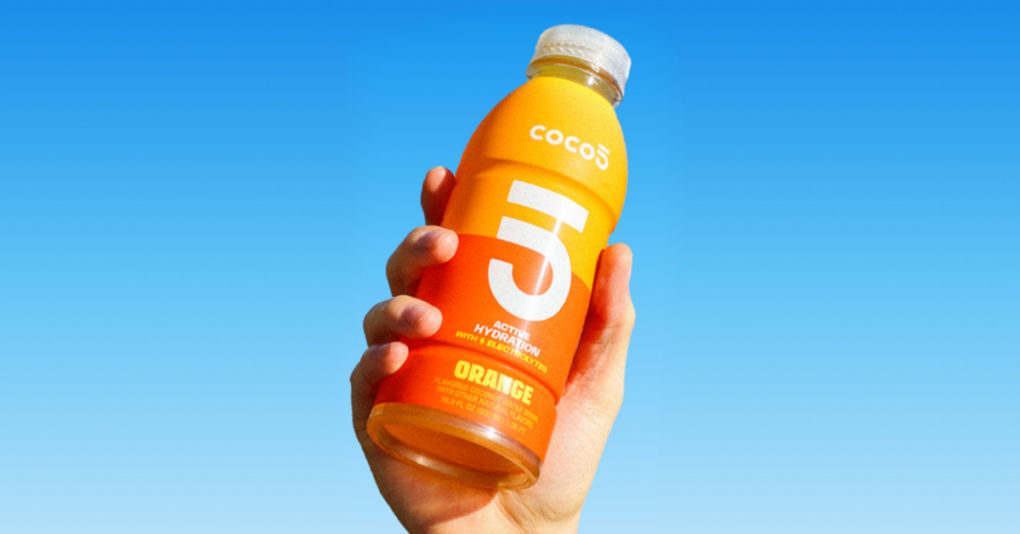
Coco5’s visual rebrand has been a big boon for the business as well, Farnsworth said. He noted that within three months of the rollout, which began in September, the brand’s Passionfruit flavor went from one of its worst performing SKUs to its top seller.
“The formula in the bottle didn’t change, the packaging changed – and the level of attraction to that has been really fun to watch in the market,” he said.
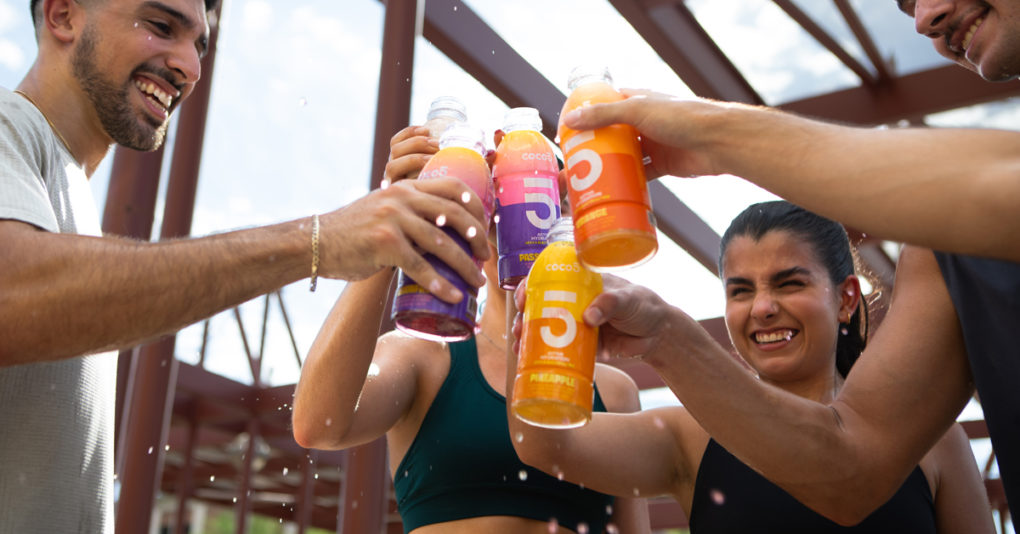
While competing sports drinks like BodyArmor and PRIME also make use of coconut water, Farnsworth argued that Coco5 is able to position itself as a premium, clean label alternative to those drinks that can still build its brand off of the “healthy, female-forward hydration” message provided by its core ingredient.
But it’s not just coconut water that is moving the category. Medical-grade hydration formulas, such as those made by Electrolit, have rocketed in popularity as a mainstream beverage, while other competitors have emerged to specifically court a female consumer base, such as podcaster Alex Cooper’s Unwell Hydration brand.
Still, while the aspiration is to be a brand for everybody, focusing on top income earners has had its benefits.
Some of those accounts may not be “large scale national accounts,” Farnsworth conceded, but they include influential and exclusive destinations like the East Bank Club in Chicago and the Troon Country Club in Phoenix. Those accounts, he said, help the brand to grow further in their respective markets, including opportunities to add independent restaurants and traditional retailers.
Looking ahead, Farnsworth said that the brand intends to double down on its strategy and continue to grow steadily without outpacing its ability to support existing accounts.
As well, there’s the big question of tariffs and the future economy in the air, which has created uncertainty in the market. However, Farnsworth feels confident that Coco5 has the resources and relationships to keep the ship stable as the macroeconomic climate remains in daily flux.
“There’s only a few groups that really control a lot of the coconut water distribution chain in the world, and we’re fortunate to have great partnerships with them,” he said. “So with that there are strategic decisions that are made, both in maybe moving up the calendar of when we run, or add new products to the run, to the warehouses. As well as strategically ensuring we have the appropriate amount of back stock of raw material, which has been a key, key focus.”
He said it’s “not the intention right now” to take pricing action and pass the cost of tariffs onto consumers, although he cautioned that “you never know over a long period of time.”
“Right now we’re not concerned at all about our ability to meet the needs of the customers that we have, and we’ve been really intentional about that.”