

KEANU is not just the coolest guy in Hollywood, but also the name of the newest entrant in the kava category.
Positioning itself as the most authentic format to consume the Pacific Island root, KEANU’s mission is to bring premium kava into the U.S. as direct-to-consumer kits.
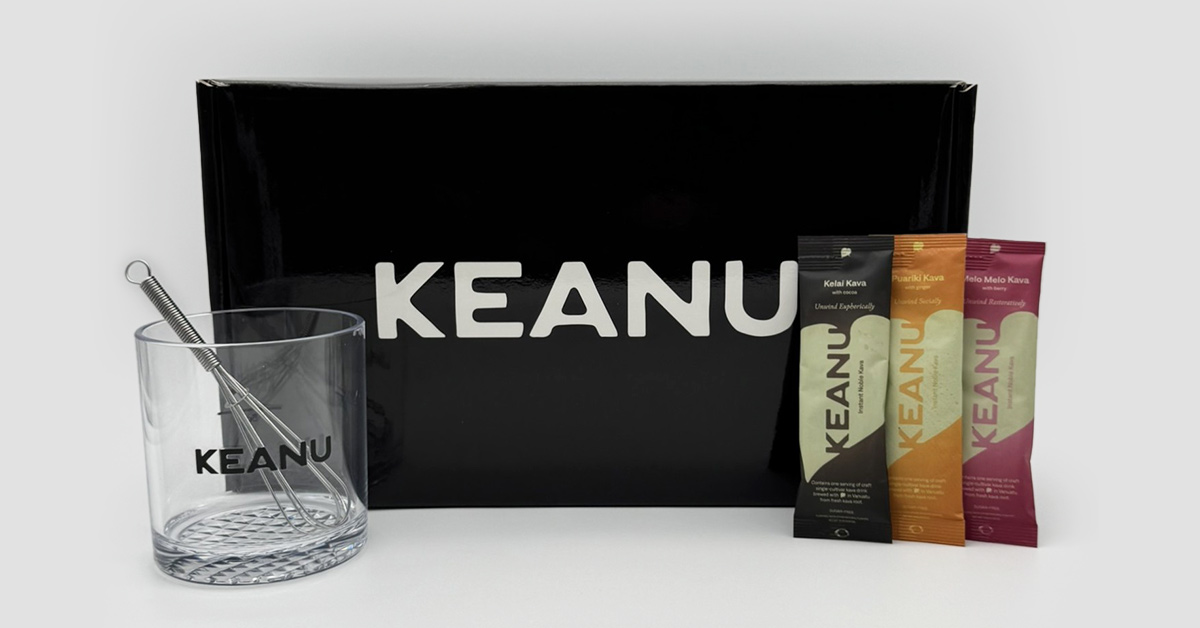
Launching this month, the brand is the first CPG product from kava documentarian and former Lazard banking investment analyst Alex Russell. KEANU is part of Russell’s new kava business platform Nothing Special. The kits contain three varieties, or cultivars, of instant noble kava — Kelai, Puariki, and Melo Melo — in about 10 gram stick packs, each with its own flavor, along with instructions, educational materials, and a custom glass and whisk to best prep the drinks at home.
A limited number of kits will be available this month for $79.99.
“Kava [beverage] brewed from fresh kava root is a lot more efficacious and fresher tasting,” Russell said, describing his experience drinking kava brewed in the Pacific Islands. “Think of it like good and bad coffee, there’s a bit of a spread. With good and bad kava, there’s a huge spread.”
While KEANU is not the first U.S. kava brand to use powdered drink mixes as its form factor, most other brands rely on kavalactone extract. Kavalactone extracts tend to contain about 30% kavalactones and are a “synthetic derivative” of the kava root, according to Russell; whereas, KEANU uses instant, noble kava powder.
“Just like caffeine is different than coffee, kavalactone extracts are different than kava,” Russell said. “The difference in effect is night and day.”
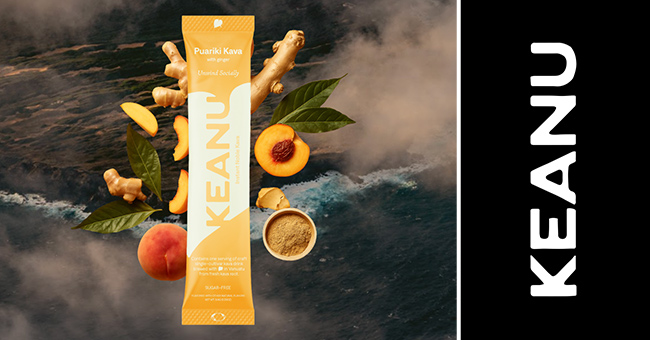
Kavalactone extract is a concentrated substance that chemically isolates the kavalactone from the dried kava root using non-aqueous solvents like CO2, ethanol, or acetone. Formulating with kavalactone extracts can be easier to source and work with in liquid and powdered formats, but they “don’t get the same full-spectrum of relaxing and social effects as you get from drinking a true instant kava beverage,” Russell added.
KEANU kava uses the more traditional process of grinding fresh noble kava, mixing with water, straining and then dehydrating the result into instant noble kava powder.
“We tried to make that holy grail of fresh-brewed kava in an RTD bottle but paused our efforts when we realized it would require a lot more R&D to do it without degradation of the kava’s effects after a few weeks on-shelf,” he said.
Interest in kava has grown dramatically as consumers look for adult non-alcoholic (ANA) alternatives, with about 75% of kava purchasers saying they were consuming less alcohol, according to a 2024 report from Brightfield Group. The purchase incidence of kava rose 2% between Q3 2022 and Q4 2024, which is slow but climbing.
Kava took root in the U.S. in the early 2000s, predominantly centered in South Florida. Since then, kava bars have sprung up all over the country and have opened the door for retail beverage brands like Leilo, Melo and Psychedelic Water.
Most RTD formats use the kavalactone extract because it is easier to source and more stable in liquid.
Kavalactone extract products are “great in their own right,” Russell said, but they’re really not delivering the real kava experience and separate consumers from the role kava has played among Pacific Islander communities.
KEANU goal is to educate new users on the nuances of what makes kava so special and, at times, ceremonial among Pacific Islanders. Russell likens it to how brands like GT’s Kombucha and Yerba Madre (formerly Guayaki) introduced American consumers to traditional, functional beverages from South America and Asia.
While the current market for kava remains small, Russell believes the addressable market is much larger; despite setbacks in some regions like New York City, which recently cracked down on kava bars and other on-premise retailers. Russell’s approach to expanding the kava set started with educating himself better so he could bring information to interested consumers. His journey to CPG started with multiple trips to Pacific Island nations and talking to experts and researchers. He moved on to making short documentary videos and publishing a kava magazine called Old Root.
KEANU is starting in DTC with plans to potentially move into other ecommerce channels where it can leverage the low weight and size of stick packs to yield wider margins. One day, the brand could move into retail, but DTC allows it to educate without the high cost of entry into retail, Russell said.
“The goal for us is to get to $1 million in sales, purely DTC and on ecommerce,” he said. “We have a big vision, but I’ve learned to keep the vision strong and then adjust with short-term execution.”