

As the premium mixer category evolves, Badger Bevs is locking in distribution partnerships and prepping for a portfolio expansion that will take its new formats beyond the bar.
The Ridgefield, Connecticut-based brand has signed on with distributor Brescome Barton in the brand’s home state as well as Badger Liquor in Wisconsin to position Badger Bevs for deeper penetration in both on-premise locations and retail as it expands into cans and larger format bottles.
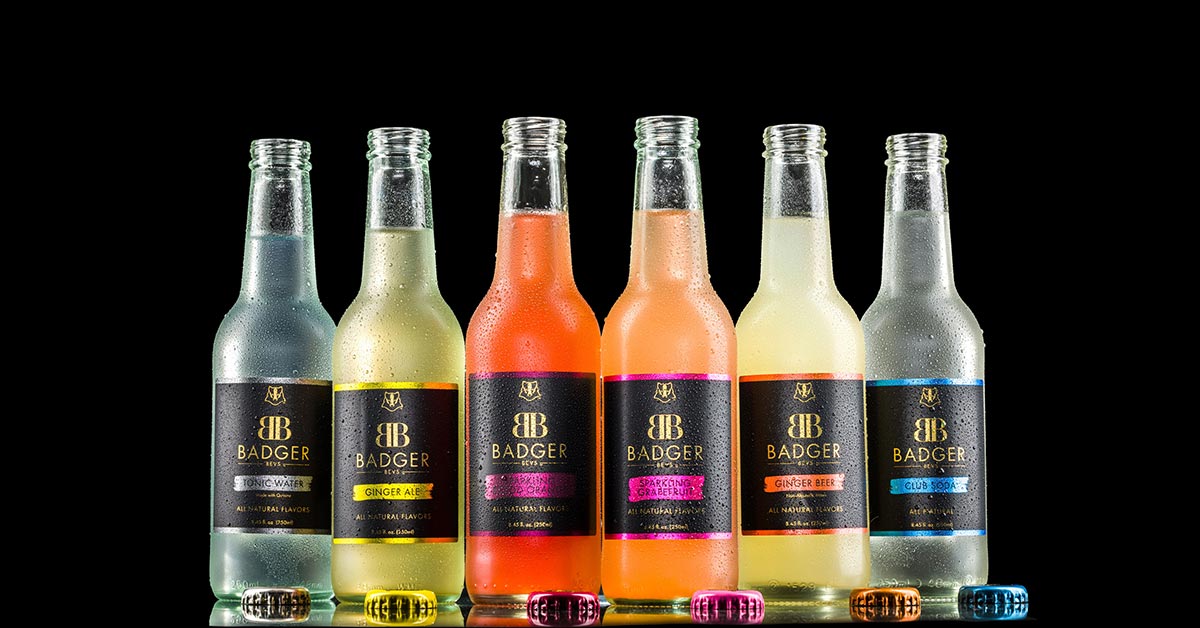
Founded in 2022 by David Vogel with investment support from the Bishop family (founders of Sobe Beverages and Blue Buffalo pet food), Badger Bevs makes six SKUs of mixers and cocktail waters in 8.45 oz. glass bottles.
The brand has focused primarily on high-end bars, fine dining restaurants and private drinking establishments such as country clubs or hotels, where it has tried to cultivate an “exclusive, high-end aesthetic” that will also appeal to the home bartender looking to elevate their cocktails, Vogel said.
“If you’re at Bemelman’s Bar – a mainstay of Manhattan high-society – and you order a gin and tonic and a Badger Bev is served tableside, you shouldn’t expect to see it at Walmart in a floor stack,” he said.
While the brand has targeted on-premise to establish a foothold and build brand awareness in its first two years, it has also progressively opened up new distribution partners to enter regions like Northern California, where upscale restaurants and hotels are a prime opportunity.
Badger Bevs has seen demand grow in the Midwest, anchored by accounts in Chicago, Ohio and as far south as Nashville, Tennessee, Vogel said. “We want to grow within the footprint we have, but with an understanding that we’re very disciplined and the [distribution] partnerships need to make sense for the customer base and our brand.”
Cracking Into Cans
Glass bottles have driven the brand’s premium positioning strategy during these first two years, but it might not be the long-term trajectory. By the end of the year, Badger Bevs is expected to expand its portfolio to other formats.
Besides the aesthetic look of launching with glass, Badger Bevs also preferred the carbonation that its two-serving bottles brought to the cocktail experience. As it prepares to unveil single-serve cans, Vogel conceded that the “tiny champagne bubbles” will be a sacrifice, but “there are use cases that you really need to have the can.”
Canned varieties allow for a broader consumer demographic in various retail channels, while also opening distribution options in places, such as high-end airlines, pool clubs or golf courses, where glass is not preferred.
Brands like Q Mixers and Fever Tree took similar approaches to the premium mixer set, starting in glass and expanding out to aluminum to bring in more retail partners and use occasions. As Fever Tree scales further into retail after forming a strategic partnership with Molson Coors, Badger Bevs joins other mixers, such as Thomas Henry, offering the on-premise an alternative.
Dollar sales in cocktail mixers have stuttered recently, declining 5.3% in the last 52-week period ending June 15, according to Circana tracking. Volume fell 12.3% in the period. The tonic/club soda category had an even steeper decline as sales dropped 11.1% and volume retreated 16.5%.
Expanding its format options could provide some added support for Badger Bevs, which counts tonic water, club soda and ginger beer as its “workhorses.”
Early next year, the brand expects to unveil new flavors that piggyback on the success of its Sparkling Grapefruit and Sparkling Blood Orange varieties, and tap into the palate and industry know-how of award-winning bartender and brand partner Jillian Vose.
While cans might be a side-step towards approachability, adding flavors that speak to an elevated cocktail experience is in line with Badger Bevs ultimate goal.
“From a macro perspective, we see bars moving away from the fountain gun,” Vogel said. “The years of putting a beautiful gin or vodka in a glass and then spraying it down with the gun doesn’t make a high-quality cocktail.”